Learning to talk back.
A call in your pocket is one of the cheapest ways to turn a quiet sit into an encounter - if you know what you're saying. Here are 15 calls worth learning, grouped by quarry, with what each one means, when to reach for it, and the one tip that matters most. The golden rule runs through all of them: call less than you think you should.
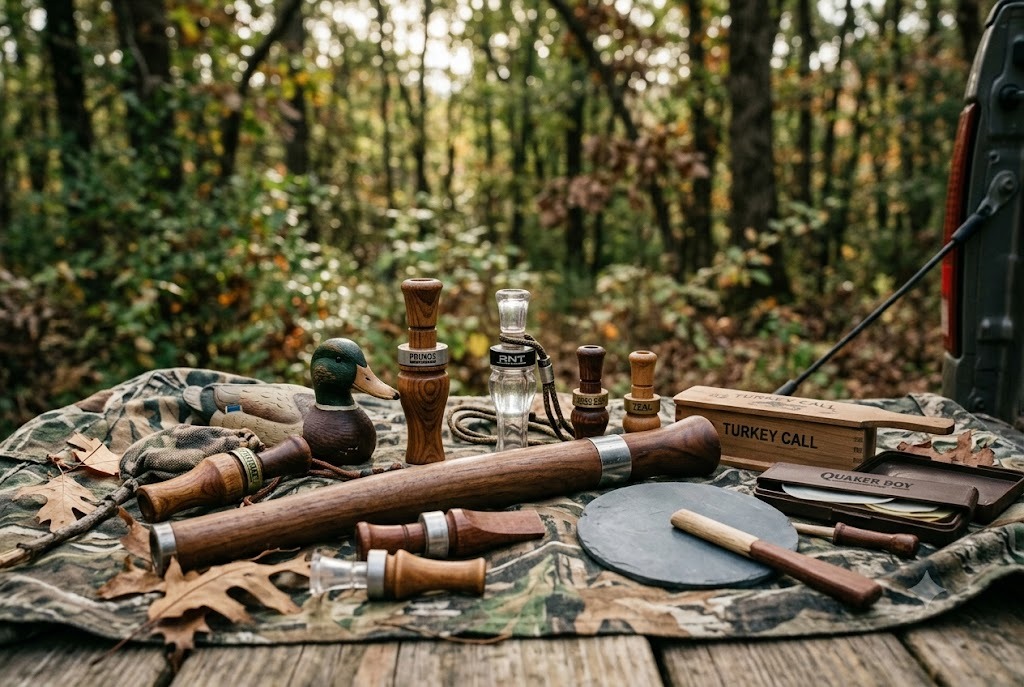
📣Pick your call - full guides
Every call type gets its own deep-dive: the sound, running it in the field, choosing one, practice drills and the mistakes that educate animals.
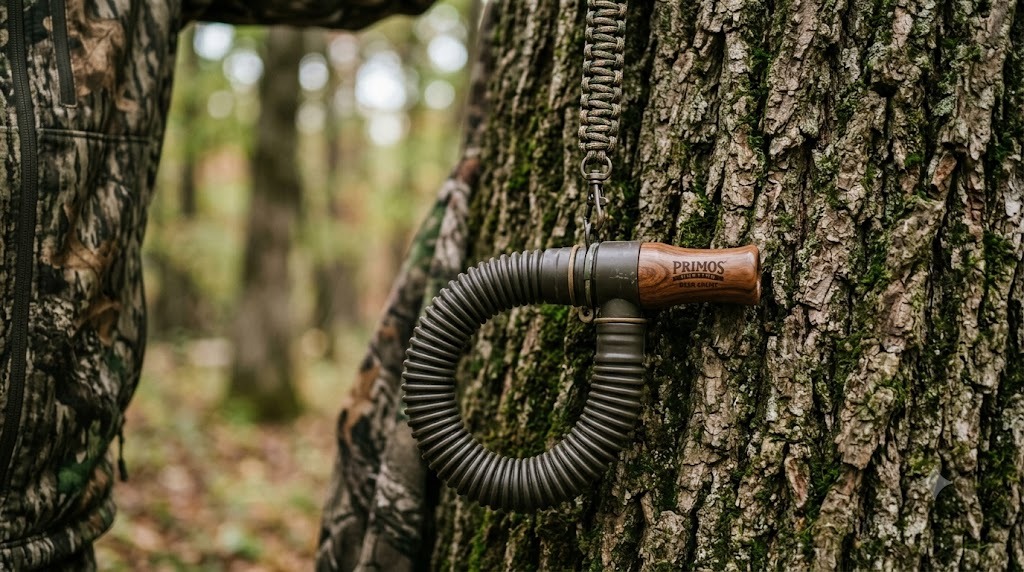 Beginner
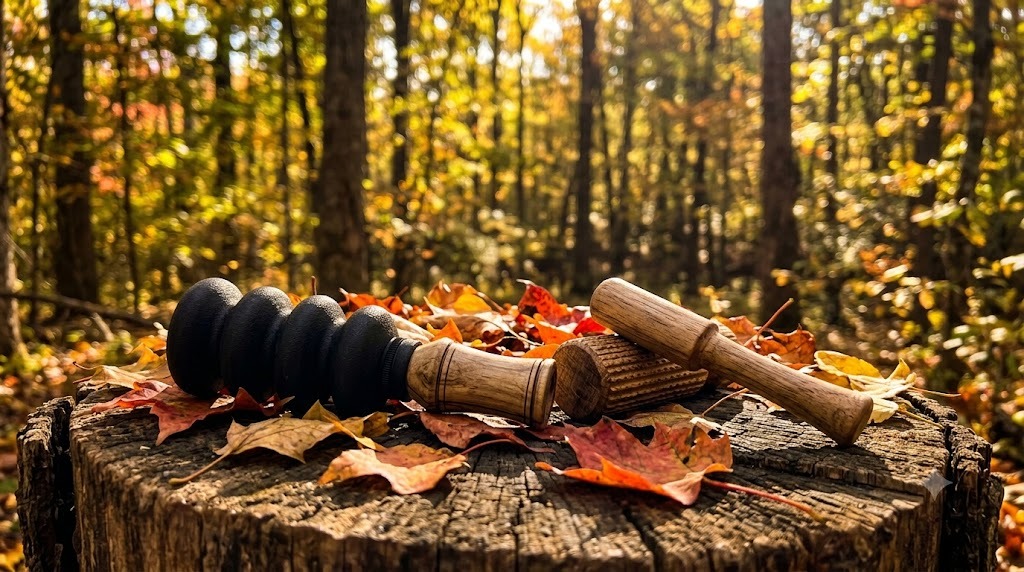
 Deer Grunt Tube
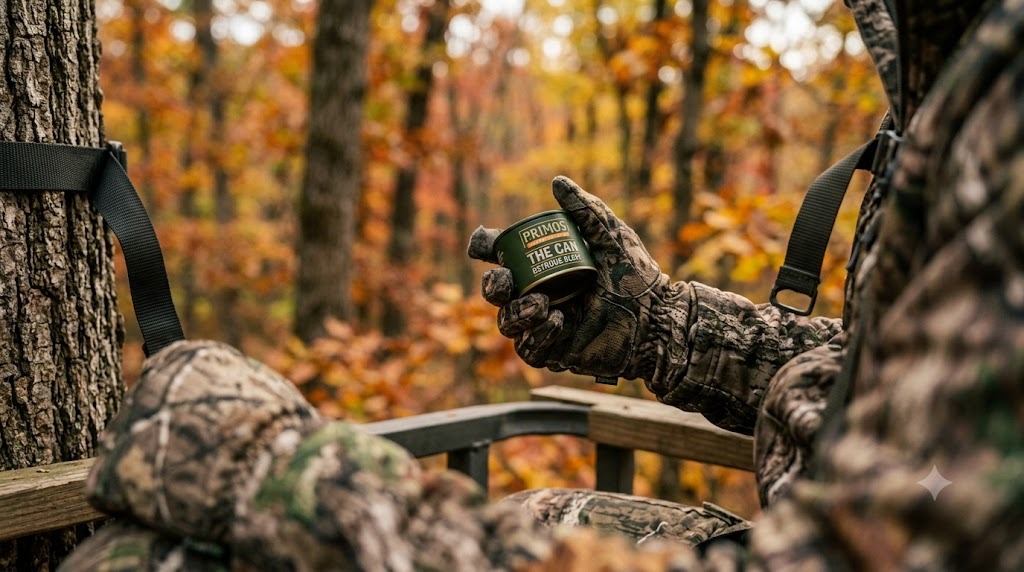 Beginner
 Doe Bleat Can
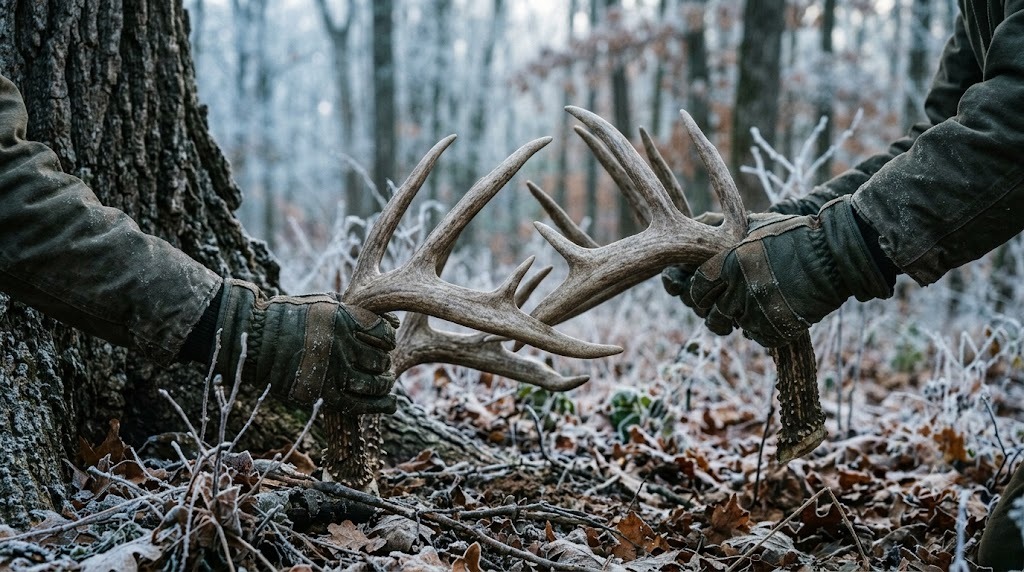 Intermediate
 Rattling Antlers
 Advanced
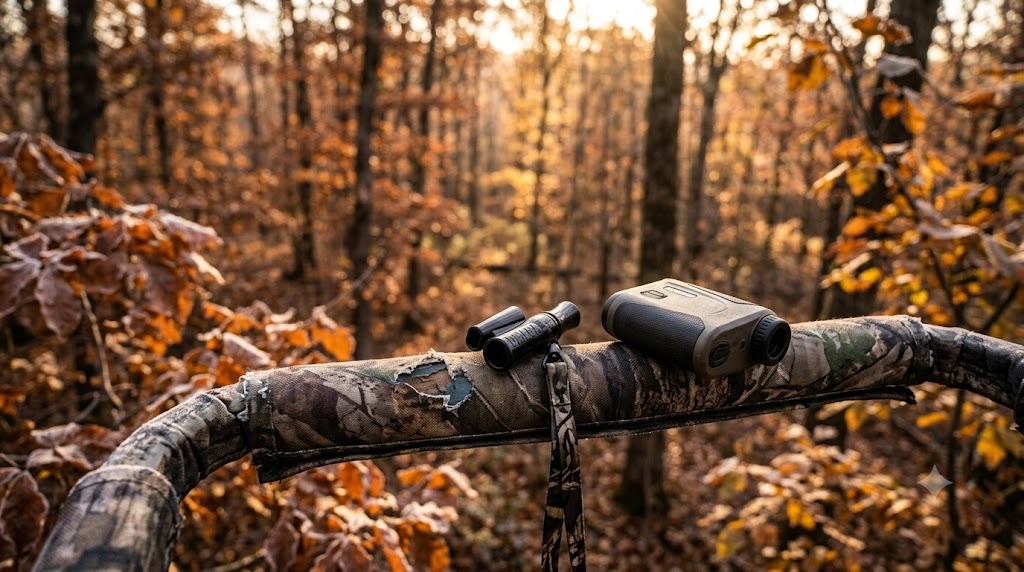
 Snort-Wheeze Call
 Advanced
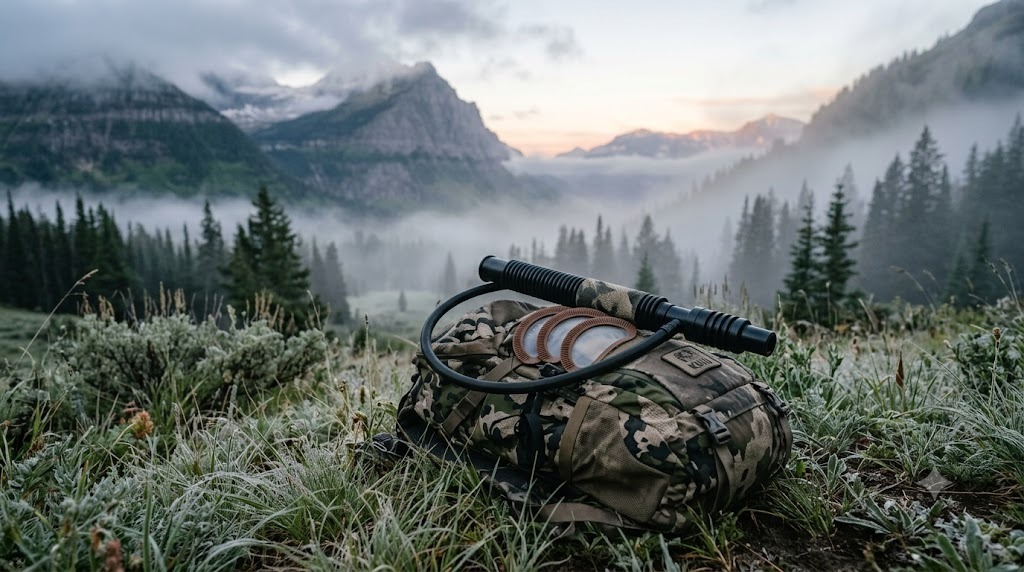
 Elk Bugle Tube
 Intermediate
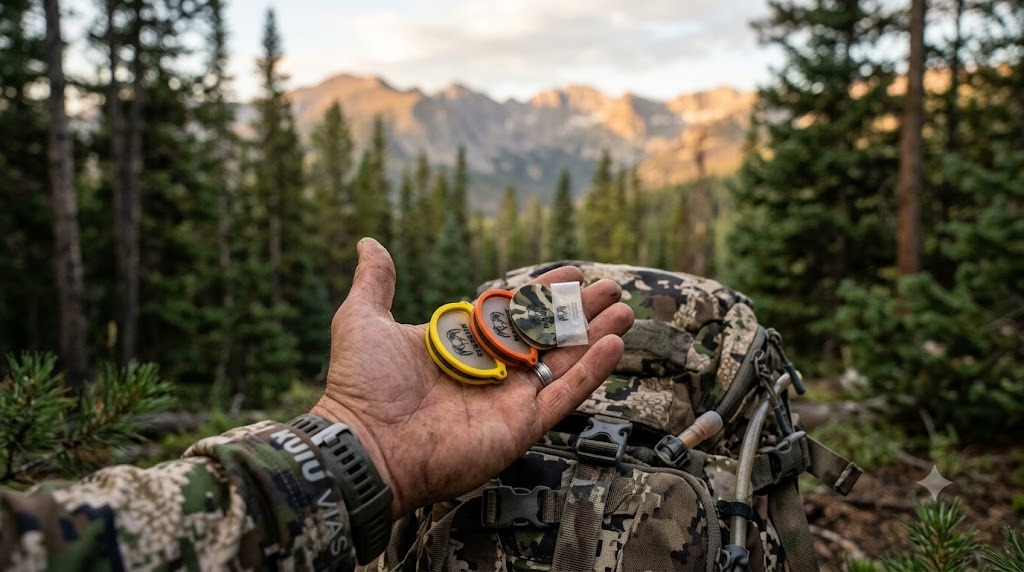
 Cow Call (Diaphragm)
 Beginner
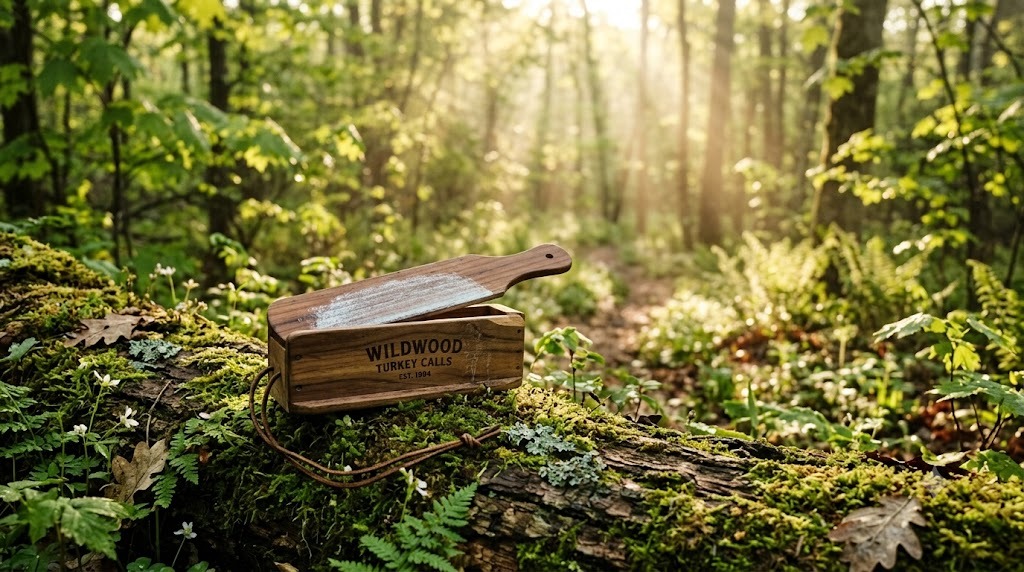
 Turkey Box Call
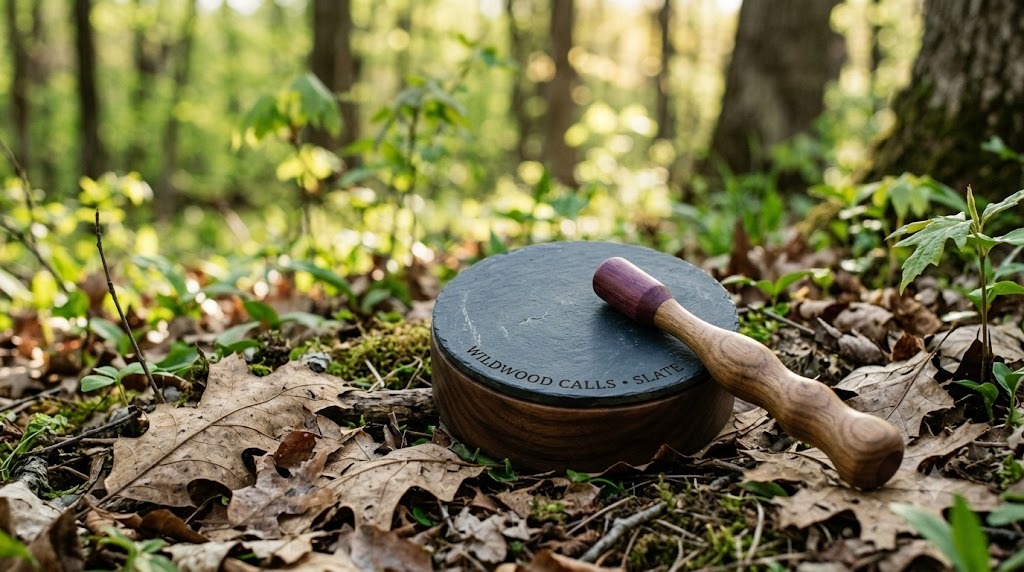 Intermediate
 Turkey Pot Call (Slate)
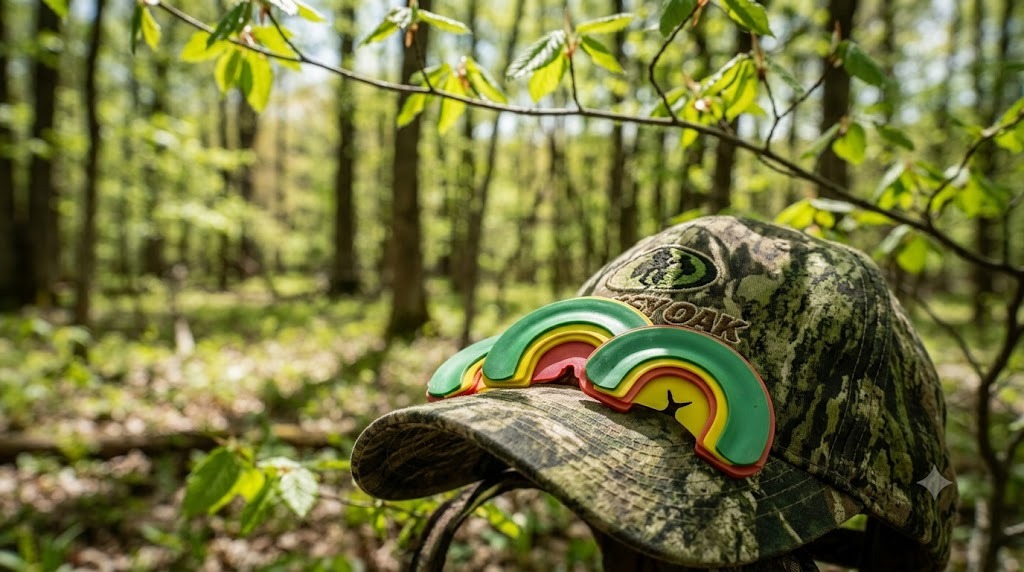 Advanced
 Turkey Diaphragm Call
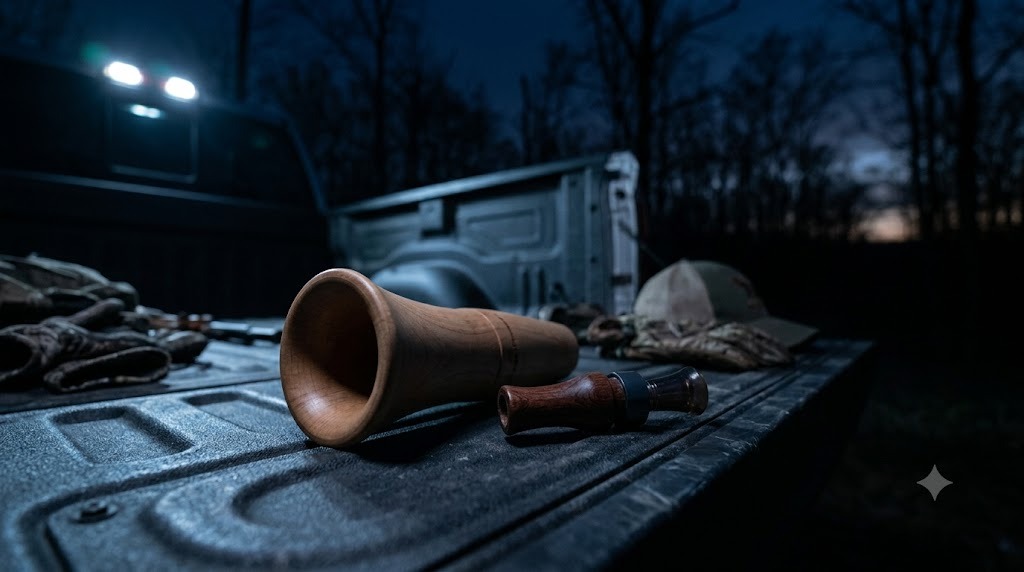 Beginner
 Locator Calls (Owl & Crow)
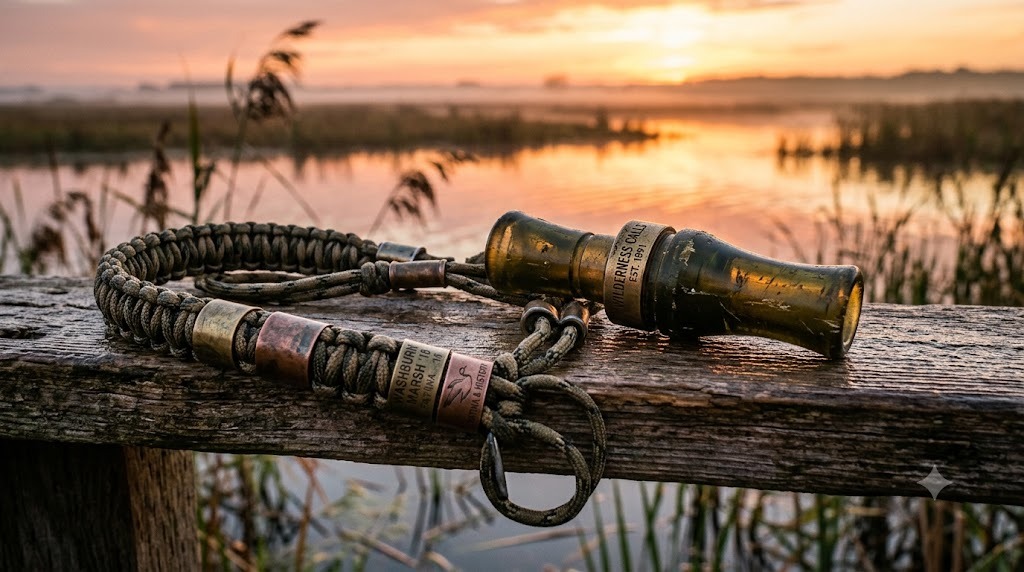 Intermediate
 Duck Call
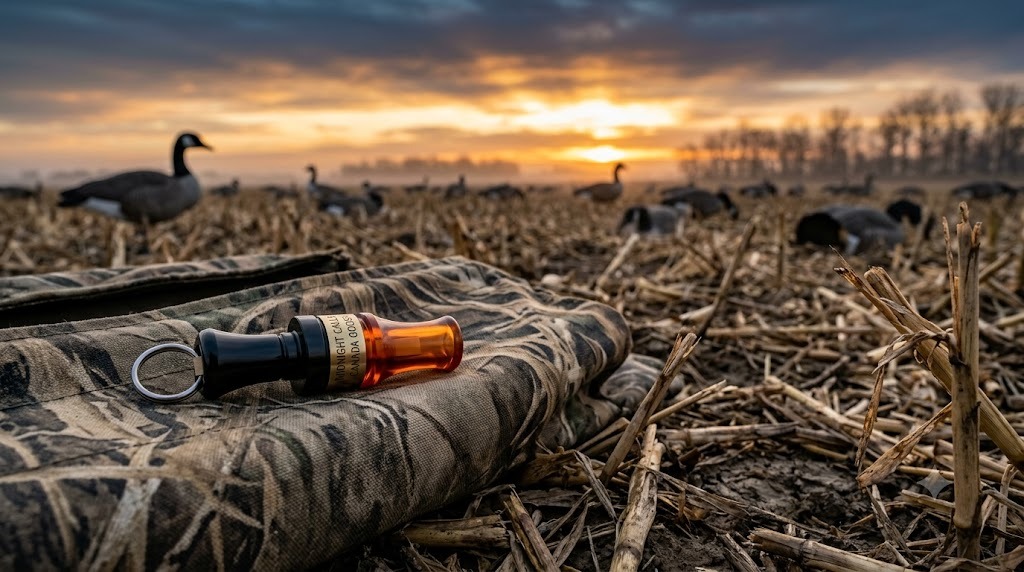 Advanced
 Goose Call (Short Reed)
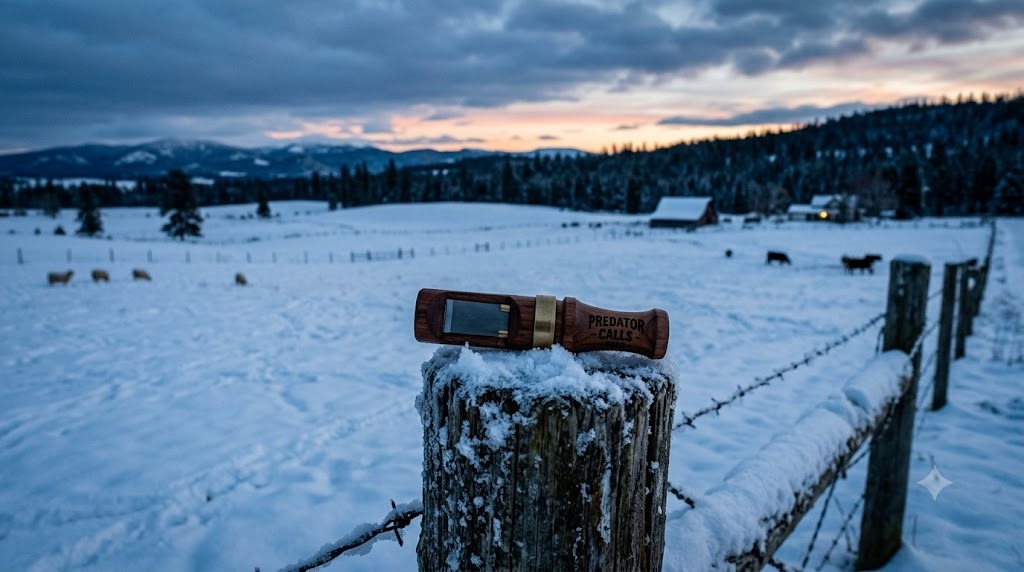 Beginner
 Rabbit Distress Call
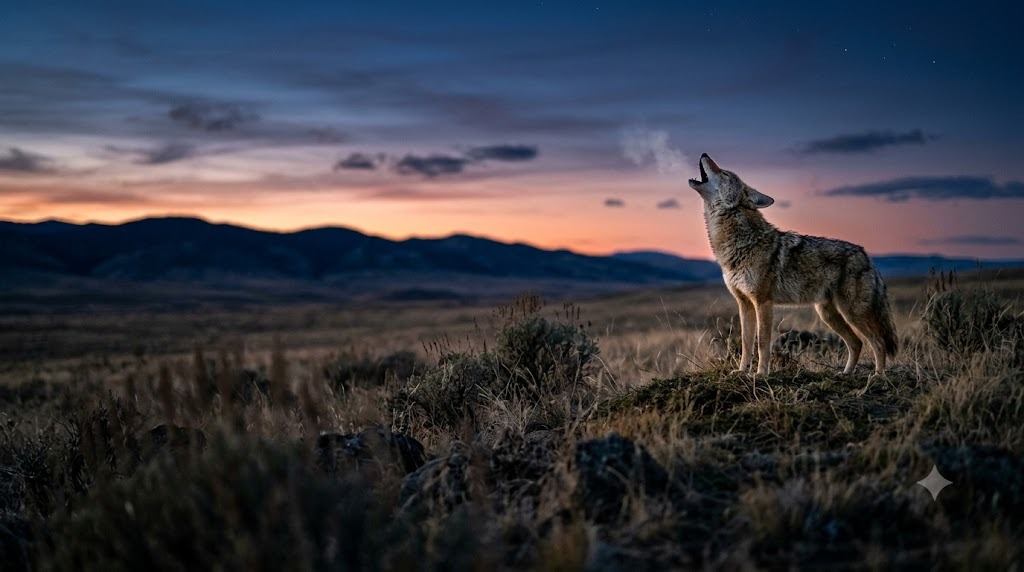 Intermediate
 Coyote Howler
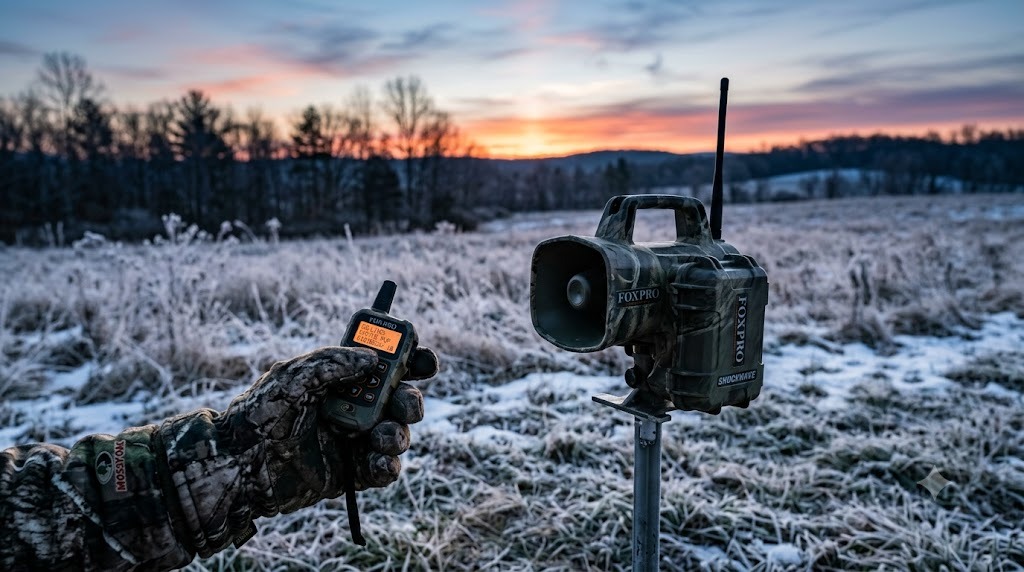 Beginner
 Electronic Caller
 Beginner
 Squirrel Call
🦌Deer
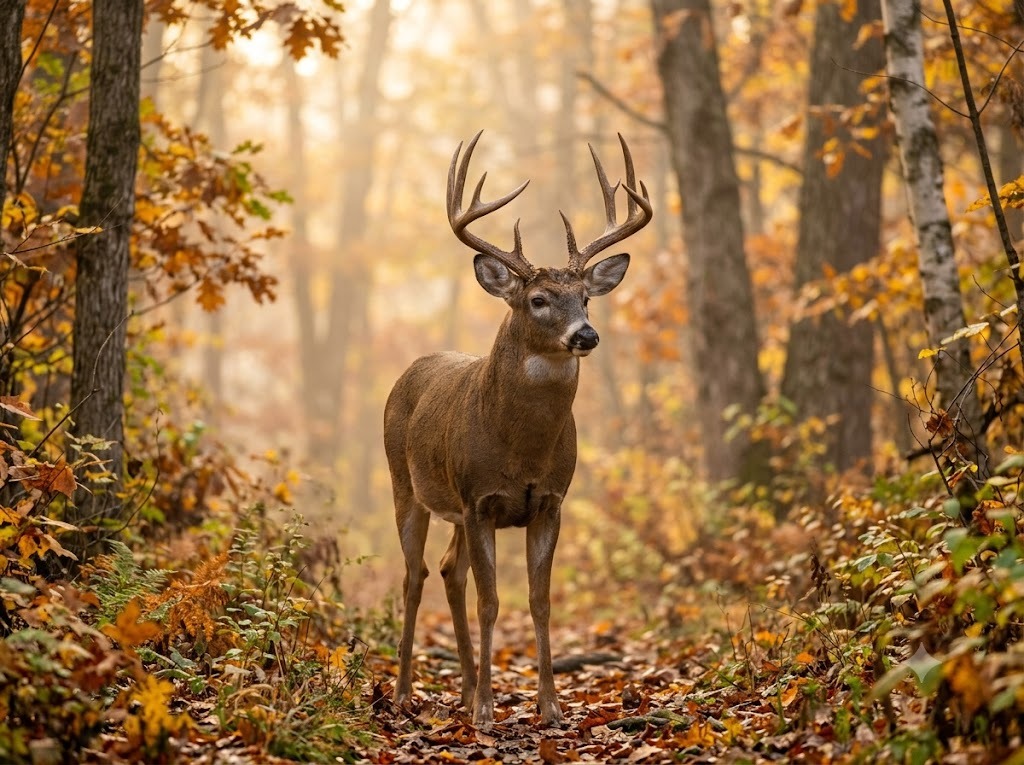
A whitetail's world runs on subtle sounds. Call sparingly - one soft grunt at the right moment beats a morning of noise, and over-calling turns a curious buck away.
A buck's everyday voice. A single short, low grunt says 'I'm here'; a stuttering tending grunt is a buck trailing a hot doe.
WhenThe rut. Use it to stop a cruising buck or pull one that's skirting just out of range.
TipStart quiet. You can always grunt louder - you can't un-spook a deer.
A nasal 'blaaat' - a doe's contact call. Tip a 'can' call over and it makes the drawn-out bleat of a doe in estrus.
WhenPre-rut and rut, when bucks are on their feet looking for does.
TipBlind-call every 20-30 minutes from a good stand even if you see nothing.
Two sets of antlers clashed together imitate two bucks fighting - and a dominant buck often comes to join or break it up.
WhenPre-rut and rut, best on cold, still mornings when sound carries.
TipRattle hard for 30-60 seconds, then put them down and watch downwind - that's where he'll circle.
The most aggressive deer sound: a sharp 'fff-fff-wheeeze.' A dominant buck's outright challenge.
WhenA last resort for a mature buck that's hung up and won't commit.
TipIt makes or breaks the encounter - use it only when the softer stuff has failed.
🎺Elk
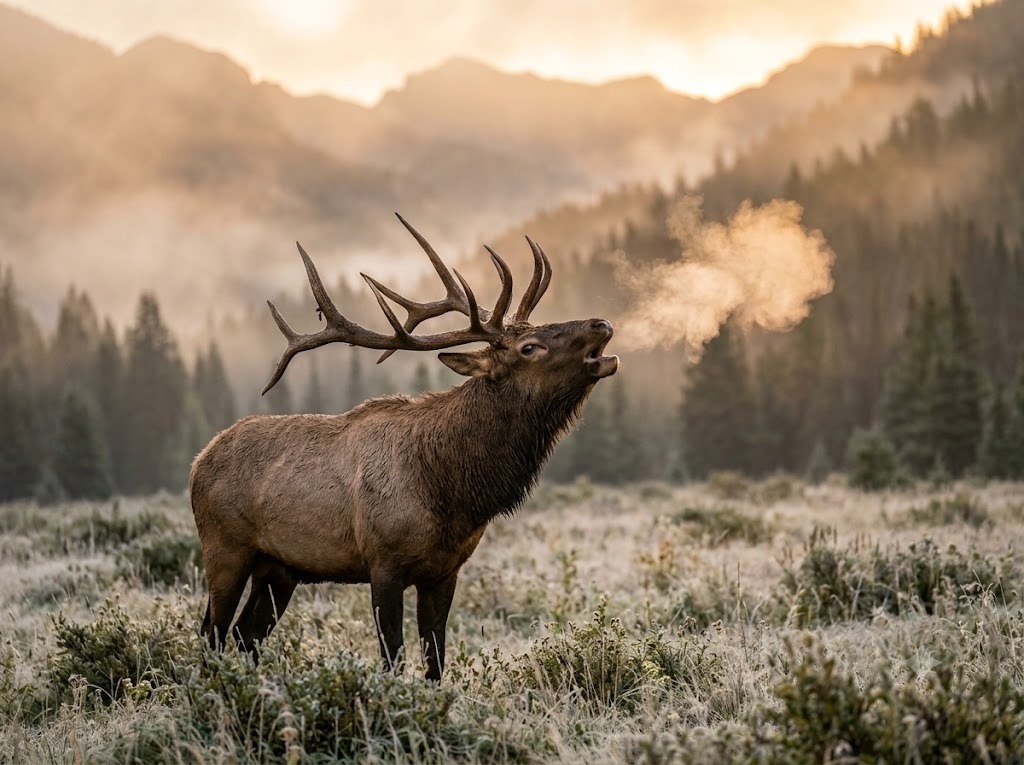
Two sounds do most of the work in the elk woods: the bull's bugle and the cow's mew. For a beginner, soft cow calls pull far more bulls than aggressive bugling.
The bull's screaming challenge and location call - a rising squeal that drops into deep grunts (the 'chuckle').
WhenThe September rut, to locate a herd bull or challenge him into range.
TipLocate first with a single bugle. Save the aggressive stuff for a bull that's already fired up.
A soft, reassuring mew - the sound of a contented cow. It calms the herd and draws a bull looking for company.
WhenRight through the rut. The single most useful elk sound to learn first.
TipSubtle and sparing beats loud and constant - a lost-sounding cow is very convincing.
🦃Wild turkey
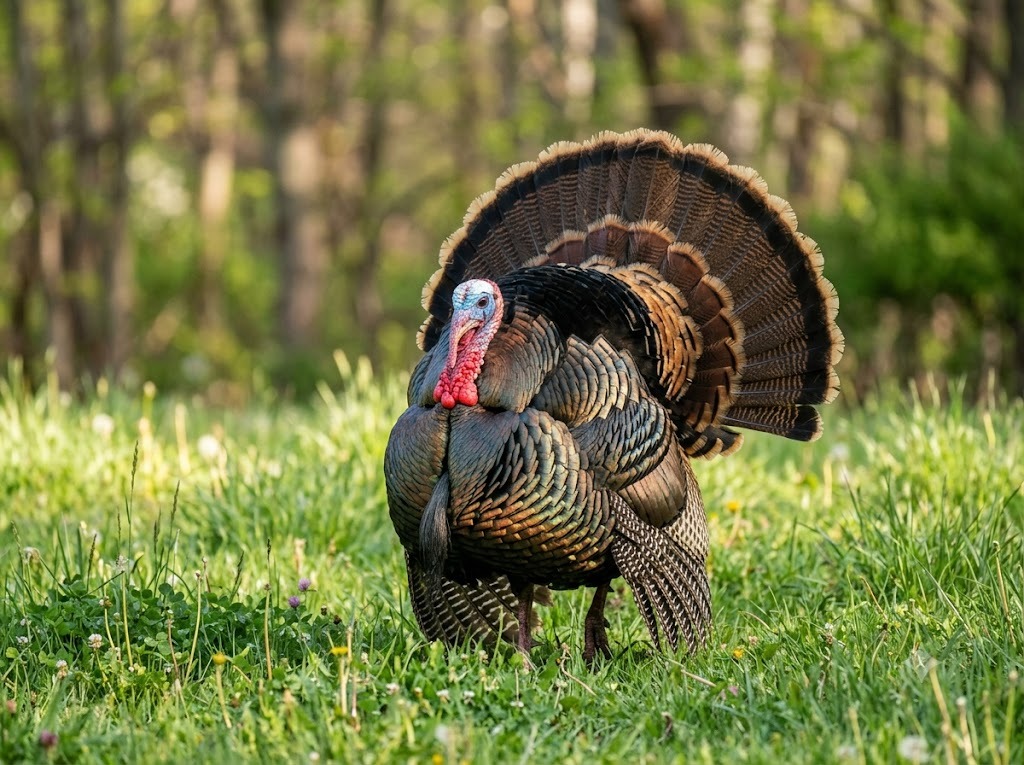
Spring gobbler hunting is a conversation with a hen's vocabulary. Once a tom is answering and coming, the hardest and best thing you can do is shut up.
The hen's basic call - a rhythmic series of two-note notes that says 'here I am, come find me.'
WhenThe go-to from first light, to a roosted or cruising gobbler.
TipOnce he's gobbling back and closing, call less and less.
Soft, close-range contentment sounds: a cluck is a single sharp note, a purr a soft rolling one.
WhenTo seal the deal on a tom that's hung up just out of range.
TipScratch the leaves with your hand as you purr - it sounds like a feeding hen.
Loud, fast, irregular clucks - the sound of an excited, fired-up hen.
WhenTo locate a quiet gobbler or light a fire under a hot one.
TipUse it in small doses; too much excited calling can also intimidate a shy tom.
The tom's own call, used to locate other birds or challenge a rival gobbler.
WhenOccasionally, to shock a roosted bird into shock-gobbling back so you can locate him.
Tip⚠️ Risky on public land - it sounds like a turkey to other hunters. Skip it where people hunt close.
🦆Ducks & geese
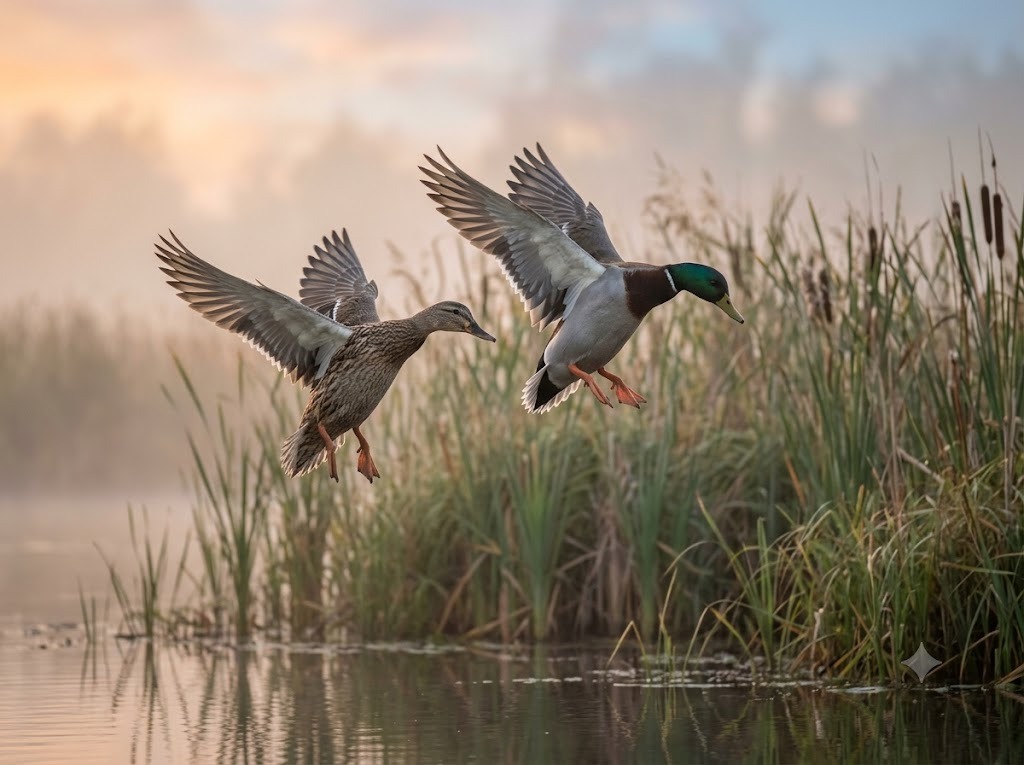
Reading the birds matters more than volume. Loud calling turns distant birds; the moment they commit and cup their wings, back right off.
A long, loud, descending series that reaches out and grabs the attention of ducks passing at a distance.
WhenBirds far off over big water, to turn them toward the spread.
TipNever hail birds that are already working your decoys - you'll flare them.
A soft, rolling 'tikka-tikka-tikka' that mimics a raft of contented, feeding ducks.
WhenBirds circling close and looking - this is the closer.
TipQuiet and steady. Confidence sounds calm.
The goose's carrying two-note honk plus short clucks and moans; the volume reaches a long way.
WhenTo turn passing geese, then softer notes to finish them over the decoys.
TipMatch their intensity - answer excited birds with excitement, calm birds with calm.
🦊Predators
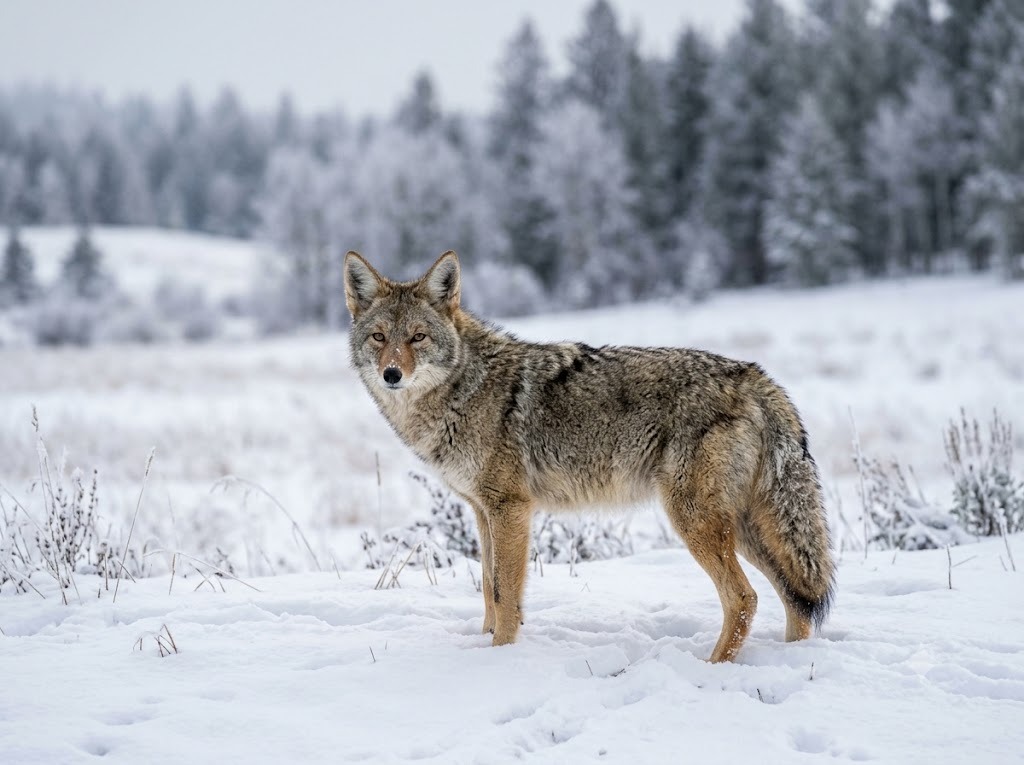
Predator calling is about triggering a hunting or territorial response. Set up with the wind in your face, stay still, and watch downwind - that's where they circle to scent-check you.
A raspy, screaming squall of a rabbit in trouble - the classic dinner-bell for coyotes, foxes and bobcats.
WhenDawn and dusk stands, calling blind into likely cover.
TipCall in short 30-60 second bursts with pauses; give a stand 15-20 minutes before moving.
A locator and a social or challenge call that pulls a territorial coyote in to investigate the newcomer.
WhenTo locate at dusk, or through the January-February breeding season.
TipStart with a single lone howl and wait - an answer tells you exactly where to set up next.
Ready to put it to work? Line calling up with the right timing on the rut timing map, brush up on hunting methods, and read the ground with track & sign ID.
⚠️ Calling technique varies with region, pressure and the mood of the animal on the day - treat every "when" here as a starting point, not a rule. Above all, know your target and beyond before you ever act on a call, and be extra cautious with turkey gobbles and any calling on busy public land, where other hunters may be working the same bird.