Short Reed Goose Call
The short reed speaks the whole Canada goose language - honks, clucks, moans and murmurs - and in practiced hands it argues entire flocks into a cut-corn decoy spread.
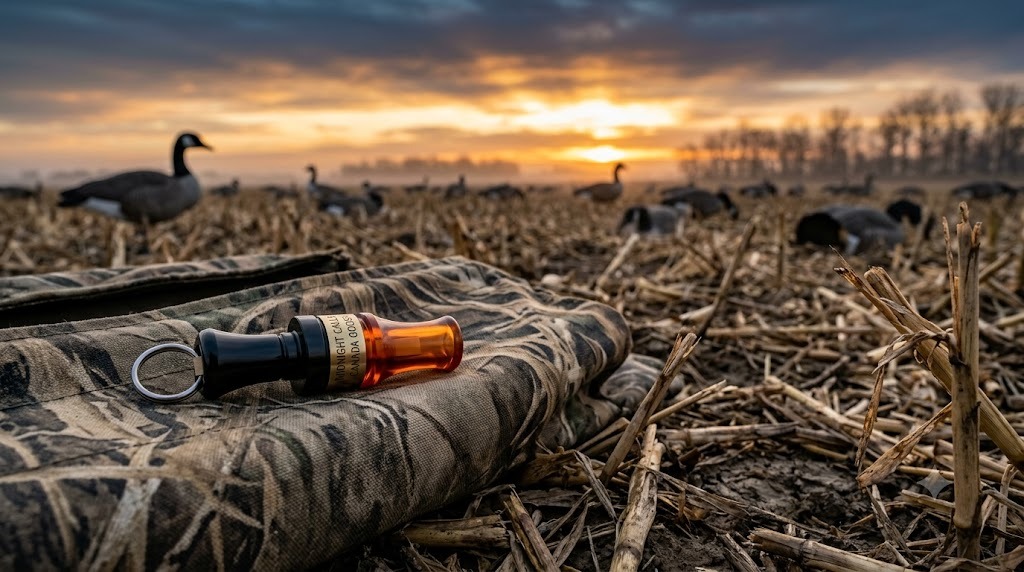
Canada geese are talkers: a working flock runs a continuous argument of honks, clucks and moans, and a silent spread is a suspicious one. The short reed goose call reproduces that whole conversation from one instrument - deep two-note honks breaking exactly like a live bird, machine-gun clucks over the decoys, low contented moans that say 'the eating is good down here'. It is genuinely hard to learn and genuinely lethal learned.
What it is & the sound
A compact call whose short, stiff reed 'breaks' between low growl and high crack - the two halves of a goose's voice. Every sound combines them: the honk (er-RONK), cluck (fast broken honks), moan (unbroken low), murmur and spit notes for flock texture.
When & where it works
Field spreads for Canadas above all - cut corn, winter wheat, loafing waters. Calling volume follows flock behavior: hail and honk to turn distant lines, cluck-and-moan aggressively as they approach, murmur softly at the finish.
How to run it
Foundation is the two-note honk with pressure-'growl' air and a tongue drop to break the note. Build sequences by MIRRORING the flock - answer their cadence, speed up when they chatter, and let your blindmates layer sounds; two average callers beat one good one.
Choosing one
A polycarb short reed with a broken-in (shaved) reed starts easiest; acrylic adds volume and crispness later. Avoid flute calls unless short-reed learning defeats you twice - the ceiling is lower but the floor is friendlier.
Practice drills
'Grrrr-it' drill: growl the low note, spit the 'it' to break it high - the honk assembles from those parts. Then cluck strings (fast honk-breaks), then moans (pure low note held). Practice to live-flock audio; the goal is joining the argument, not reciting.
Common mistakes
Blowing it like a duck call with loose cheek air (the reed needs pressurized growl), honking on a rigid metronome (real flocks are ragged), and over-calling finished birds - feet-down geese want murmurs, not speeches.
⚠️ Calling regulations vary - electronic calls especially are restricted for some species, states and seasons. Always check the current official regulations for your area before hunting; this page is general technique guidance, not legal advice.