Bring back what you shoot.
The shot is only half the job. Every animal you release an arrow or a bullet at deserves a genuine, patient effort to recover it - and most of that effort is reading sign and knowing when to wait. Here's how to trail methodically, so a hit animal ends up in the freezer, not lost.
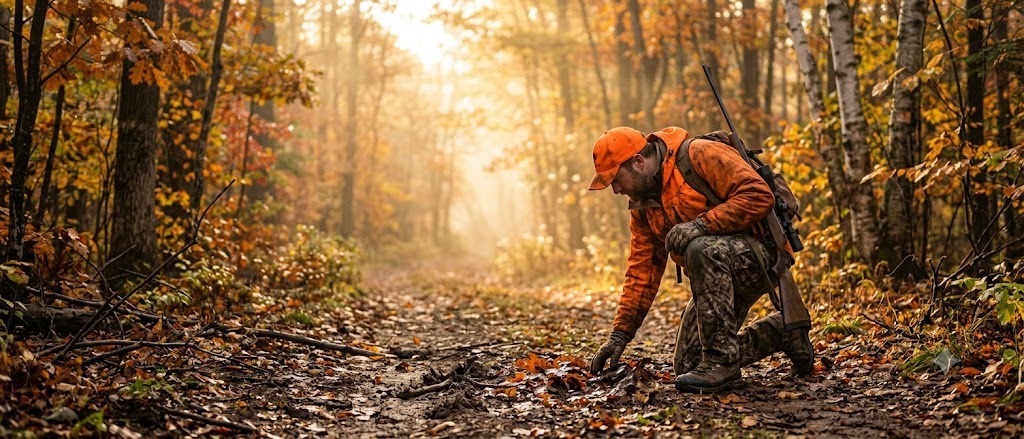
First, read the shot
The blood at the hit site and the animal's reaction tell you what you're dealing with - and, crucially, how long to wait before you follow. Match what you see to the closest column below.
Blood signBright pinkish-red, often frothy or bubbly - lungs put air in the blood.
ReactionA hard run or 'mule-kick', usually piling up within 50-125 yards.
The ideal hit. Little tracking needed - most are down fast.
Blood signBright red and heavy, often sprayed on both sides of the trail.
ReactionA wild, flat-out sprint, then a crash - typically inside 100 yards.
Massive blood, short track. Still give it a few minutes.
Blood signDark red to maroon, steady but not sprayed.
ReactionHunches up and walks off slowly to bed down.
Fatal but slow. Patience recovers it - pushing it doesn't.
Blood signSparse, often with green or brown stomach matter and a distinct smell.
ReactionHunched, tail tucked, a slow deliberate walk.
Back out. This is the #1 hit that gets lost by rushing. Overnight if it's cool.
Blood signBright but can taper off (single lung), or darker and steady (muscle only).
ReactionVaries widely - a muscle-only hit may not be fatal at all.
The hardest read. Trail carefully, be ready for a follow-up shot, and use a tracking dog where legal.
Then, take up the trail
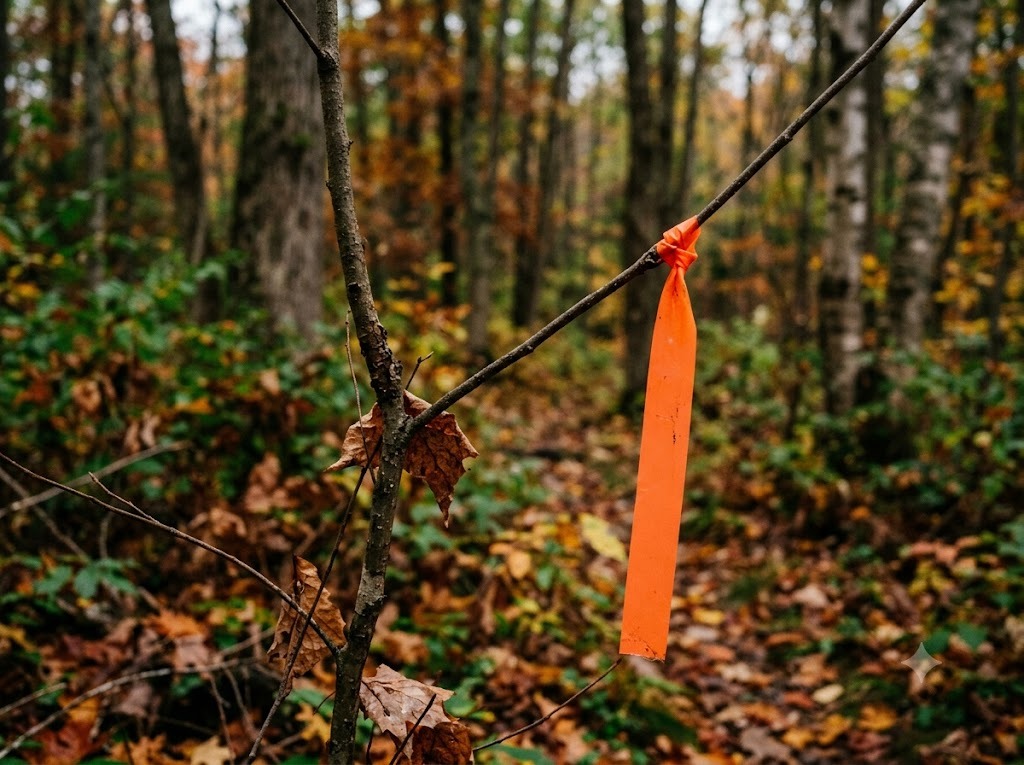
Before you climb down, fix in your mind exactly where the animal stood and the last spot you saw it. Then go find first blood and mark it with flagging tape.
Read the shot (above) and give it the time it needs. Rushing a liver or gut hit is the single most common reason an animal is never found.
One person tracks the blood, a helper hangs back. Never walk on the trail itself - you'll wipe out the sign you need if you have to start over.
Tie tape at each spot of blood. The line of tape behind you shows the direction of travel and, if you lose it, your last-known point.
It wipes onto both sides of a narrow trail, beads low on brush and grass, and hides on the undersides of leaves. Get low and look back toward the light.
Return to last blood, mark it, and search outward in slow arcs. Check the nearest thick cover, and downhill and toward water - hit animals head for both.
Once you've found it, fill your tag as the law requires and get the carcass opened and cooled quickly, especially in warm weather.
If it's a gut hit, or the blood peters out with light failing, stop. Back out quietly and come back in a few hours - or at first light if the weather is cool enough to hold the meat. A pushed animal can travel for miles; a bedded, undisturbed one usually dies close by. Where it's legal, a leashed tracking dog is the most ethical tool you can bring.
Put a good shot in first: study shot placement & vitals, carry a vital-zones card, and read the ground with track & sign ID.
⚠️ Recovery methods and wait times are general guidance drawn from long woodsmanship, not fixed rules - weather, terrain and the individual animal all change them. Follow your local laws on tracking, tagging, tracking dogs and trespass, always get landowner permission before crossing a boundary in pursuit, and handle firearms and broadheads safely throughout the recovery.