Rattling Antlers
Crashing two antlers together stages a fake buck fight - and the dominant buck comes to break it up. The highest-risk, highest-reward sound in the deer woods.
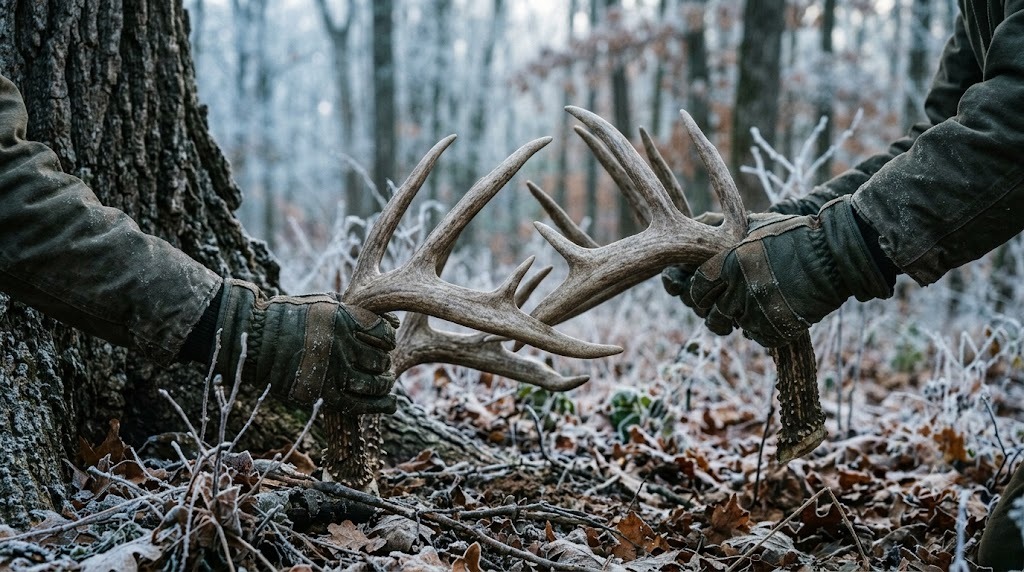
Rattling is deer calling's big swing: a minute of antlers crashing tells every buck in earshot that two rivals are fighting - possibly over a doe - and the local boss often comes on a string to enforce the hierarchy. It pulls fewer deer than a grunt tube but bigger ones, and on the right cold pre-rut morning it is the most exciting thing you can do with your hands in a treestand.
What it is & the sound
A pair of real or synthetic antlers (or a rattle bag of rods) clashed, ground and tickled together to imitate sparring or all-out fighting - complete with the leaf-crushing and brush-raking of a real brawl.
When & where it works
The 10 days of pre-rut before does come into heat is the classic window, on cold, calm mornings in areas with a healthy buck age structure. Best where a hunter can see far downwind - responders circle to scent-check the fight.
How to run it
Start with 30 seconds of moderate sparring, then watch 15-20 minutes. Escalate the next sequence: 60-90 seconds of hard crashing, antlers ground together, rake the tree, stomp. Two or three sequences per sit, then move or go quiet.
Choosing one
Real sheds sound best but a quality synthetic set is close and legal everywhere; rattle bags sacrifice a little realism for pocket convenience and freezing-hand ergonomics. Cut brow tines off real sheds to save your knuckles.
Practice drills
Watch two young bucks spar on video and copy the RHYTHM - fights are bursts and shoves with pauses, not continuous grinding. Practice the full theatre: leaves, branch snaps, a grunt before the first clash.
Common mistakes
Rattling in warm mid-season lulls (it advertises you), skipping the downwind watch (most responders come from there), and sequences that sound like a metronome - real fights are chaos, not tempo.
⚠️ Calling regulations vary - electronic calls especially are restricted for some species, states and seasons. Always check the current official regulations for your area before hunting; this page is general technique guidance, not legal advice.