Turkey Box Call
The box call is turkey hunting's friendly giant - a wooden box whose scraped lid yelps louder and easier than anything else made, reaching gobblers across a windy county.
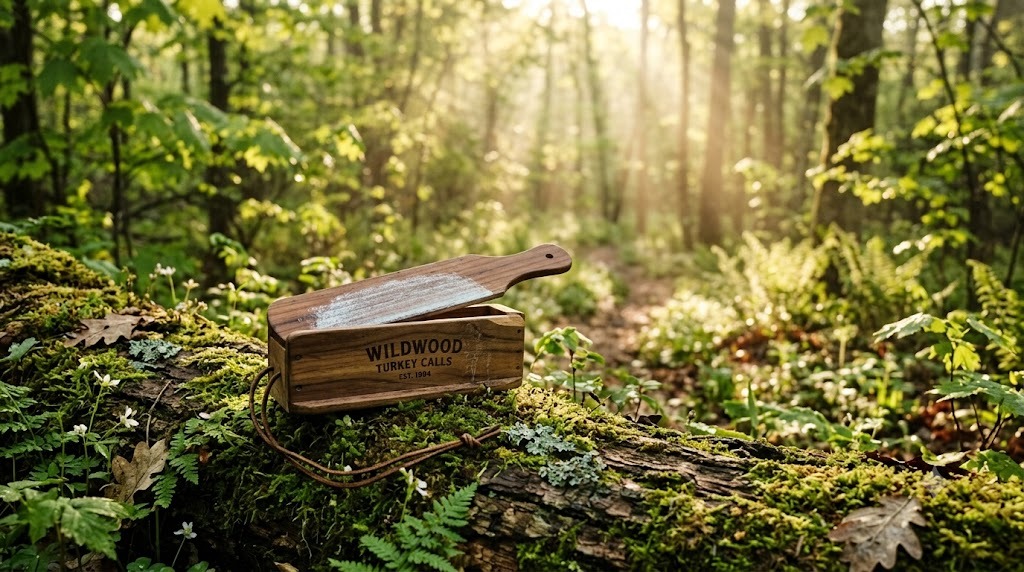
The box call has killed more turkeys than any device ever built, and it earns the record honestly: dragging the chalked lid across the box's rails produces a hen yelp so realistic, so loud and so EASY that a first-timer sounds passable in ten minutes. On windy days and big country, when diaphragm subtlety dies thirty yards out, the box is the call still reaching birds three ridges away.
What it is & the sound
A thin-walled wooden box with a hinged, chalked paddle lid; scraping the lid across the rail edges makes rasping two-note yelps, sharp cutts, clucks and (with a light touch) purrs. Different woods run different voices - walnut raspy, poplar clear.
When & where it works
All spring, and unbeatable in wind, rain-light days and open country where volume wins. The classic tool for STRIKING a distant gobbler - loud cutting that makes a longbeard answer and reveal himself.
How to run it
Basic yelp: light pressure, smooth strokes across the sweet spot, 4-7 notes in a pleading rhythm. Excited cutting: sharp broken strokes. Once a gobbler commits inside 100 yards, put the box DOWN and finish soft with a mouth or pot call.
Choosing one
One good custom or mid-priced production box outperforms five gimmicks; walnut-on-poplar is the classic starter voice. Keep it chalked (railroad/box chalk, never crayon wax), dry, and rubber-banded silent in the vest.
Practice drills
Learn the two-note yelp rhythm against real hen audio - the CADENCE kills, not tone. Drill volume control: the same yelp at whisper and at war. And drill one-hand operation on your knee for when a bird's already close.
Common mistakes
Squeezing the box (deadens it - cradle it on fingertips), running it soaked or unchalked, and finishing a close bird with it - box volume at 60 yards reads hen; at 25 it reads fraud.
⚠️ Calling regulations vary - electronic calls especially are restricted for some species, states and seasons. Always check the current official regulations for your area before hunting; this page is general technique guidance, not legal advice.