Duck Call (Single & Double Reed)
Quacks, greeting hails and feed chatter turn passing mallards into cupped-wing customers - the duck call is the marsh's sales pitch, and the quack is its entire foundation.
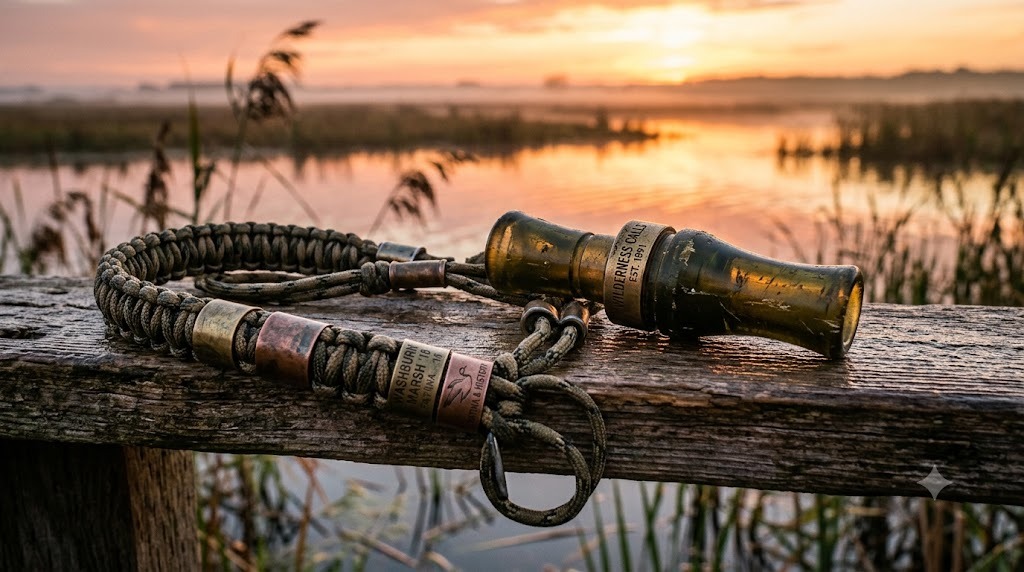
Every sound a mallard hen makes is built from one brick: the quack. The duck call - a barrel and reed you learn to 'growl' through - turns that brick into greeting hails that bend a distant flock, comeback calls that pull them off a bad line, and soft feed chatter that seals cupped wings over the decoys. Double reeds forgive beginners; single reeds reward the practiced; both live or die on a clean, honest quack.
What it is & the sound
A two-piece barrel-and-insert with one or two reeds. Air 'growled' from the chest (say 'hut' or 'quit' through it) breaks the reed into a quack; strung together those become hails, comebacks, feed rolls and lonesome-hen pleas.
When & where it works
Wherever mallards (and their cousins) work: timber holes, marsh spreads, field spreads. Calling matters most when birds are passing, not committed - the call's job is changing their minds, then shutting up.
How to run it
Read the birds and say less: HAIL distant crossers (loud descending 'KANK-kank-kank-kank'), COMEBACK when they slide off line (fast urgent 5-7 notes), then soft single quacks and feed chatter ('tikka-tikka') as they work. Wings cupped = call down.
Choosing one
Start double-reed polycarbonate (forgiving, cheap, sounds ducky wet); graduate to a single-reed acrylic for range and speed once your air is right. One good call beats a lanyard of six.
Practice drills
The quack is the gate: 'hut' through the call with chest air until each note ENDS crisply (the cut-off is the duck). Then 5-note descending hails against real hen audio; then feed rolls - 'tikka-tikka-tikka' with rolling tongue. Truck, shower, dog walk: daily.
Common mistakes
Blowing balloon-cheek air instead of growling from the chest (the #1 sound of a fake duck), calling AT committed birds (silence finishes them), and hailing birds that are already close - volume matches distance, always.
⚠️ Calling regulations vary - electronic calls especially are restricted for some species, states and seasons. Always check the current official regulations for your area before hunting; this page is general technique guidance, not legal advice.