Doe Bleat Can Call
Tip it over and it bleats - the can call makes the drawn-out estrus bleat of a ready doe, the simplest call in hunting and a proven rut-week buck puller.
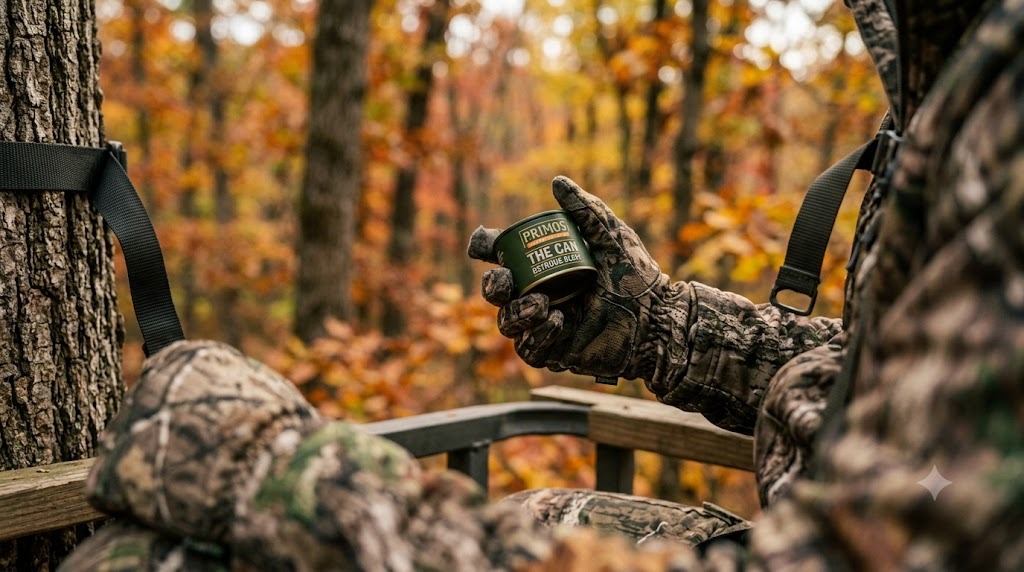
The bleat can is hunting's only call you literally cannot blow wrong: turn it upside down, and a weighted plunger draws out the nasal 'blaaaat' of an estrus doe. During the seeking and chasing phases, that sound is the one every buck in the woods is listening for - and pairing the can with a grunt tube covers 90% of whitetail vocal situations for under thirty dollars.
What it is & the sound
A sealed can with a weighted bellows that produces a 2-3 second falling doe bleat when inverted - the estrus bleat that tells bucks a doe is ready. Shorter hand-muffled tips make plain contact bleats.
When & where it works
The two weeks around peak rut, from any stand near doe traffic - bedding edges, food sources, funnels between doe groups. Also useful early season as a calming 'deer are here' sound.
How to run it
Blind-call sets of 2-3 bleats every 20-30 minutes during rut sits; follow 30 seconds later with a soft grunt - a 'doe plus interested buck' scene that pressures cruisers to hurry in. Muffle with a palm for close cover.
Choosing one
Cans differ mostly in size (bigger = louder, carries in wind) and weatherproofing - buy one with a lid or keep it in a pocket; a rain-soaked can bleats like a sick kazoo. A strip of tape over half the holes quiets it for bow range.
Practice drills
There's little to practice - so practice CADENCE: two bleats, pause, one bleat, long silence. And practice patience: set a phone timer for call intervals so you don't over-call out of boredom.
Common mistakes
Over-flipping it like a maraca, calling on a still day so loud it reads fake, and quitting after 15 minutes - bucks often show up at bleat sites a half hour after the sound.
⚠️ Calling regulations vary - electronic calls especially are restricted for some species, states and seasons. Always check the current official regulations for your area before hunting; this page is general technique guidance, not legal advice.