Rabbit Distress Call
The scream of a dying rabbit is a free-meal siren for every coyote, fox and bobcat in earshot - the open-reed distress call is predator hunting's oldest, simplest trigger.
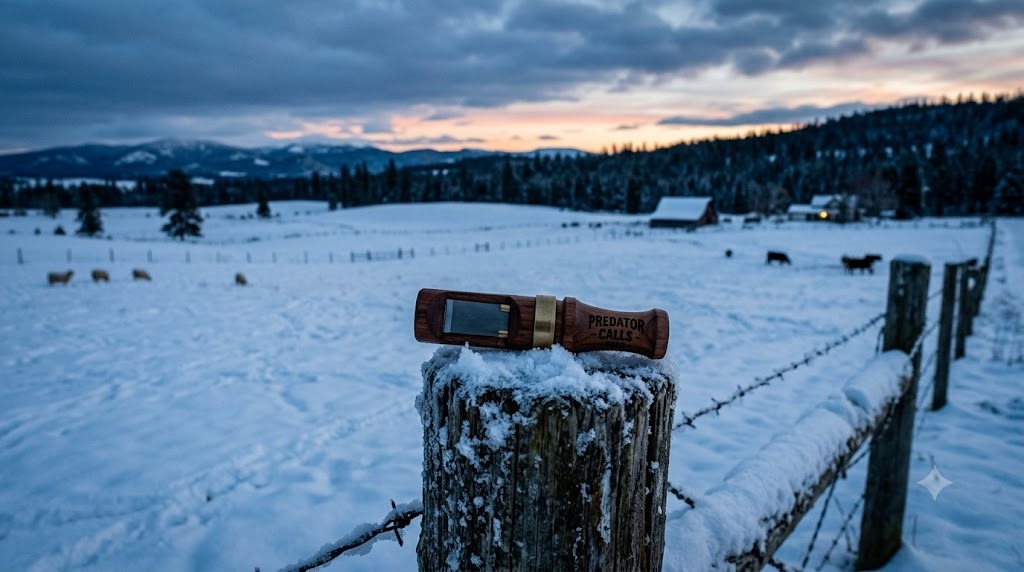
Predator calling runs on one brutal principle: nothing in nature ignores an easy meal. The wailing, cyclic scream of a rabbit in trouble - blown through a simple open-reed call - promises exactly that, and a hungry winter coyote may come at a dead run from a mile downwind-adjacent. One reed, one awful sound, endless variations: it remains the most productive hand call in the predator game.
What it is & the sound
An open-reed call (exposed reed you lip at different points) producing the raspy, desperate 'waaah-waaah-WAAAH' of a cottontail or jackrabbit in distress - plus, with lip position changes, rodent squeaks and bird distress on the same reed.
When & where it works
Winter, when food is scarce and fur is prime: dawn/dusk sets overlooking open country, downwind visibility mandatory - every canine circles to scent-check. Works on coyote, fox, bobcat (give cats twice the patience) and sometimes hawks overhead, so look before you move.
How to run it
Set up with the wind in your face and sun behind, call in 20-40 second screaming cycles with 1-2 minute silent gaps, ready from the FIRST note - hard-charging dogs arrive in seconds. Give a stand 15-20 minutes (30+ for cats), then move a half mile.
Choosing one
Any quality open-reed distress call; closed-reed versions are even easier (bite-and-blow) at the cost of versatility. Camo, shooting sticks and wind discipline matter far more than call brand.
Practice drills
Practice the AGONY arc: start loud and frantic, trail into weak, broken wails - a rabbit losing the fight, not a smoke alarm. Lip-position drill: find the squeak (reed tip) and the scream (mid-reed) and move between them mid-cycle.
Common mistakes
No downwind coverage (the circling dog winds you and vanishes unseen), calling nonstop with no listening gaps, moving your head to scan (be a stump - their eyes are built for movement), and leaving a stand at minute ten that a bobcat would have finished at minute twenty-five.
⚠️ Calling regulations vary - electronic calls especially are restricted for some species, states and seasons. Always check the current official regulations for your area before hunting; this page is general technique guidance, not legal advice.