Deer Grunt Tube
The grunt tube speaks a buck's everyday language - one soft note stops a cruiser in range, and no whitetail hunter should climb a stand without one around their neck.
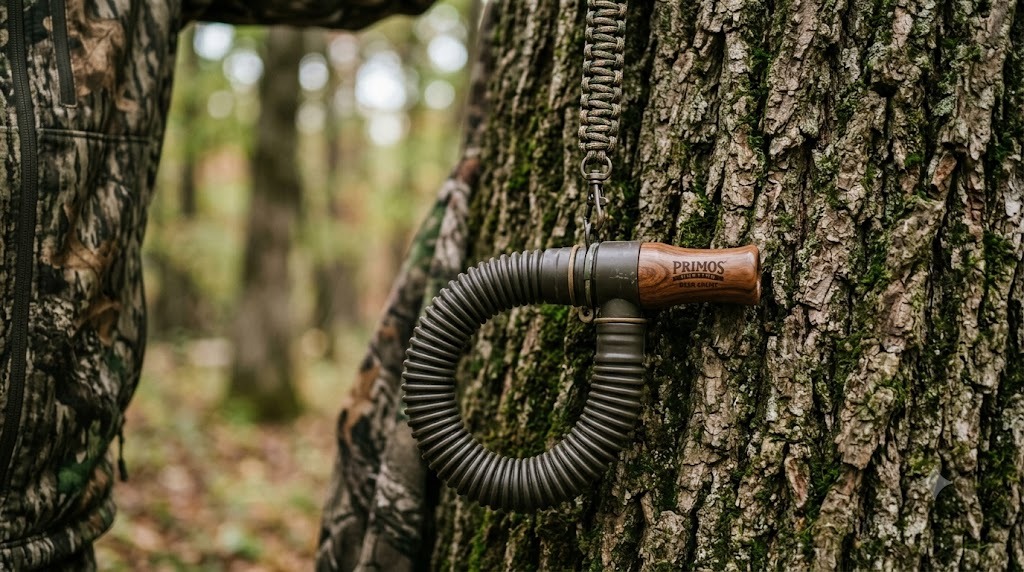
If deer calling has an entry ticket, it's the grunt tube - a simple reed-in-a-hose that reproduces the low, guttural voice bucks use all fall. It is the most forgiving call in the deer woods: hard to blow badly, deadly in the right ten seconds, and the difference between watching a buck cruise past at 80 yards and stopping him broadside at 25.
What it is & the sound
A flexible tube with an internal reed that produces the deep, pig-like grunt of a buck - from a soft contact 'urp' to the stuttering tending grunt of a buck dogging a hot doe. The ribbed hose lets you bend the tone deeper for a bigger-sounding deer.
When & where it works
Late pre-rut through the rut is prime, anywhere bucks are cruising - funnels, ridge ends, downwind of doe bedding. Its best single job: stopping or turning a buck that is visible but out of range.
How to run it
Less is everything. A single soft grunt when he's moving away; two or three moderate grunts to call blind every 20-30 minutes; a stuttered tending grunt only when a rutting buck ignores the polite version. After calling, go silent and watch downwind - he'll circle.
Choosing one
Any quality tube works; pick one with an adjustable reed (grunt-to-bleat), a ribbed extendable hose, and a rubber band-free design that won't freeze. Snort-wheeze capability is a bonus you'll rarely use but love once a season.
Practice drills
Learn three sounds on the drive to work: the single soft contact grunt, a 3-grunt blind sequence, and the tending stutter. Volume drill: practice grunting QUIETER - most hunters' 'soft' is a deer's 'loud'.
Common mistakes
Calling at a buck that's coming anyway (shut up and let him), grunting too loud and too often, and calling without watching downwind - the circler busts you before you ever see him.
⚠️ Calling regulations vary - electronic calls especially are restricted for some species, states and seasons. Always check the current official regulations for your area before hunting; this page is general technique guidance, not legal advice.