Cow Elk Call (Diaphragm)
Soft cow mews pull more bulls than all the bugling in Colorado - the diaphragm cow call is the first elk sound to learn and the one that closes the last hundred yards.
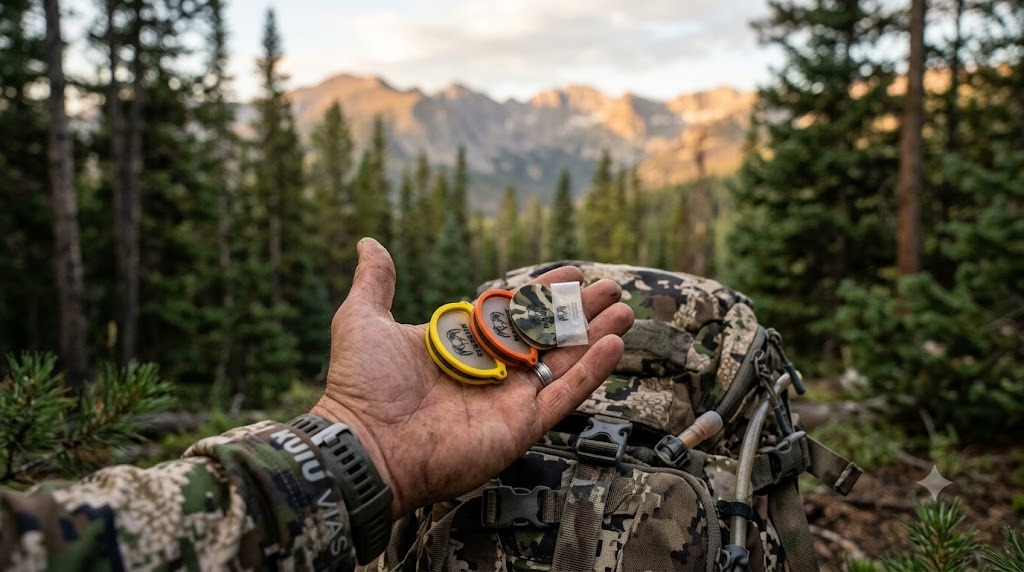
Ask working elk guides which call kills bulls and the answer is boring: cow sounds. The soft mew of a contented cow calms nervous herds, answers a bugle without threatening anyone, and gives a rutting bull the one thing he actually wants - a cow he hasn't met. A latex diaphragm on the roof of your mouth makes these sounds hands-free at full draw, which is exactly when you'll need one more mew.
What it is & the sound
A horseshoe of latex stretched in a plastic frame, pressed to the palate and blown - tongue pressure bends the pitch through mews, chirps, and the whiny estrus buzz. Hands stay free; the sound stays with you from truck to shot.
When & where it works
All September, everywhere: answering distant bugles, cold-calling dark timber, calming a blown stalk (a single mew freezes departing elk), and closing hung-up bulls the last 80 yards when bugles would push them.
How to run it
Base sequence: 2-3 soft mews, wait 15-20 minutes, repeat. On a hot bull: mew when he bugles, then SHUT UP and make him hunt you - moving away a few steps while calling sells a wandering cow. At full draw: one chirp stops him in the lane.
Choosing one
Buy a 3-pack of different latex weights and find your mouth's match; light single-reeds run easiest for beginners. Open-reed hand calls (Hoochie-style) are a zero-learning-curve backup that lives on the pack strap.
Practice drills
The commute is the classroom: hold the diaphragm with light tongue pressure, say 'pew' through it until a clean mew appears, then pitch-bend drills against real cow audio. Two weeks of drives makes a caller.
Common mistakes
Gagging on a too-big diaphragm (trim the tape ring), calling from open ground a bull can glass without committing (call from cover so he must come LOOK), and mewing nonstop - real cows mostly say nothing.
⚠️ Calling regulations vary - electronic calls especially are restricted for some species, states and seasons. Always check the current official regulations for your area before hunting; this page is general technique guidance, not legal advice.