Why You Missed That Deer
Blown opportunities on deer trace back to five causes - wind you ignored, movement it caught, a rushed shot, a range you guessed, and pressure you did not know you were applying. An honest post-mortem of each.
The short version: when a deer hunt falls apart, it is almost never bad luck and almost always one of five causes - the wind said no and you hunted anyway, the deer caught movement, you rushed a shot you had time for, you guessed a range instead of knowing it, or you educated the deer on previous sits without realising. Every one of them is fixable, but only if the post-mortem is honest. “He just knew somehow” is the story we tell instead of naming which of the five it was.
Take them in order of how often they are the real answer.
1. The wind, and the thermals you forgot
Smell is the deer’s court of final appeal. Eyes and ears make it suspicious; nose makes it gone, usually without theatre - a mature deer that winds you often just fails to appear, and the hunt dies invisibly. If deer that should have shown never showed, assume scent until proven otherwise.
The common failure is not ignorance, it is optimism: the wind was “mostly okay” for the stand, and mostly okay means a cone of scent swept across the trail the deer actually used. The second failure is forgetting thermals - on calm evenings cooling air slides downhill regardless of what the forecast arrow said, carrying you to every deer below; on calm mornings warming air pulls scent uphill. In broken terrain, thermals overrule the forecast for the first and last hour of light - which is precisely when deer move.
The fix is a rule, not a product: every stand gets wind directions it can be hunted on, decided in daylight with a milkweed pod or puffer bottle, and a wrong wind means a different stand, full stop. Sprays and carbon clothing shave the margins and lose to physics; the deep dive is in wind and scent control, and weather and animal movement covers how fronts reshuffle the deck.
2. Movement it caught
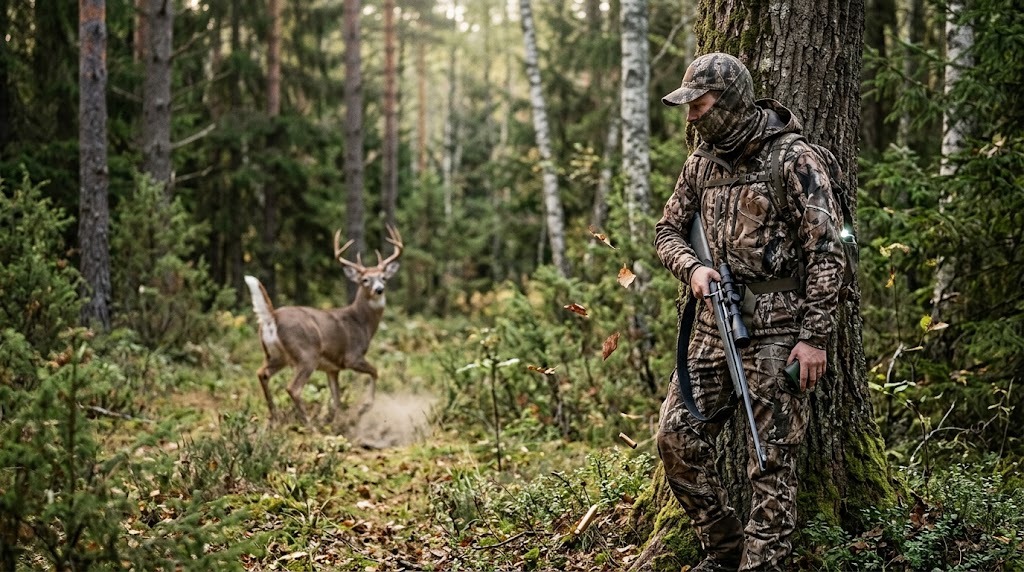
A deer’s eye is tuned for exactly one thing: motion against a still background. What busts hunters is rarely the outline - it is the hand raised to the binoculars while a doe you never saw watched from ninety yards, the head-turn on the skyline, the bow arm drawn while the buck’s head was up.
The discipline that fixes it:
- Move when the deer cannot see you - head behind a tree, feeding, walking away. If it is looking your way, you are furniture.
- Assume unseen eyes. The buck you are watching is often not the nearest deer. Scan wide before any movement bigger than breathing.
- Slow beats small. A slow full draw is safer than a quick small one; speed is what the eye is built to catch.
- Break the skyline and the backdrop. A stand with cover behind it forgives movement; a stand against open sky reports it.
If deer keep spotting you at the same stand, the stand is the problem - too open, too low, or hung on the wrong side of the tree for the approach the deer actually use.
3. The shot you rushed
Most missed shots at deer are not marksmanship failures at the range; they are process failures at the moment. Buck fever is real and does not fully go away - experienced hunters just have a routine that runs anyway.
The honest culprits: shooting the instant an opening appeared instead of the second after settling; shooting at “the deer” rather than picking one hair-sized spot; yanking the trigger as the crosshair swung past; standing awkwardly because the shot came from the direction you did not prepare. Each has the same antidote - a short pre-shot routine (feet, breath, spot, squeeze) practised until it is what your body does under adrenaline, plus the humility to let a marginal opportunity pass. A deer given ten more seconds usually offers a better shot; a deer shot at badly offers none for the rest of the season. Where exactly to hold, and which angles to refuse, is the shot placement guide’s territory, and it is worth knowing cold before the season, not during it.
Dry-fire and draw practice from odd positions - seated, twisted, off the wrong shoulder - is worth more than another box of ammo from a bench.
4. The range you guessed
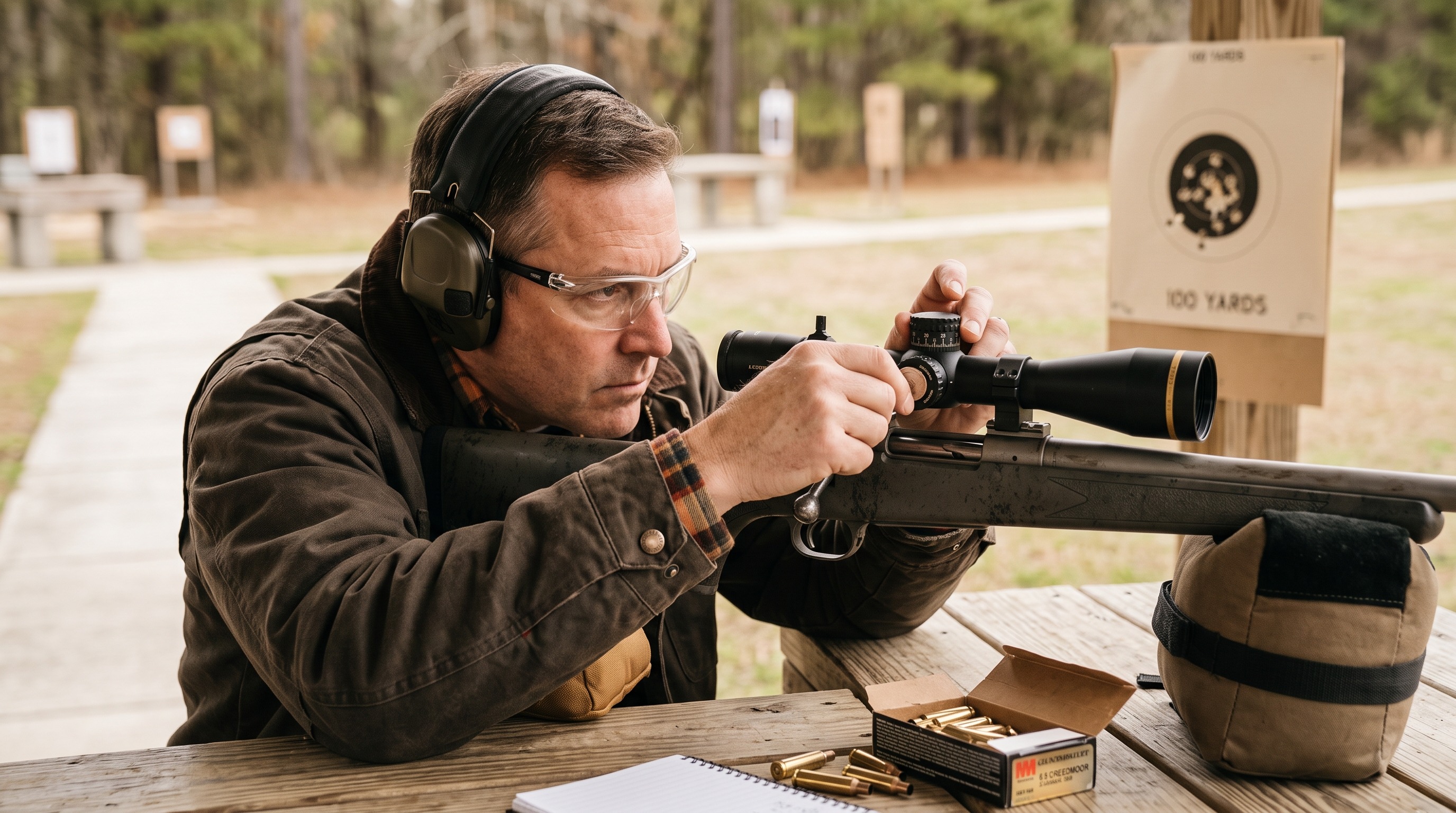
Under 150 yards with a rifle, range estimation barely matters. With a bow, it is most of the game: at typical whitetail distances an error of five yards is the difference between a double-lung hit and a wound or a clean miss, because the arrow’s arc is steep and the vital zone is not tall.
Guessing under adrenaline, across a ravine, in failing light, over snow - humans are reliably bad at all of it, and reliably confident anyway. The fix is boring: pre-range landmarks from your stand the moment you settle in (that rock 25, the fence gap 33, the oak 40), so the number already exists when the deer steps out and your rangefinder would be one more movement it could catch. For rifle hunters stretching further, how to sight in your rifle plus an honest zero beats holdover folklore every time.
5. The pressure you applied without noticing
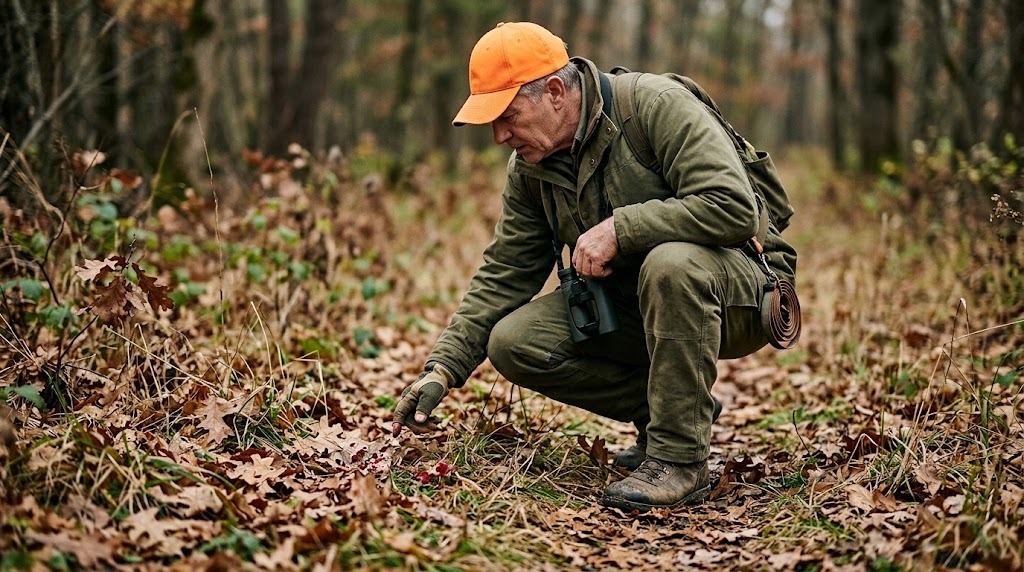
Sometimes the miss happened days earlier. Deer - mature bucks especially - audit their world constantly, and they respond to surveillance by going nocturnal or shifting a hundred yards, which is enough. If a stand produced sightings the first two sits and nothing since, the deer did not leave the country. They learned your entry route, your exit, or your schedule.
The usual self-inflicted wounds: walking in through the feeding area your stand overlooks, checking trail cameras at midday every third day, leaving after dark by bumping the field full of deer you sat all evening trying not to disturb, and simply sitting the same stand until it went stale. Why bucks go nocturnal unpacks the mechanism; the summary is that access routes deserve as much scouting as stand sites, and the best stand is worthless if getting to it announces the sit.
Run the post-mortem
After any blown opportunity, ask the five in order - wind honest? movement caught? shot rushed? range known? area burned? - and write the answer down while it stings. One season of honest post-mortems teaches more than five seasons of “he just knew”. The pattern that emerges is usually embarrassing and usually the same one repeating, which is excellent news: you only have to fix one thing, and how to hunt whitetail deer covers rebuilding the fundamentals around it.