The October Lull, Explained
The mid-October slump in whitetail sightings is real for many hunters, but GPS-collar research suggests deer do not stop moving - they move differently. What actually changes in early to mid October, and how hunters adjust instead of waiting it out.
Regulations and safety come first. Season dates, legal hunting hours, weapon types, baiting rules and tag requirements vary by state and province and change from year to year. Your wildlife agency’s current regulations are the authority on what is legal where you hunt, not this article. Most tree stand accidents are falls; a full-body harness connected from the moment you leave the ground is the standard safety practice. We do not give legal or safety advice - check with your agency and your hunter education instructor.
The short version: the “October lull” is the stretch in early to mid October when many hunters stop seeing deer they were seeing in September. It is real in the sense that sightings drop. But research tracking deer with GPS collars has generally found that deer do not simply stop moving. They shift where and when they move - in response to changing food, warm weather, falling leaves and hunting pressure. The hunters who do well in October are the ones who follow the change instead of waiting for November.
What hunters notice
The pattern is familiar. In September, bucks show up on field edges in daylight on a predictable schedule. Then archery season opens, a few people walk in and out of the woods, the weather stays warm, and within a week or two the same deer seem to disappear. Trail cameras show them only at night, or not at all.
It is easy to conclude that deer are “locked down.” But what the cameras and sightings actually show is a change in pattern, not an absence of deer.
What is actually changing
Several things happen at once in early to mid October:
Food sources shift. Summer feeding on soybeans, alfalfa and field edges gives way to acorns in many regions. When acorns drop, deer can feed inside the timber without ever stepping into an open field. A buck that walked past your field-edge stand in September may now be feeding a few hundred metres away under white oaks. Our guide to hunting acorn flats covers how to find and set up on them.
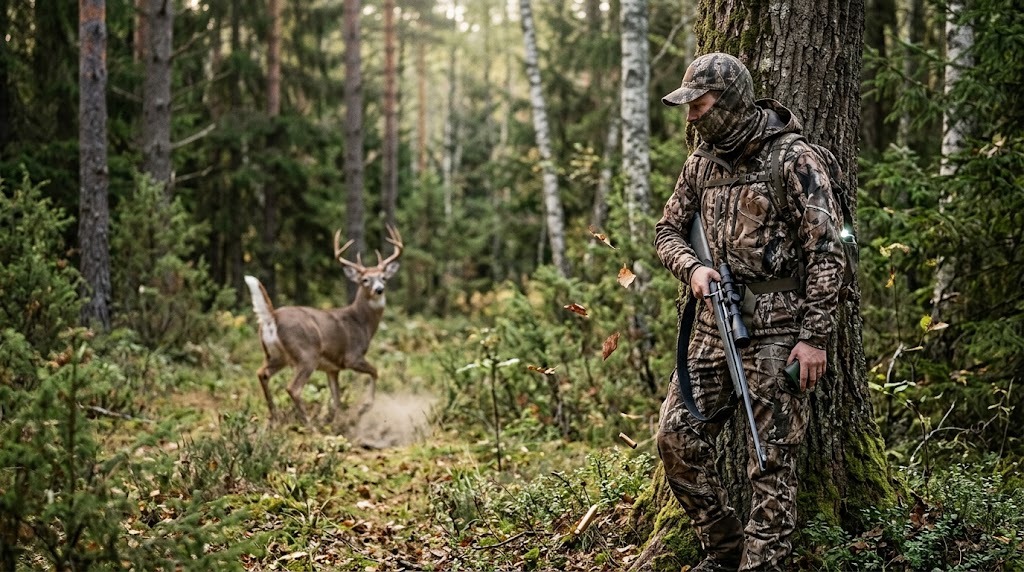
Hunting pressure increases. Opening week puts human scent, noise and trails into the woods. Mature deer, especially, respond by shifting movement to darkness and to thicker cover. We cover this in detail in why bucks go nocturnal.
Warm weather hangs on. Early October can still be warm in much of the country. Deer carrying a new winter coat move less in daytime heat and more at night.
Cover is still thick. Leaves are still on the trees and crops may still be standing, so deer have more places to move without being seen.
The pre-rut has not started. Bucks have broken from bachelor groups and are making rubs and scrapes, but most are not yet actively searching for does in daylight. That typically builds toward the end of October in many northern regions, though timing varies with latitude.
None of these factors individually stops deer. Together, they move deer away from the places hunters watched in September.
What the research suggests
Studies using GPS collars on whitetail deer, carried out at several universities in the eastern United States, have looked for a mid-October drop in movement and generally not found a dramatic one. Some found movement fairly steady from late September into October, then a rise with the rut. The measured changes tended to be in daylight movement and location, not total distance travelled.
This is a useful reframe. If deer are still moving roughly as much as before, the question becomes where they have gone, not whether to stay home.
Research findings differ between regions, and no single study settles the question. It is best read as a correction to the idea that deer simply shut down.
How hunters adjust
Hunt the food that is working now. When acorns are dropping, hunt near the productive trees rather than the fields. White oak acorns are usually preferred over red oak when both are available.
Hunt afternoons more than mornings. Walking into a stand in the dark in October often means bumping deer off the food you want to hunt. Many hunters favour evening sits near feeding areas and save mornings for travel routes they can reach without crossing the food.
Reduce your impact. Fewer sits in your best spots, careful entry and exit routes, and attention to wind all help. Deer that have not been disturbed stay easier to pattern into November.
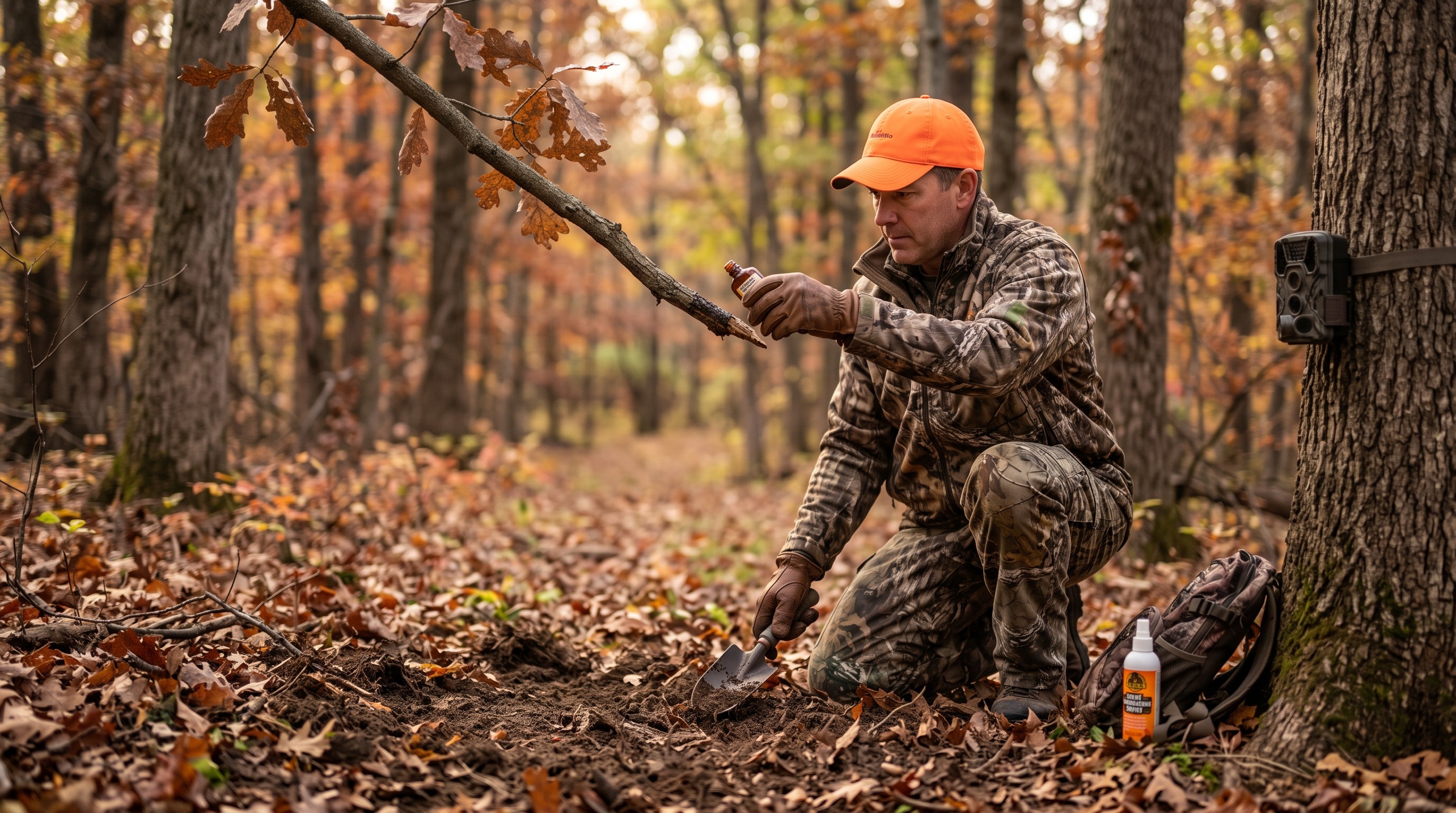
Use cameras to watch the change. Moving a camera from a September field edge to a travel route in the timber or a fresh scrape line can show you where deer have shifted.
Watch the cold fronts. A significant temperature drop in October often triggers a burst of daylight movement. Many hunters save their best stands for the first cool days after a warm spell.
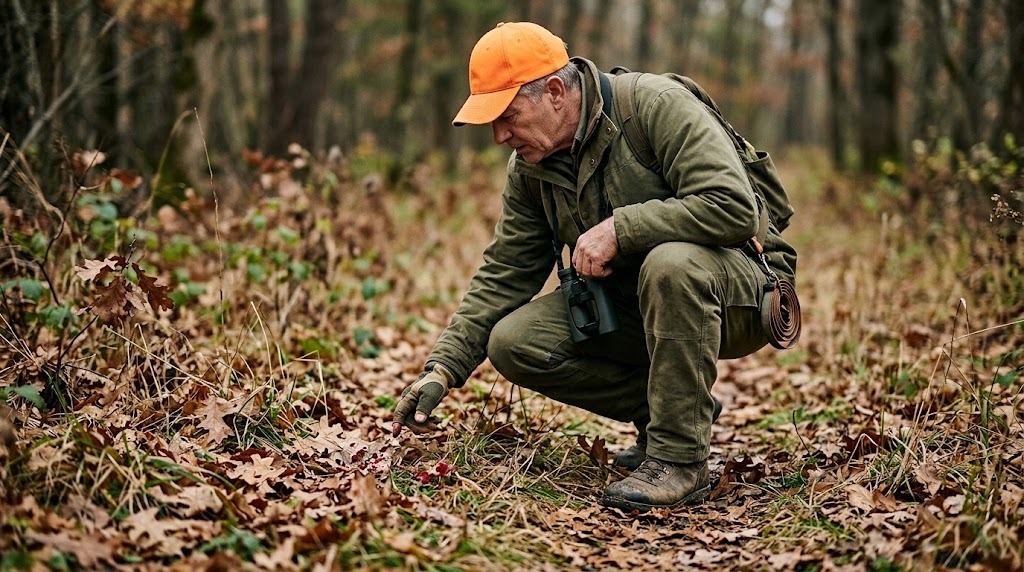
Scout for pre-rut sign. Fresh rubs and scrapes toward the end of the month show where bucks are travelling. The whitetail deer profile covers their general behaviour through the season.
The honest takeaway
The October lull is real in the sense that it is harder to see deer. But the deer are still there. The ones who were predictable in September are adjusting to acorns, weather and your presence in the woods.
The hunters who keep seeing deer in October are usually the ones who move with them - onto new food, away from pressured spots, and onto the cool afternoons when daylight movement picks up again.
🛒 Recommended Gear on Amazon
- Cellular trail camera - browse current options and reviews on Amazon.
- Wind checker powder - browse current options and reviews on Amazon.
As an Amazon Associate, we earn from qualifying purchases - at no extra cost to you. This helps us keep producing free, in-depth guides.