How to Make Mock Scrapes
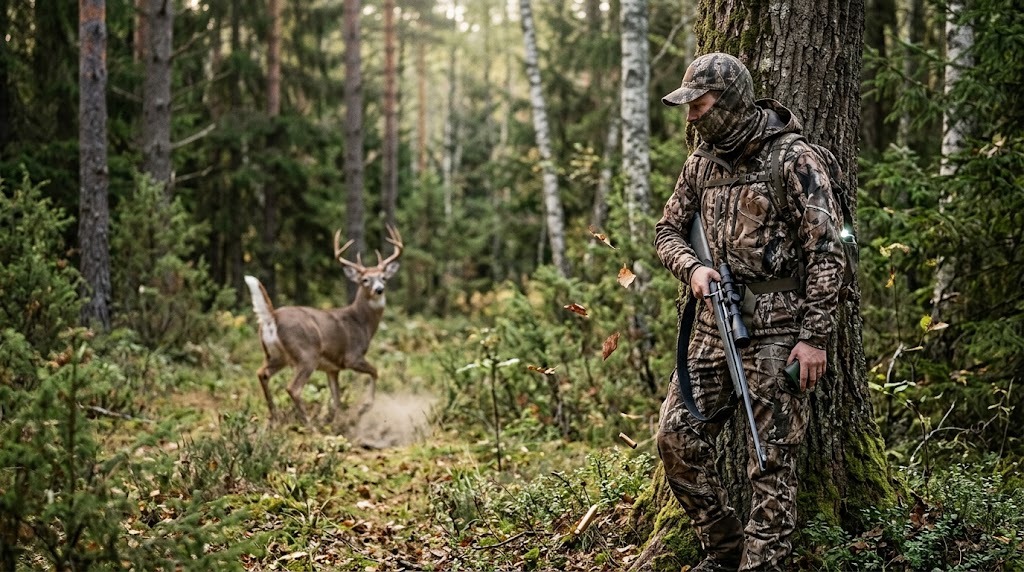
A mock scrape is a hand-made copy of a buck's signpost - a pawed patch under a licking branch - used to inventory deer on camera and draw movement toward a spot you can hunt. Where to put one, when to make it, and the scent rules to check first.
Check your regulations before using any scent. A growing number of states and provinces restrict or ban natural deer urine and other deer-derived scents because of concerns about chronic wasting disease (CWD). Rules on attractants, and on what you may do on public land, also vary widely. Your state or provincial wildlife agency is the authority - read its current regulations or call them. This article explains the technique; it is not legal advice. Our regulations hub is a starting point for finding the right agency.
The short version: a mock scrape is a patch of bare soil you clear under an overhanging branch in a place bucks already travel. Deer find it, investigate it and often adopt it, leaving scent and visiting it again. For most hunters the real value is not a guaranteed shot - it is a reliable place to put a trail camera and learn which bucks are around, plus a small nudge to movement past a stand you can actually hunt. Make them early, make them near cover, keep your own scent out of it, and check the law before you open any bottle.
What a real scrape is
A scrape is a whitetail communication post. A buck paws the leaves and soil away to bare earth, usually under a low overhanging branch. That branch - the licking branch - is the most important part. Deer chew it, and rub their forehead and the glands near their eyes on it, leaving scent. Many bucks also urinate over their tarsal glands onto the scrape.
Bucks and does both visit scrapes, and a single scrape can be used by many deer. Scrape activity builds in the weeks before the rut and usually peaks in the pre-rut phase, then drops once breeding is in full swing. Trail-camera observations commonly find that a large share of scrape visits happen after dark, which is one more reason to set expectations accordingly. For how scrapes fit alongside rubs, trails and beds, see our guide to reading deer sign.
When to make them
Earlier than most people think. The best time is late summer through early autumn, before bucks begin scraping heavily on their own. A scrape that deer have been using for weeks is far more useful in late October than one made the day before you hunt.
Mock scrapes can also become part of a local “community” of scent posts that deer check year after year if you maintain the spot. Our breakdown of rut phases and strategy explains why the pre-rut weeks are when scrape sites tend to matter most.
Where to put one
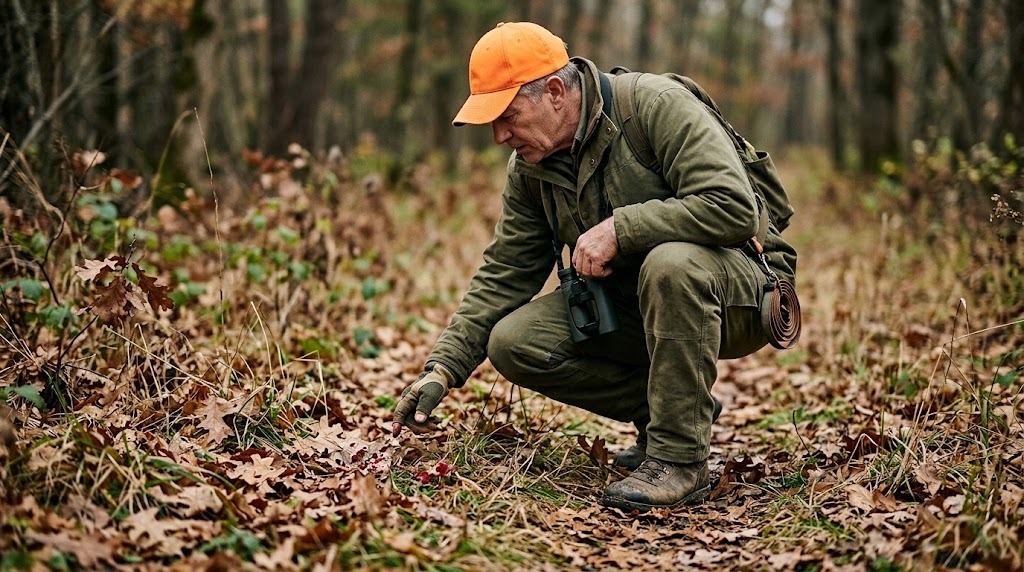
A mock scrape works best where deer are already walking. It cannot create movement from nothing.
Good locations:
- Along travel routes between bedding and feeding areas.
- Field and food plot edges, just inside the cover rather than out in the open.
- Inside corners, pinch points and saddles, where terrain funnels movement.
- Near existing natural scrapes, if you already know where bucks sign-post.
Just as important is how you get in and out. Choose a spot you can reach with the wind in your favour and without walking through bedding cover. If it is meant to be hunted over, place it within comfortable, ethical range of a stand or blind with a clear shooting lane - and set it slightly off the main trail so a deer approaching it turns and offers a better angle.
How to make it
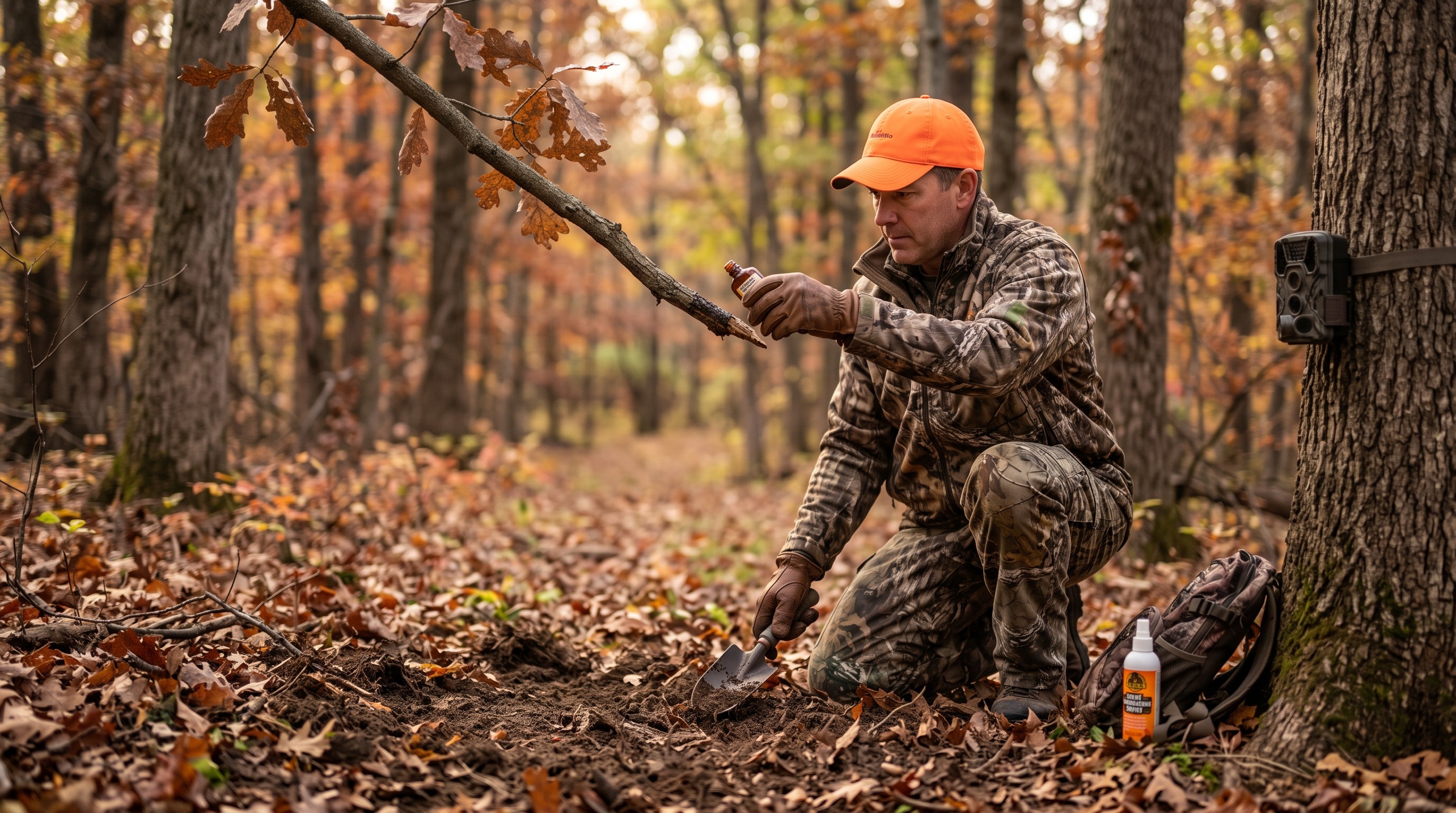
1. Find or add a licking branch. Look for a branch hanging at roughly 1.2-1.7 m (4-5.5 ft) above the ground - about head height to a standing deer. If none exists in a good spot, you can cut a flexible branch from a tree deer already browse and fasten it in place to a sapling, a stake or a rope strung between two trees.
2. Clear the ground. Beneath the branch, rake or scrape a patch of about 60-90 cm (2-3 ft) down to bare soil. A stick, small rake or boot heel does the job.
3. Keep your scent to a minimum. Wear clean rubber boots and gloves, touch as little as you can, and do not linger. Human scent on the branch is the quickest way to make a mature buck avoid it. Our guide on wind and scent control goes into how scent and air movement work.
4. Decide on scent - only after checking the rules. Many hunters use no added scent at all and let the fresh soil and branch attract the first deer. Where it is legal, some use synthetic scent products or scent from deer glands. In areas with restrictions, a bare mock scrape still works well - the licking branch is doing most of the work.
5. Leave it alone. Once made, the less you visit, the better.
Pairing it with a trail camera
Mock scrapes are one of the best camera locations there is.
- Set the camera a short distance away and angled across the scrape rather than straight at it, so deer walking in are captured from several positions.
- Mount it a little above head height and angled down to reduce spooking animals and the chance of theft.
- Choose settings that capture video or bursts, since the most useful footage shows how deer approach and work the branch.
- Check cards infrequently and only when conditions let you slip in cleanly.
For more on camera height, angle and avoiding the sun, see our trail camera placement tips.
Common mistakes
- Putting it where there are no deer. A scrape amplifies existing movement; it does not manufacture it.
- No licking branch. Bare soil alone rarely gets used.
- Too much human scent. Heavy handling and repeated visits educate deer.
- Starting too late. Scrapes made at the peak of the rut have little time to become established.
- Using scent without checking the law. CWD-related restrictions change and are enforced.
- Expecting daylight bucks on command. Much activity is nocturnal. Treat the camera information as valuable in itself.
A few well-placed mock scrapes can tell you more about the bucks on a property in one autumn than hours of glassing. Set them early, keep them clean and legal, and let the deer do the rest.