Reaching Your Stand Before Dawn
Getting to a morning setup in the dark: why hunter education recommends tree stands only in daylight, ground-level alternatives, planning and marking the route, leaving a hunting plan, a haul line and a fall-arrest system attached from the ground, and the rules to check on markers and legal hours.
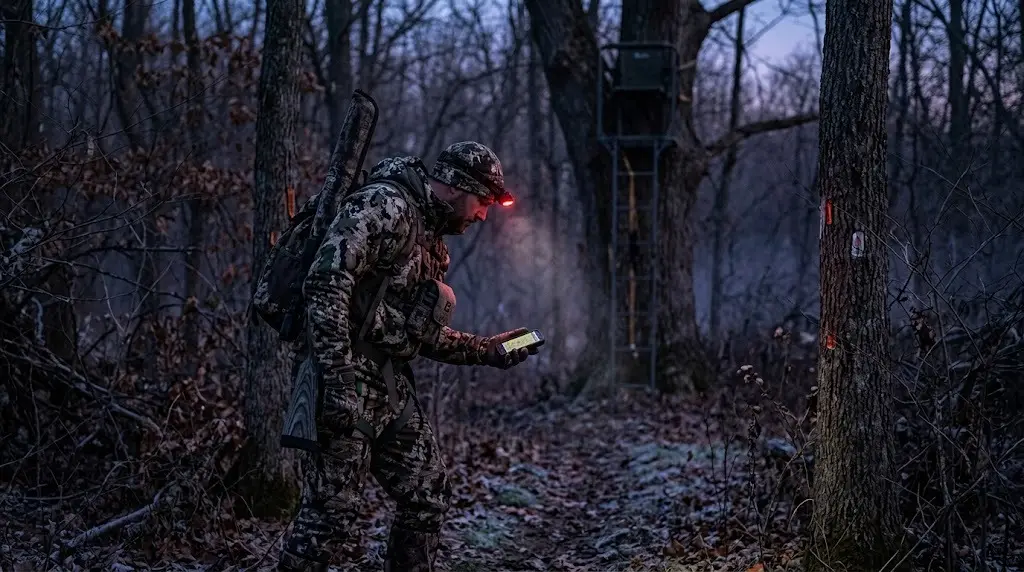
Safety first. The Alaska Bowhunter Safety Course recommends using a tree stand only during daylight hours. Climbing in the dark adds risk where the Nebraska bowhunter course says most tree-stand falls happen: climbing up or down. If you hunt from a stand at first light, think hard about whether to climb before light at all; a ground blind or a ground setup until it’s light are alternatives.
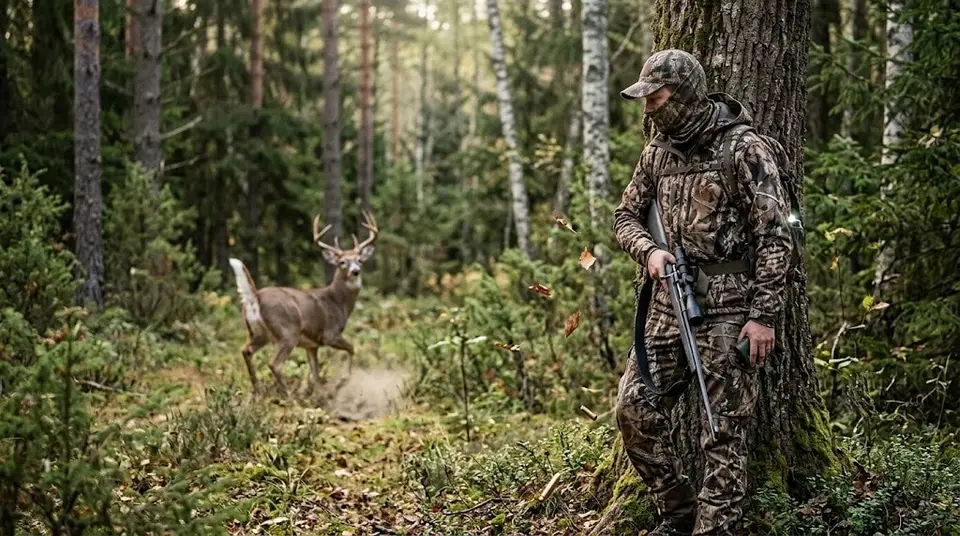
Morning hunts often depend on getting set up quietly before animals start moving. An MDC article on spring turkeys, for example, advises arriving at a field before any hint of dawn so the birds forget the noise of your setup by daybreak. This guide covers planning the walk in and getting set up safely, following the Alaska course and the Missouri Department of Conservation (MDC).
Plan the route in daylight
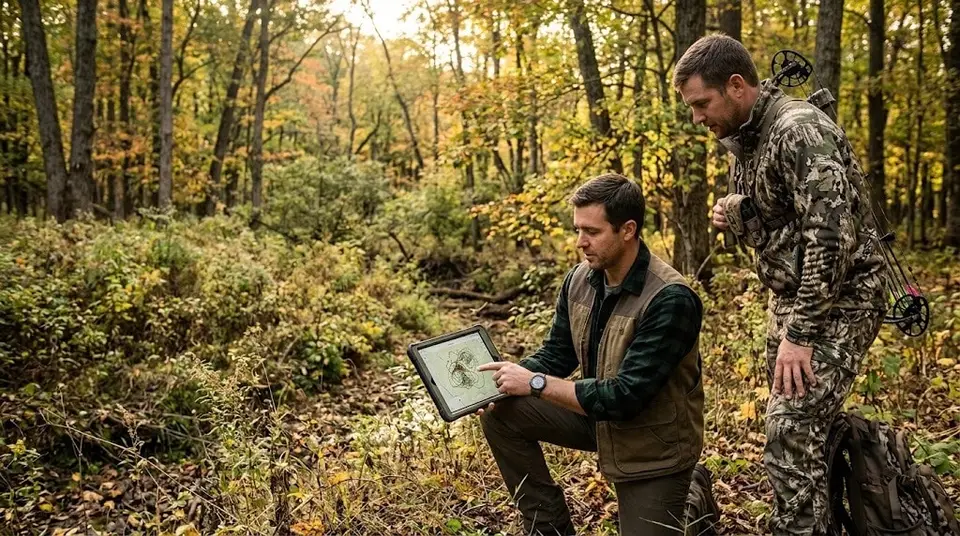
- Scout it first: walk the route in daylight while scouting; see our scouting guide.
- Approach with the wind: plan a route that keeps your scent away from where you expect game; see our wind and scent control guide.
- Leave a hunting plan: the Alaska course says to tell a family member or friend where and with whom you’re hunting, your route and any alternate if weather changes the plan, and when you expect to return, and not to stray from it without telling them.
Mark the route
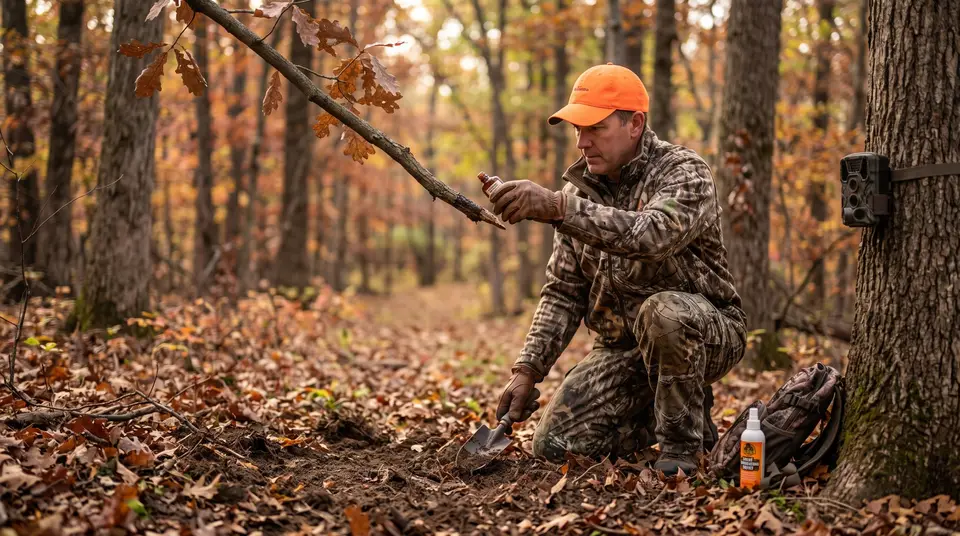
Reflective markers can help you follow a route in the dark, but whether you can use tacks, tape or flagging, and whether you must remove them, depends on the land: check your state’s and the land manager’s rules, especially on public land, and on private land ask the owner.
Get into the stand safely (Alaska course)
- Use a stand made, certified or tested to industry standards, and read its instructions every season.
- Wear a fall-arrest system (FAS) with a full-body harness, attached to the tree from the moment you leave the ground until you’re back down. A tree-stand safety rope with a prusik knot keeps you attached the whole way up and down. Our tree stand safety harness guide covers the gear.
- Three points of contact when climbing, and keep hold of the climbing system until you’re sure you’re secure.
- Never climb with your bow or gun. Use a haul line: arrows in a covered quiver secured to the bow, the line tied to the bow, the bow set away from your climbing route, the line’s end slipped (not tied) through your belt, then haul it up once you’re secured. Unload firearms before hauling them up or down.
- Set the tether with no slack while seated, with the tree strap at head height when standing.
- Be rested, and carry a signalling device such as a whistle, phone, radio or personal locator beacon.
Before you leave the truck
- Hunting plan left with someone.
- Fall-arrest system, haul line, light and signalling device checked.
- Legal shooting hours for your state and season known; arriving early doesn’t change when you may shoot.
Sources
- Alaska Bowhunter Safety Course (bowhunter-ed.com): Protect against accidental falls, Fall-arrest systems, Tree stand rope safety system, Hauling hunting equipment into a stand and Preparing a hunting plan. Read 28 October 2026.
- Nebraska Bowhunter Safety Course (bowhunter-ed.com), Crossbow hunting from an elevated stand. Read 28 October 2026.
- Missouri Department of Conservation, Decoying spring turkeys. Read 28 October 2026.
Recommended Gear on Amazon
- Reflective trail markers - browse current options and reviews on Amazon.
- Red light headlamp - browse current options and reviews on Amazon.
- Tree stand lifeline - browse current options and reviews on Amazon.
As an Amazon Associate, we earn from qualifying purchases - at no extra cost to you. This helps us keep producing free, in-depth guides.