Tree Stand Safety Harnesses Compared
What state wildlife agencies say about tree stand safety: a full-body harness, a lifeline that keeps you connected from the ground up, three points of contact, a haul line - and what to do if you are left hanging.
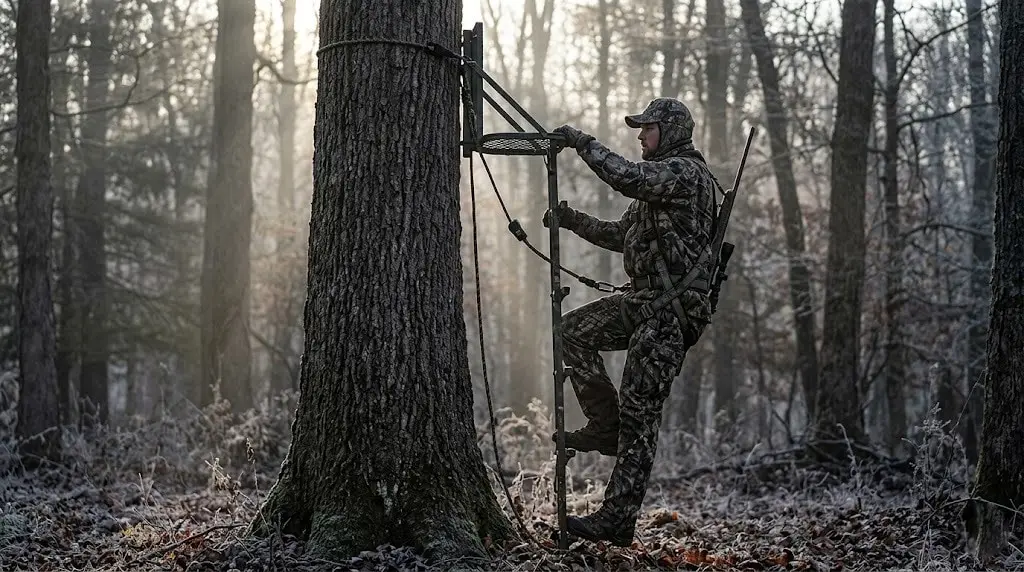
A fall from an elevated stand can kill or cripple, and most of the protection comes down to one habit: being attached to the tree from the moment your feet leave the ground until they are back on it. This page gathers what state wildlife agencies and the US workplace-safety agency publish on harnesses, lifelines and suspension after a fall. If you are still deciding whether to hunt elevated at all, weigh it against the alternative in our tree stand versus ground blind comparison.
Safety note. This is a reading guide, not a safety course and not a substitute for your state’s hunter-education class. Follow the manufacturer’s instructions for any stand, harness or heater, and your state’s rules first.
How Common Falls Are
The Wisconsin Department of Natural Resources puts numbers on it for its own hunters: one-quarter of the state’s bowhunters have experienced a fall or near fall from an elevated stand, and less than half of Wisconsin deer hunters use a safety harness every time they climb. The same page cites a 2003 survey in which two-thirds of tree stand hunters owned a harness and less than one-third reported actually using it.
Owning the equipment, in other words, is not the problem. Wearing it every time is.
The Rules the Agencies Agree On
Wisconsin’s list is short:
- Always wear a full-body harness, also known as a fall-arrest system.
- Use a lifeline when climbing up and down - it keeps you connected from the time you leave the ground.
- Keep three points of contact while climbing into and out of the stand: two hands and a foot, or two feet and a hand.
- Use a haul line to raise and lower your unloaded firearm or bow. Nothing in your hands while you climb.
- Use a short tether between you and the tree when seated.
- Choose a tree that is substantial enough to support your weight.
Virginia’s Department of Wildlife Resources adds its own wording for the same habits - harness up before you climb up, read the instructions that came with the stand, inspect a stand for damage before the season begins and before and after each use, and unload the gun or bow before climbing or descending.
New York’s Department of Environmental Conservation, in its tree stand best practices, begins with the manufacturer’s instructions and warnings, and ends with two points that matter when something goes wrong: let someone know where you will be hunting and when you will return, and carry your emergency equipment in your pockets - not in a pack hanging in the tree.
The Harness
A full-body harness has leg straps as well as chest and shoulder straps, and attaches to the tree behind you. Every agency above specifies full-body; a belt round the waist or chest is not what they mean.
What to check when buying:
- Does it meet the industry standard? Wisconsin’s DNR points hunters to the Treestand Manufacturers Association’s list of products that meet its standards, and to the association’s free online course.
- Does it fit you over the clothes you will wear in the cold? Adjust it at home, on the ground.
- What do the instructions say about inspection, about retiring the harness after a fall, and about its service life? Follow them; they differ by maker.
Harnesses compared
| Harness | Weight range | From the maker | Included | Links |
|---|---|---|---|---|
| Hunter Safety System Ultra-Lite | Three sizes from 100 to 300 lb | 2.5 lb; ventilating mesh upper; shock-absorbing tether; quick snap buckles and rubber-coated leg buckles | Adjustable tree strap; suspension relief strap that doubles as a deer drag; instructions | See on Amazon · Maker’s page |
| Hunter Safety System Pro-Series | Three sizes from 100 to 300 lb | Mesh and lighter fabrics, which HSS says make it 40% lighter than its earlier models; eight pockets and binocular or rangefinder straps; shock-absorbing tether | Adjustable tree strap; suspension relief strap; instructions | See on Amazon · Maker’s page |
| Hunter Safety System 4X/5X | Hunters up to 400 lb, the only HSS harness that size | Ten pockets; binocular or rangefinder straps; shock-absorbing tether | Lineman’s climbing rope; rope-style tree strap with carabiner; two suspension relief straps | See on Amazon · Maker’s page |
| Hunter Safety System Reflective Lifeline | - | A lifeline that keeps you connected from the ground to the stand; reflective so you can find the stand with a flashlight | Carabiner; sound dampeners | See on Amazon · Maker’s page |
How we put this together. Three harnesses and a lifeline, all from Hunter Safety System, compared on what the maker states on its own product pages, checked on 26 October 2026. We used one maker because its pages list the weight range and what comes in the box; we could not find or read Summit’s and Muddy’s harness pages. We have not tested any harness. Whatever you buy, look for it on the Treestand Manufacturers Association’s product list: the association says a listed product means a representative production model was tested by a third-party firm and certified to meet the industry standards TMA recognizes, while TMA itself does not test or approve products (TMA). There are no prices here: the Amazon link searches for the exact model, and we may earn a commission if you buy through it.
Each harness above comes with a suspension relief strap, which matters for the section below on being left hanging.
The Lifeline
A harness tethered at the top protects you in the stand. It does nothing on the way up or down - and that is what a lifeline (also sold as a safety line or safety rope) is for: a rope fixed to the tree above the stand and running to the ground, with a sliding knot or device that your harness tether clips to. The knot slides as you climb and grips if you fall.
Install it as the maker’s instructions say, clip in at the bottom, and stay clipped in until you are down again. For hanging or moving a stand, the lineman’s-style rope supplied with many harnesses lets you work with both hands while attached; again, use it the way its instructions show.
A home-made line is not the place to save money.
If You Fall and Are Left Hanging
A harness stops the fall. Hanging in it is the next danger. Wisconsin’s DNR warns that suspension trauma can happen in less than 20 minutes and can be fatal, and advises attaching an additional foot strap to the harness, which takes pressure off the upper legs if you fall.
The US Occupational Safety and Health Administration describes the same hazard for workers in fall-arrest harnesses. Its safety bulletin on suspension trauma says that hanging immobile lets blood pool in the legs, which can lead to unconsciousness, and gives this guidance:
- Get out of suspension as quickly as possible - back onto the stand, the steps or the tree if you can reach them.
- If you cannot, pump your legs frequently to keep the muscles working, and use a foothold - this is what the relief strap is - to take the pressure off, delay symptoms and give your legs something to push against.
- Afterwards, see a doctor, even if you feel fine. OSHA notes that delayed effects are possible and are hard to judge on the scene.
So: carry a relief strap on the harness, a phone and a whistle in pockets you can reach while hanging, and know before you climb how you would get back to the stand or the steps.
Tell Someone
Before any hunt, tell someone:
- Where the stand is - New York’s DEC suggests a map showing its location
- When you expect to be back
- Where the vehicle is parked
A hunter hanging in a harness needs somebody who knows where to look, and when to start looking.
Stand by Stand
Climbing stands move up the tree with you, so there are more moments at which you are shifting your weight. Stay attached to the tree throughout, and follow the maker’s sequence exactly.
Hang-on stands with climbing sticks are a common choice for whitetail deer. Straps and other attachments left outdoors age. Wisconsin’s DNR puts it bluntly: wood can rot, tree steps snap, railings fail and climbers slip. Check every attachment, replace anything doubtful, and do not alter the equipment.
Ladder stands still call for a harness. The agencies’ advice covers every type of elevated stand.
Children and New Hunters
A harness and a lifeline from the first climb, with no exceptions - as routine as a seat belt. Your state’s hunter-education course is the place to start, and the Treestand Manufacturers Association’s free online course is a good thing to do together.
Before Every Season
Virginia’s Department of Wildlife Resources tells hunters to inspect a stand for damage before the season begins and before and after each use. Things to look at:
- cables, chains and welds
- nuts and bolts
- straps and other attachments
- the platform and the steps
Look at the tree as well: dead limbs overhead, rot, a lean. Replace anything doubtful.
FAQ
How long can you hang in a harness? Not long. Wisconsin’s DNR says suspension trauma can happen in less than 20 minutes and can be fatal. Get your weight onto a foothold or back onto the stand at once.
Are climbing sticks safe? Used as their maker instructs, and with you attached to the tree while you install and climb them.
Do I need a harness in a ground blind? No. Check your state’s rules on hunter orange.
Can I share a harness? Only if it is adjusted to fit each person who wears it, every time.
What if my harness gets wet, or I fall in it? Follow the maker’s instructions on drying, inspection and replacement, and replace any harness that shows fraying or damage.
Conclusion
A full-body harness, a lifeline and a relief strap, worn every time - including when you are “just climbing up to check the stand”. Read the instructions, inspect the stand, keep three points of contact, haul your gear up on a line, and tell someone where you are.
Recommended Gear on Amazon
- Tree stand safety harnesses - browse current options and reviews on Amazon.
- Tree stand lifelines - browse current options and reviews on Amazon.
- Suspension relief strap - browse current options and reviews on Amazon.
As an Amazon Associate, we earn from qualifying purchases - at no extra cost to you. This helps us keep producing free, in-depth guides.