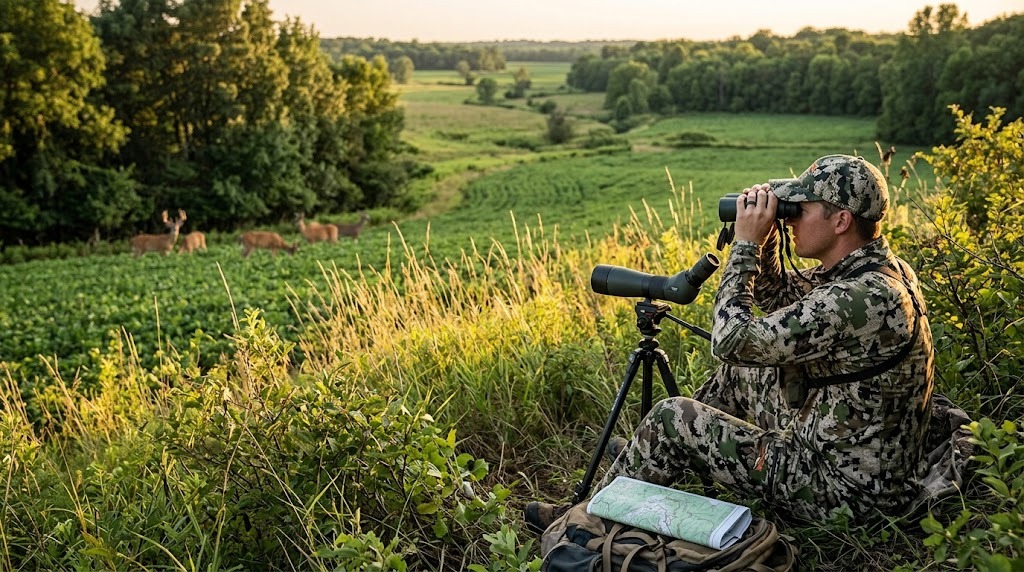
Why Bucks Go Nocturnal
The short answer: bucks don't truly become nocturnal - hunting pressure teaches them to move in the last minutes of light and shrink their daylight range. Here is what the research says and how to hunt an 'invisible' buck.
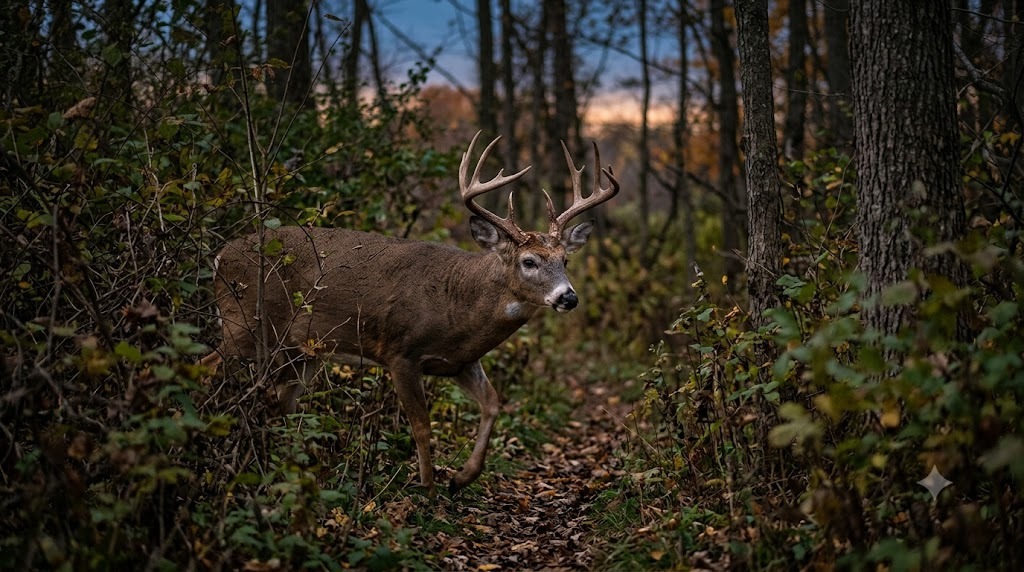
The short answer: a “nocturnal” buck usually isn’t. GPS-collar research shows pressured bucks keep moving in daylight - they just move less far, later, and tighter to thick cover, often shifting their feet only in the last grey minutes before dark. What changed isn’t the deer’s clock; it’s how much daylight risk he is willing to take, and your cameras and stand sits only sample the risky part. That distinction matters, because a buck that still moves 100 yards at dusk is huntable - if you move to him.
What actually happens when pressure rises
Whitetails are naturally crepuscular - wired to move at dawn and dusk. Add hunting pressure and several well-documented things stack on top:
- Daylight movement compresses. Collared bucks on pressured ground shift a larger share of their movement into darkness and the edges of legal light, especially after being bumped or scented.
- Range shrinks toward security. Instead of crossing open ground to feed, a pressured buck beds tighter, uses thicker cover, and may stage inside the timber until light fails - he still gets up at 4 pm, he just doesn’t leave the thick stuff.
- He learns your pattern. Deer respond to specific intrusion: the same trail walked in, the same stand hunted on the same wind, camera checks at noon. Studies of hunted properties show bucks avoiding stand locations within days of repeated use.
- October shifts add noise. The famous “October lull” is partly food changing (acorns pull deer off fields into timber) and partly this pressure response - the deer didn’t vanish, the pattern did.
Why he looks invisible
Your evidence has a bias. Cameras over fields and feed trails photograph the last, boldest link of his day - the part he now does at night. Meanwhile the daylight movement still happening - bed to staging area, 80-200 yards inside cover - happens where you don’t have a camera and don’t sit. “Nocturnal” is usually shorthand for “moves in daylight only where I’m not watching”.
How to hunt him anyway
- Move toward the bedding, carefully. The closer to his bed you can get without blowing it, the more of his daylight window you intersect. This is a one-or-two-sits play, not a season stand - our whitetail track covers staging-area setups in detail.
- Hunt the entries, not the destination. Shift from the field edge to the staging cover 100 yards inside, where he waits for dark.
- Ration your intrusions. Every sit, scent trail and midday camera check spends capital. Hunt the spot when the wind is perfect and conditions say movement - not just because it’s Saturday.
- Strike on the movers. A cold front, the first hard temperature drop, and the pre-rut seeking phase all pull daylight movement back out of even pressured bucks - those are the days to burn your best stand. Our weather and movement guide covers the triggers.
- Let the spot breathe. Collar data is encouraging here: back off for several quiet days and daylight use often rebounds. A rested stand beats a burned one.
The honest bottom line
Bucks go “nocturnal” the way employees go quiet in a bad meeting - they’re still there, still active, just no longer volunteering. The fix isn’t magic beans or more nighttime photos to stare at; it’s lowering the pressure you add, moving your setup into the sliver of cover where his daylight feet still fall, and cashing in the handful of high-odds days when weather and the rut make him careless again.