Muzzleloader Hunting: A Beginner's Guide
A reading guide for hunters new to muzzleloader seasons: how flintlock, percussion and in-line guns differ, what your state's regulations decide, and what the hunter education course says about loading, misfires, unloading and carrying a muzzleloader.
Safety note. This is a reading guide, not a firearm course and not legal advice. Your state’s hunting regulations decide what is legal in a muzzleloader season, and the owner’s manual for your gun decides how it is loaded and cleaned. Take a hunter education course and, if you can, a hands-on muzzleloader class before you hunt. We do not give load or powder recommendations.
A muzzleloader is a firearm you load from the front of the barrel, one shot at a time, and some states set aside a muzzleloader season or allow muzzleloaders in other seasons. Getting started means three pieces of reading: your state’s regulations for what counts as a legal muzzleloader and when you can use it, your gun’s owner’s manual, and the muzzleloader chapter of a hunter education course. This guide walks through what each one covers and points to the safety steps in the National Hunter Ed Course on hunter-ed.com, so you know what to look for.
The three kinds of muzzleloader
Muzzleloaders differ mainly in how the powder charge is ignited:
- Flintlock. A piece of flint strikes a steel plate and throws sparks into a small pan of priming powder, which fires the main charge through a small hole called the touchhole.
- Percussion (caplock or sidelock). A hammer strikes a small percussion cap seated on a nipple, and the flash travels into the barrel.
- Modern in-line. The ignition sits directly behind the charge in line with the barrel, and the breech plug at the back can be removed for cleaning and unloading.
Which of these you may hunt with is a legal question first. Some states limit special seasons to traditional designs, or set rules on ignition, sights, projectiles or bore size. Our guide to hunting seasons and tags explains how to read the regulation booklet and where seasons split by method.
What to look up in your state’s regulations
Before buying a gun or a tag, read your state wildlife agency’s current regulations for:
- the dates of any muzzleloader season and the species and zones it covers;
- what the state counts as a legal muzzleloader (ignition type, sights, bore size, number of barrels);
- legal projectiles and any rules on powder;
- blaze orange or other visibility requirements in that season;
- whether a muzzleloader may be carried loaded, and where (vehicles, roads, buildings);
- whether you need a separate tag, stamp or endorsement.
Rules change from year to year, so use the edition for this season, and call the agency if a rule is unclear. Our hunting license and safety guide covers hunter education requirements.
Loading: what the course stresses
Loading is where muzzleloaders differ most from cartridge guns, because the muzzle has to point upward while you work. The National Hunter Ed Course’s loading section says to keep the muzzle pointed up and away from your body and never to work directly over the muzzle. It also says to check whether the gun is already loaded with a ramrod that carries an “unloaded” mark, and to ask an experienced muzzleloader user or gunsmith if you are unsure.
The course’s basic safety rules include:
- use only black powder or a safe substitute;
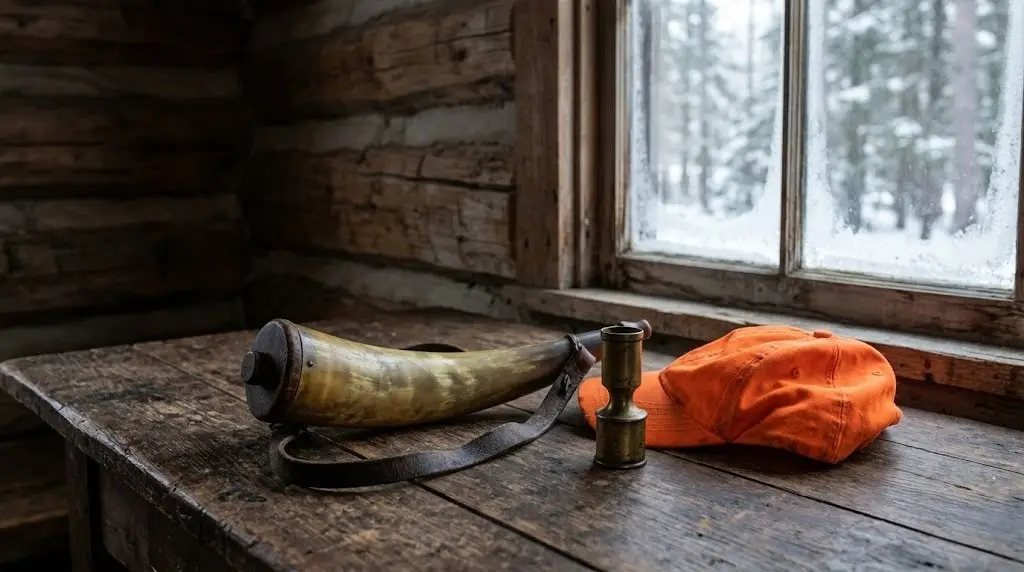
- load directly from a calibrated powder measure, never from a horn, flask or other container, because a spark or glowing ember left in the barrel can make the powder explode;
- load only one charge at a time;
- never smoke while shooting or loading, or near a powder horn or flask.
The type and amount of powder and the projectile are set by your gun’s manufacturer. Use the manual for your exact model and the load data from the powder and projectile makers. The course also says the ramrod should be pushed in short strokes, gripped a few inches above the muzzle, because long strokes can snap it and injure your hand.
Misfires and hangfires
A muzzleloader can fail to fire, or fire after a delay. The course’s unloading section tells you to keep the gun pointed in a safe direction and wait 30 seconds before re-priming and trying again, then wait another 30 seconds; if it still fails, use a CO2 discharger to remove the charge, and if that fails, follow the owner’s manual. Treat a gun that has misfired as loaded the whole time.
Unloading, carrying and transport
At the end of a hunting day the charge has to come out of the barrel, and that needs planning. The course lists three ways: discharge into a suitable backstop, clear the barrel with a CO2 discharger, or on an in-line gun remove the breech plug and push the charge out the rear. It warns against firing into the air or into the ground at your feet, where the projectile can ricochet.
The basic safety page adds that a muzzleloader should be unloaded before you bring it into your home, camp or vehicle. Your state’s rules may say more about how a muzzleloader must be carried in a vehicle, so check them too. The four general firearm rules in our hunting safety guide apply to a muzzleloader exactly as they do to any other gun.
Practice and cleaning before the season
A single shot changes how you hunt. Spend range time well before opening day so you know where your gun hits and how long reloading takes you. Follow your manual on whether to clean the barrel between shots at the range.
Clean out the fouling the way the manual describes after every outing. Store powder, caps and primers as the makers’ labels say, away from the gun and out of reach of children. If you are hunting whitetails in a late muzzleloader season, our whitetail deer profile covers the animal and its habits.
Recommended Gear on Amazon
- Muzzleloader cleaning kits - browse current options and reviews on Amazon.
- Blaze orange hunting vests - browse current options and reviews on Amazon.
- Lockable gun cases - browse current options and reviews on Amazon.
As an Amazon Associate, we earn from qualifying purchases - at no extra cost to you. This helps us keep producing free, in-depth guides.