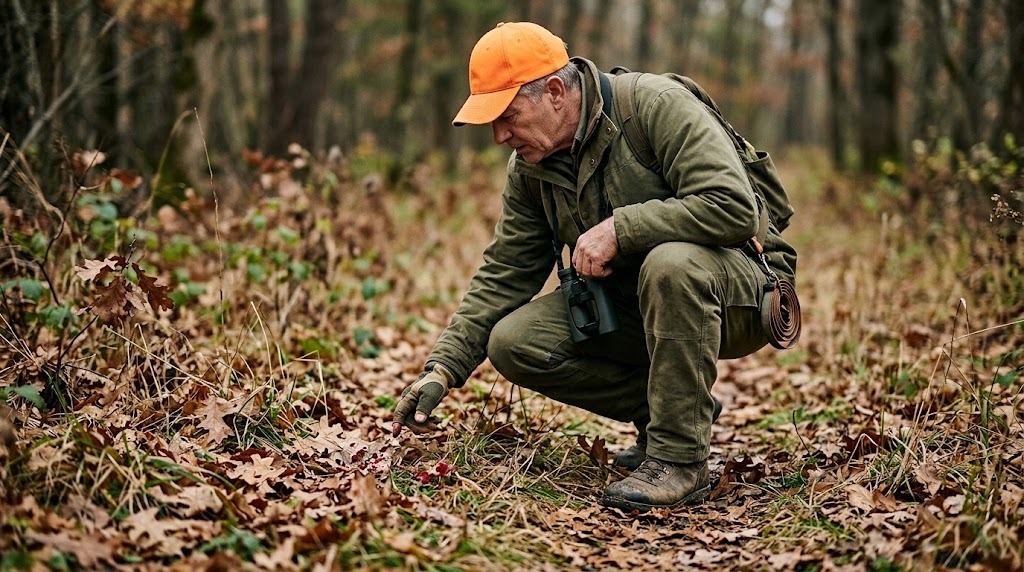
Summer Scouting for Whitetail
The short answer: summer is when you find bucks cheaply from a distance, take a low-pressure inventory, and map food and travel before the woods change. Here is what summer patterns tell you - and what they don't.
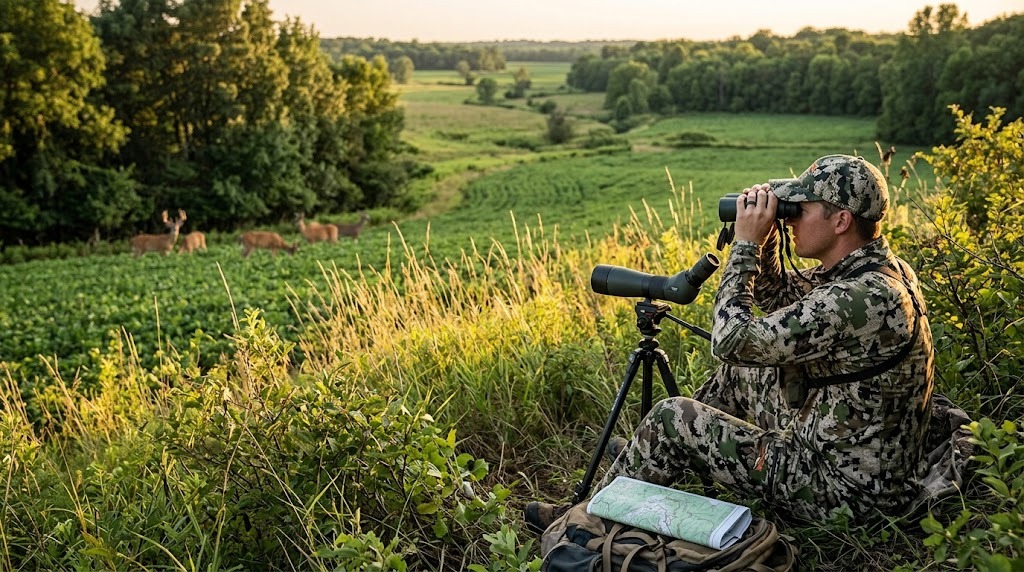
The short answer: summer is the season to scout bucks from a distance with almost no risk of spooking them - long-range glassing of open feed, a light trail-camera inventory, and map work to learn food, water and cover. You build a list of the bucks in your area and how they move now, while accepting that those exact patterns will shift when crops come off and the rut turns everything upside down. Done right, summer scouting hands you a head start; done heavy-handed, it teaches deer you are there before the season even opens.
Here is how to get the intel without paying for it in October.
Why summer scouting works
In midsummer whitetails settle into predictable, food-driven bachelor-group patterns. Bucks travel together, feed in the open in the last hour of light, and are far more visible than at any other time of year. Antlers are growing in velvet, so you can watch individual bucks develop and start recognizing them.
Best of all, you can gather most of this from a distance, without walking their core areas and leaving scent. That matters more than any single piece of gear - the biggest scouting mistake is pressuring deer before the season, which is exactly what pushes mature bucks toward the nocturnal daylight pattern hunters complain about later.
Glassing: the highest-value summer tool
Long-range observation is the core of summer scouting.
- Find a vantage point overlooking agricultural fields, food plots, clear-cuts or open feeding areas - somewhere you can watch without being seen or winded.
- Glass the last 60 to 90 minutes of daylight, when bachelor groups step out to feed. Dawn works too but evening is usually better in summer.
- Use good optics on a tripod. Steady glass at distance beats walking in close. A spotting scope earns its keep here.
- Log what you see: which bucks, where they enter and exit the field, what direction they came from, and the wind and date. Patterns emerge over a couple of weeks.
Stay far enough back that the deer never know you exist. If they change behavior because of you, the intel is already corrupted.
Running cameras without pressuring deer
Trail cameras are a summer inventory tool, but they cut both ways - every visit to a camera is an intrusion.
- Place cameras on field edges, mineral or water sources, and staging areas where you can access them without crossing bedding. Our camera placement guide covers height, angle and setup.
- Check them as rarely as possible - once every couple of weeks at most, midday, in and out fast, ideally after rain. Cellular cameras let you skip visits entirely, which is their real advantage.
- Read the whole picture, not just the giants. Time stamps, wind, direction of travel and which deer show together all matter as much as the antlers.
Treat camera data as one input, not gospel. A buck that pours through a field edge in July may relate to entirely different cover once the rut starts.
Map work and boots-on-the-ground timing
Scouting is not only watching deer - it is learning the ground.
- Start on maps. Aerial and topo maps reveal funnels, pinch points, ridges, saddles, water and the edges between cover types. Mark likely travel corridors before you ever walk in.
- Save your intrusive scouting for the right window. Walking bedding areas, hanging stands and finding sign is best done either in late winter (post-season, when sign from the previous fall is fresh and you cannot hurt anything) or in a single efficient push close to the opener - not repeatedly all summer.
- Note food sources and their timing. What deer eat in July is often gone by November. Knowing where the acorns, standing crops and late-season food will be matters more than the current summer field.
For sizing up the bucks you are seeing, the field-judging guide helps turn a velvet glimpse into a realistic read, and the deeper strategy lives in our whitetail hub.
What summer patterns don’t tell you
The honest caveat: summer intel has a shelf life.
- The velvet pattern breaks. Bachelor groups split in early fall, ranges shift, and bucks change bedding and feeding as testosterone rises.
- Food changes everything. Crop harvest, acorn drop and frost redraw the map. A field full of deer in August can be empty in November.
- The rut rewrites the rest. Once the chase is on, mature bucks may travel far outside their summer range chasing does.
Summer tells you which bucks are alive and roughly where they live. It does not tell you where they will be on opening morning. Use it to build a candidate list and a mental map, then expect to adapt.
A quick legal and safety note
Scouting can cross onto rules you must respect - trespass laws, camera regulations that vary by state and public land, and mineral or bait restrictions that are legal in some places and not others. Check your state wildlife agency’s current regulations before placing anything; we do not give legal advice here.
The honest bottom line
Summer is your cheapest, safest scouting window: glass from a distance, take a light-touch camera inventory, and do the map work now while the woods are quiet. Build your list of bucks and learn the ground - but hold the intel loosely, because harvest and the rut will change the game. The hunter who scouts smart in July and stays out of the deer’s living room is the one still seeing daylight bucks in November.