Shed hunting basics.
Every year deer, elk and moose drop the antlers they grew over the summer and start again from nothing. The cast antlers lie where they fell, and going out to find them has turned into a season of its own - one with no tags, no shooting and no closed hours, in country that is empty of everybody else in February.
It is also a walking sport with a low success rate. Most people find nothing on their first several outings, and the ones who do well are covering serious miles on ground they already know. What follows is the useful part: when to go, where to look, how a dog changes the odds, and why the timing matters to the animals as much as it does to you.
When antlers drop
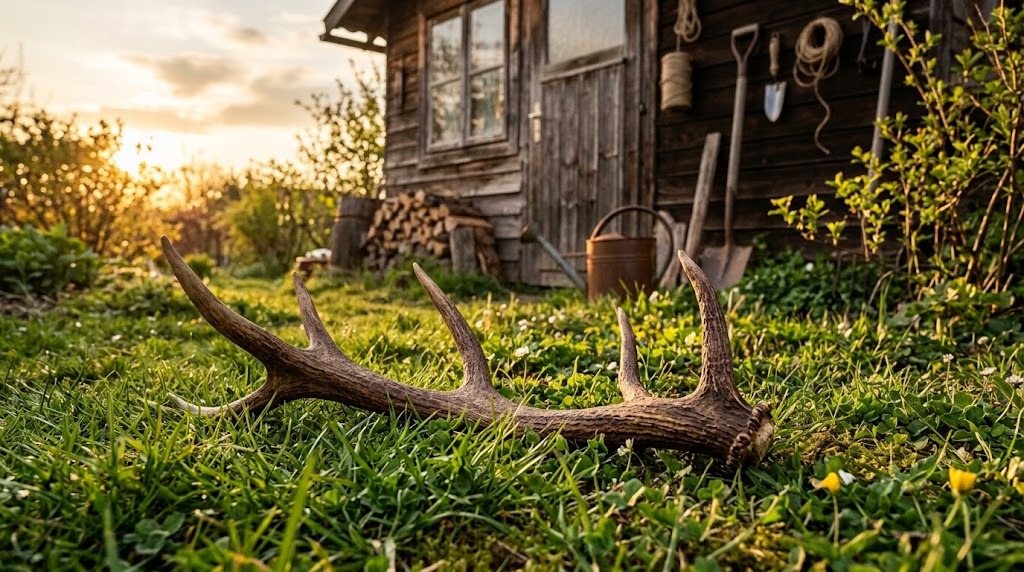
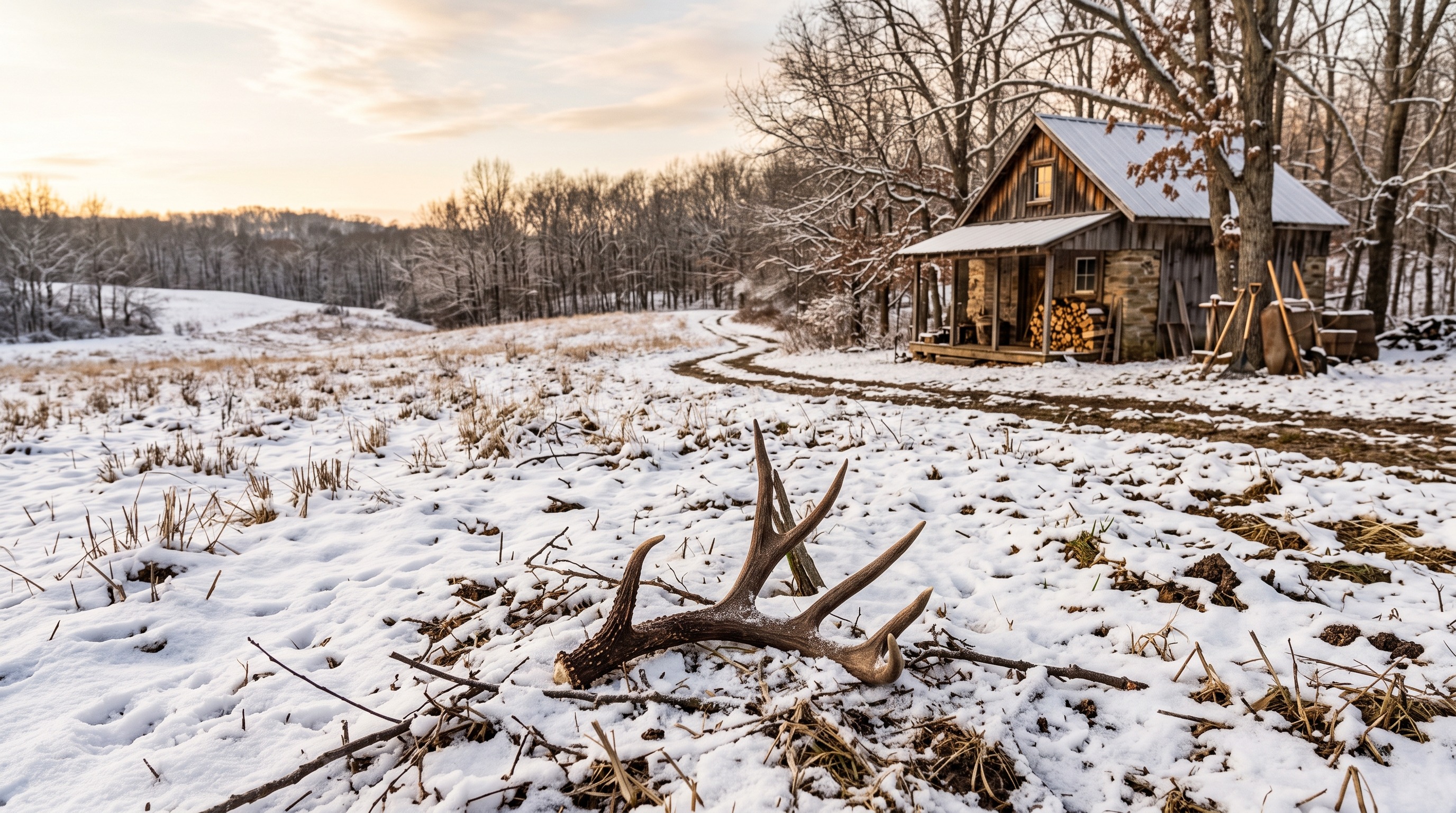
Casting is driven by falling testosterone after the rut, and it runs on a schedule you can plan around. Whitetails start dropping through late December and are mostly bare by early March, with older bucks generally shedding earlier than young ones. Elk hold longer - March into April in most of their range - and mule deer sit between the two. A hard winter pushes everything earlier because a stressed animal sheds sooner. Going too early means walking ground where the antlers are still on the deer; going too late means squirrels have been at them.
Where to look
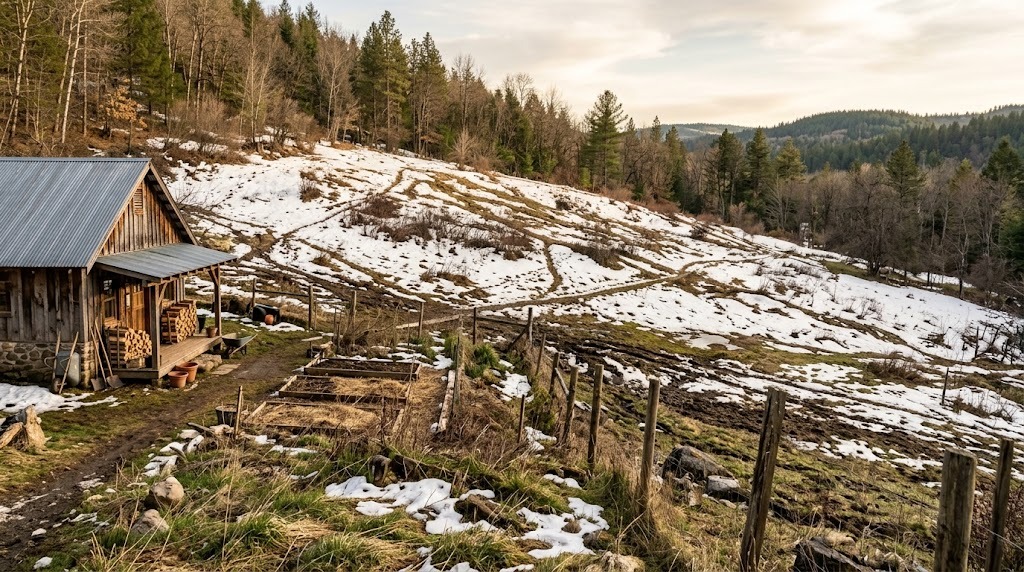
Antlers come off where deer spend the most hours, and in late winter that is a short list. Food sources first - standing crops, cut fields, browse edges. Then bedding, especially south-facing slopes where the sun holds and the snow goes first. Then the ground between the two: trails, funnels, and anywhere a deer has to jump or duck, because a jolt knocks a loose antler free. Fence crossings and creek jumps are the classic single-shed spots. Cover the same ground more than once; a brown antler in brown grass is invisible until you are almost on it.
Working a shed dog
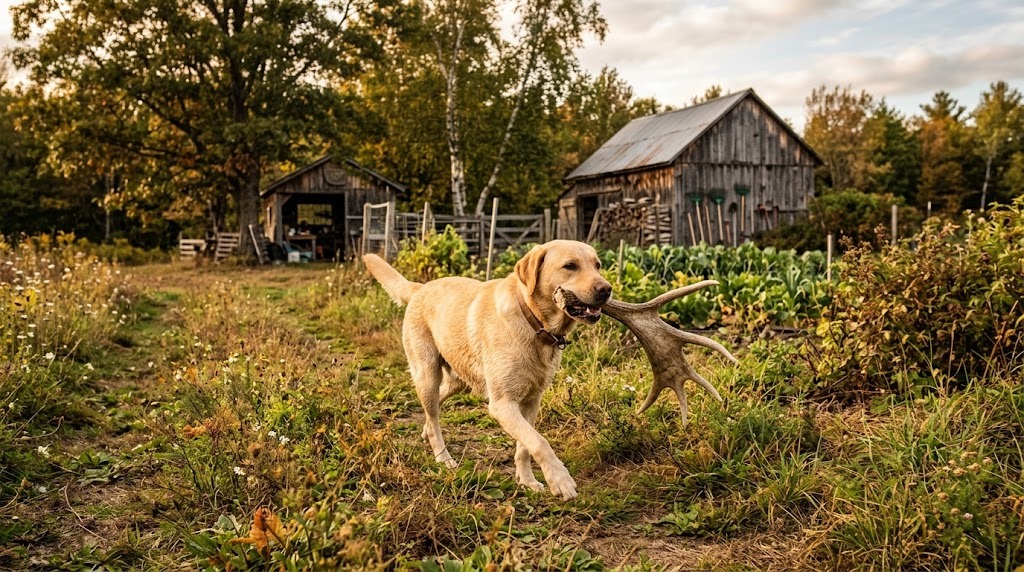
A dog covers ground faster than a person and finds antlers that human eyes walk straight past. Retrieving breeds take to it naturally: the training is scent introduction on a clean antler, short finds in easy cover, then progressively harder hides and bigger country. Fresh antler smells different from a bleached one, so most trainers work with recent sheds and keep them out of the house between sessions. It is a real training project, not a weekend - and a dog that hunts sheds badly will pick up bones, sticks and everything else instead.
Ethics and timing
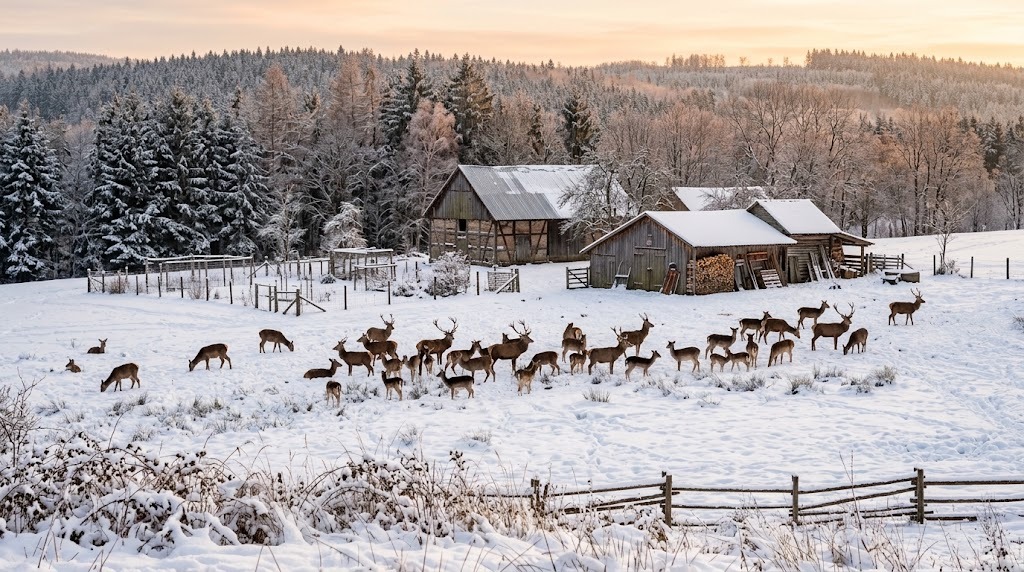
Late winter is when deer, elk and moose are at their thinnest, running on fat reserves that have to last until green-up. Pushing animals off a bedding area in February costs them energy they cannot replace, and repeated pressure moves herds off winter range entirely. The ethical shed hunter waits until the drop is largely finished rather than pressing early to beat the competition, keeps distance from visible animals, and stays off winter range where access is restricted. The antler will still be there in two weeks. The deer might not be.
What to do with finds
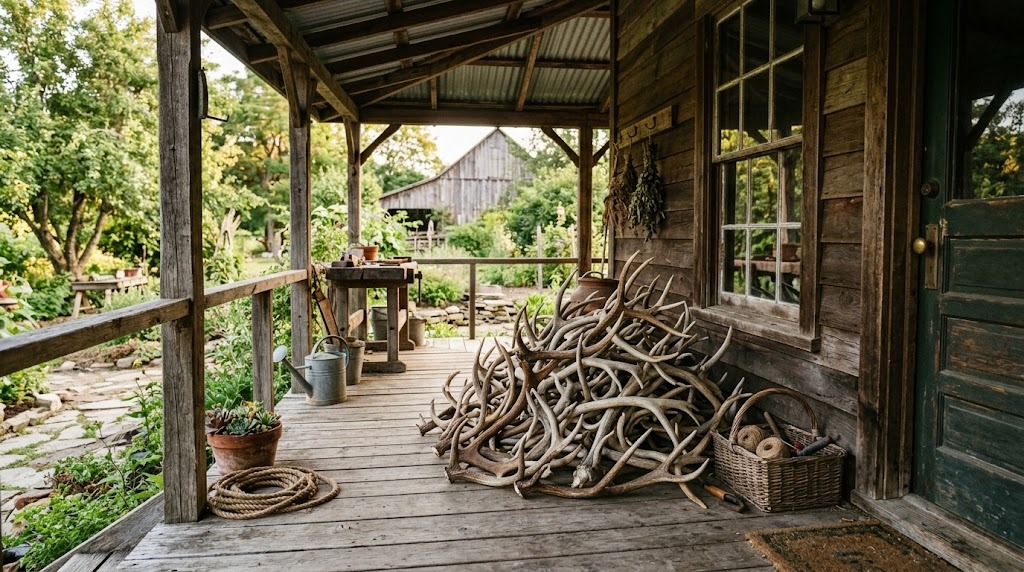
A fresh shed is dense, heavy and pale brown with the burr intact; one that has lain out a season is chalky, cracked and often chewed - rodents work antler hard for the minerals. Fresh material is what you want for anything you intend to make. Crown sections become knife and tool handles, tines become toggles and buttons, burr slices become coasters and drawer pulls, and whole matched sets go on the wall as they are. Chalky old sheds still make good dog chews. Wash off the dirt, dry them properly, and store them somewhere dry rather than in a damp shed.
Know the local rules
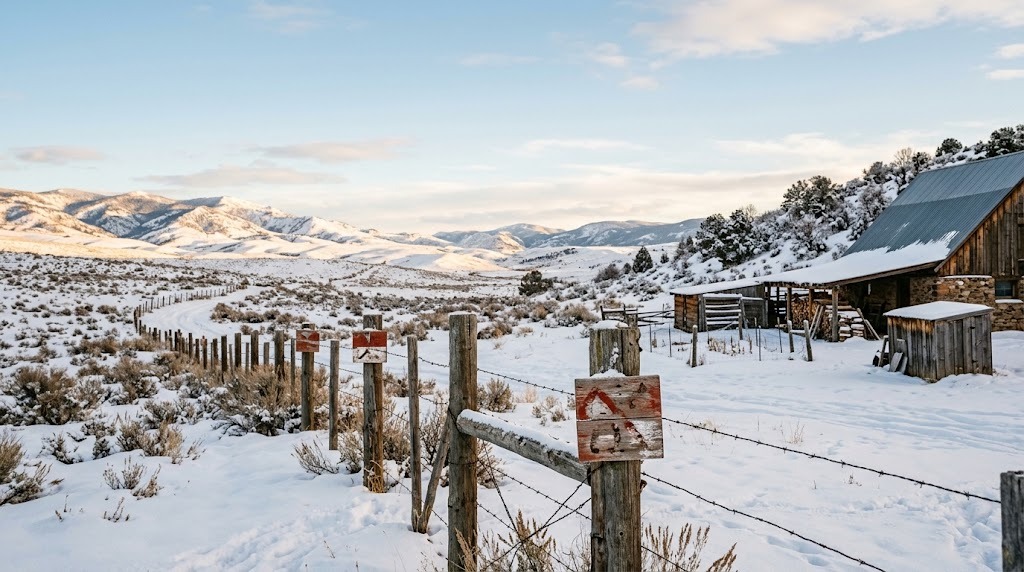
Shed hunting is unregulated in a lot of places and tightly controlled in others, and the difference matters. Several western states close winter range entirely until a set date and enforce it hard. National parks generally prohibit collecting anything, antlers included. Some jurisdictions require a licence or restrict access hours. Private ground always needs the landowner's permission regardless of what the state says. None of that is guessable from the outside - check the current rules for the specific ground before you walk it.