Decoy carving tradition.
A decoy is a lie told in wood, and for most of its history it was a purely practical lie: a floating shape that had to look enough like a duck from a distance to bring live birds into range. Market gunners carved them by the hundred and thought nothing of it. A century later the same objects hang in museums.
Carving is still a living craft with two branches. The working side makes birds that go in the water and get knocked about, built for buoyancy and read at range. The decorative side has gone somewhere else entirely, burning individual feathers into tupelo and painting with a magnifier. Both start with the same block and the same drawknife.
It is a slow way to fill a rig. Nobody carves a hundred decoys any more because nobody has to, which is exactly why the ones people do carve get the attention they get.
From working tool to folk art
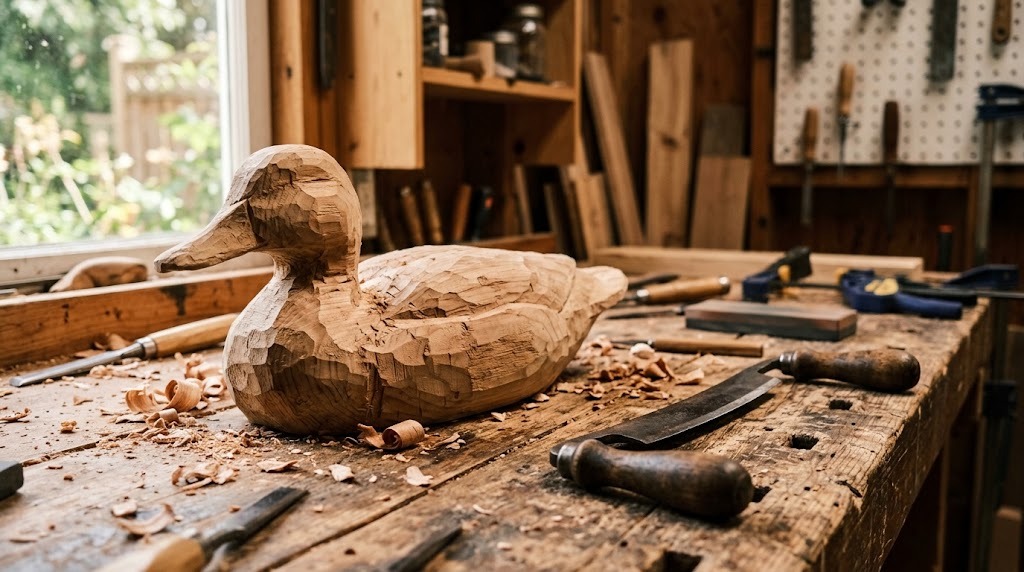
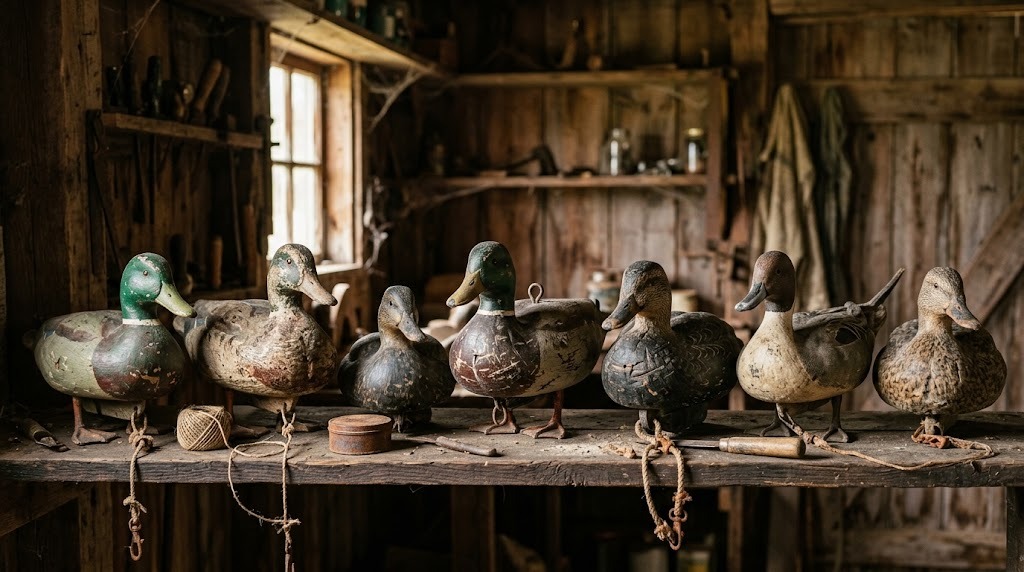
Decoys started as equipment. Market gunners on the Atlantic flyway needed rigs of a hundred or more, and they carved them fast, plain and sturdy because they were going to be thrown in a boat and dragged through ice. Nobody thought of them as art until the working era ended and collectors noticed that the best of them were sculpture. The oldest known North American decoys are woven reed birds from a Nevada cave, well over a thousand years old, which puts the whole craft in perspective: this is one of the few genuinely indigenous American art forms.
Choosing the wood
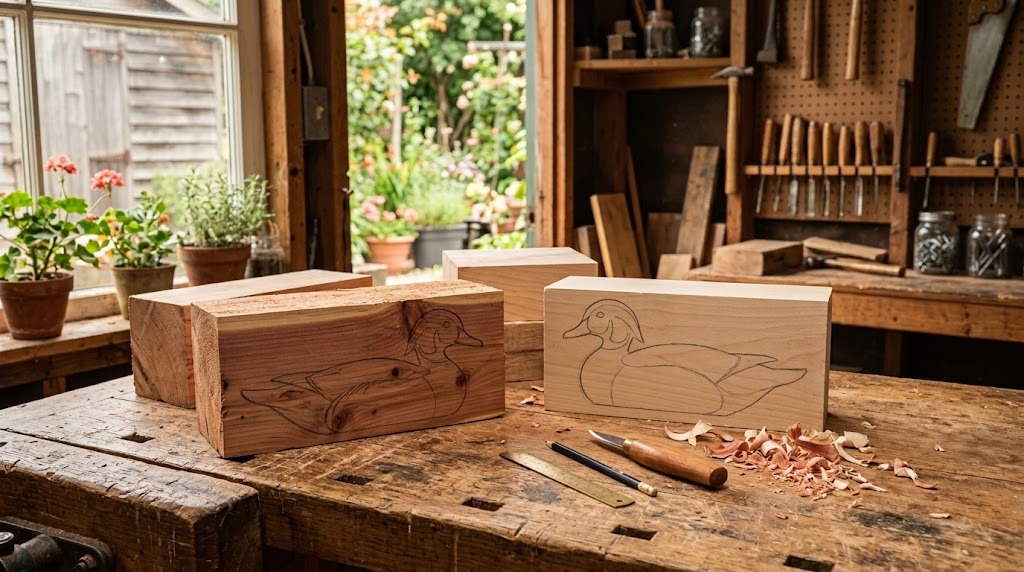
White cedar is the traditional body wood on the east coast - light, buoyant, rot-resistant and soft enough to work fast. Basswood and tupelo carve beautifully and hold detail, which is why they dominate decorative carving now, though tupelo is heavier. Cork bodies with wooden heads make an extremely light working decoy that takes shot without splitting. Heads are usually white pine or basswood rather than cedar, because the bill and neck are the weak points and cedar snaps there where a tougher, finer-grained wood takes the knocks. Grain direction through the neck matters more than the species does.
Roughing out and shaping
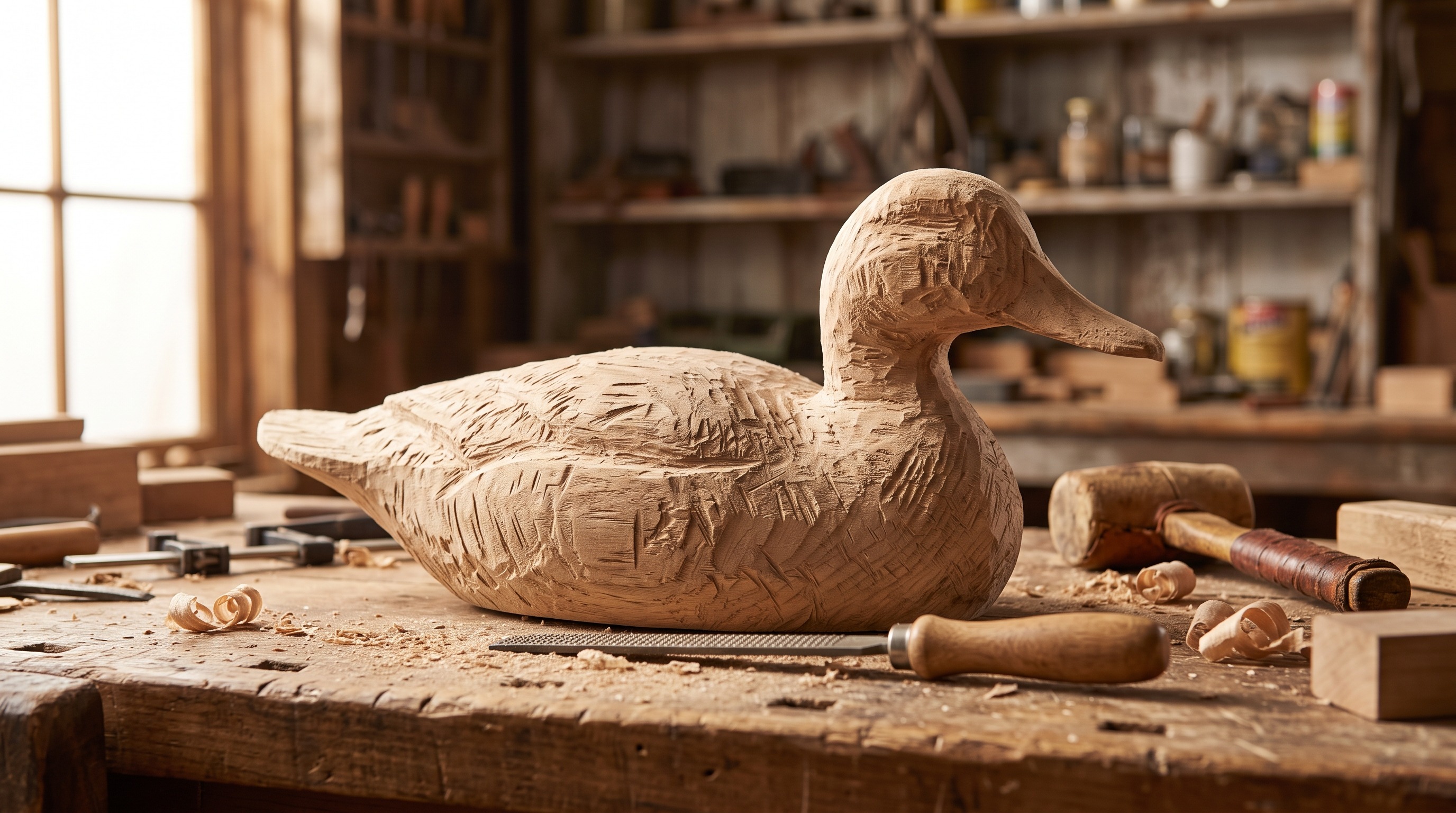
The body starts as a block with a pattern traced on the top and the side, cut to the outline on a bandsaw, then worked down with a drawknife, spokeshave and rasp until the section is right. Working decoys are hollowed - two halves carved out and glued back together - to cut weight and keep them from waterlogging. The head is carved separately and doweled in, and the angle it sits at is what gives a rig its character: a low head reads as a feeding bird, a high one as alert. Tool marks left on the surface are a mark of the working tradition rather than a mistake.
Primer and paint
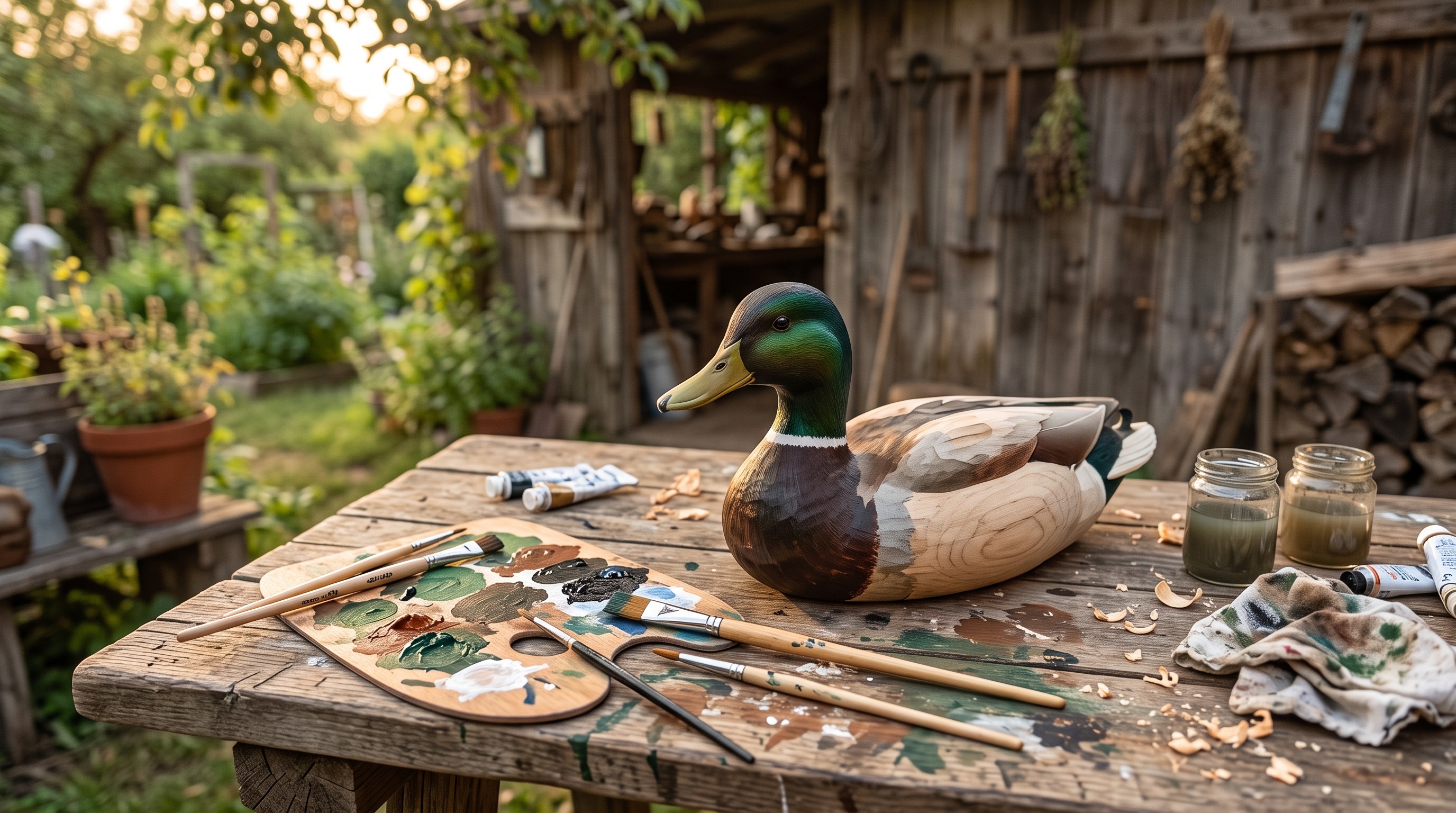
Working decoys are primed and painted in flat oils - gloss reflects and flares birds off. The paint job on an old gunning decoy is impressionistic: a few strong blocks of colour that read correctly at forty yards on grey water, not feather-by-feather accuracy. Decorative carvers work the other way entirely, burning in feather detail and using thin acrylic washes to build up colour. Both are legitimate; they are answering different questions. Learning to paint a mallard drake, with its hard-edged colour blocks, teaches most of what the other species need.
Antique decoys
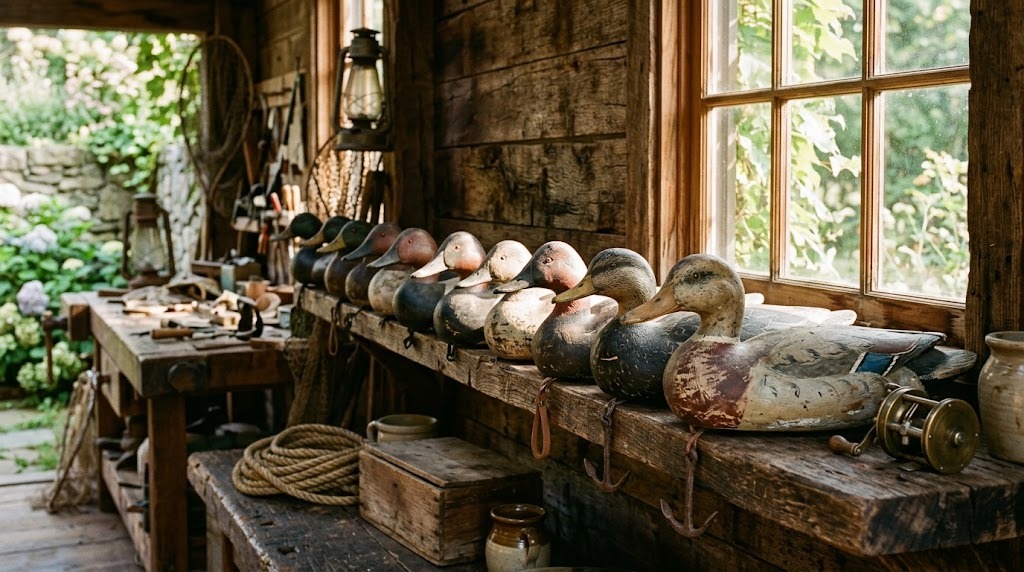
Old working decoys are collected seriously, and the qualities collectors look for are not what a beginner expects: original paint in honest condition beats a clean repaint every time, an identified maker matters enormously, and shot scars and wear are part of the history rather than damage. Regional styles are distinct enough that an experienced eye places a bird within a county. Repainting or restoring an old decoy generally destroys what made it interesting. If you find one in a barn, leave it alone and ask someone who knows before you touch it with anything.
Where feathers come in
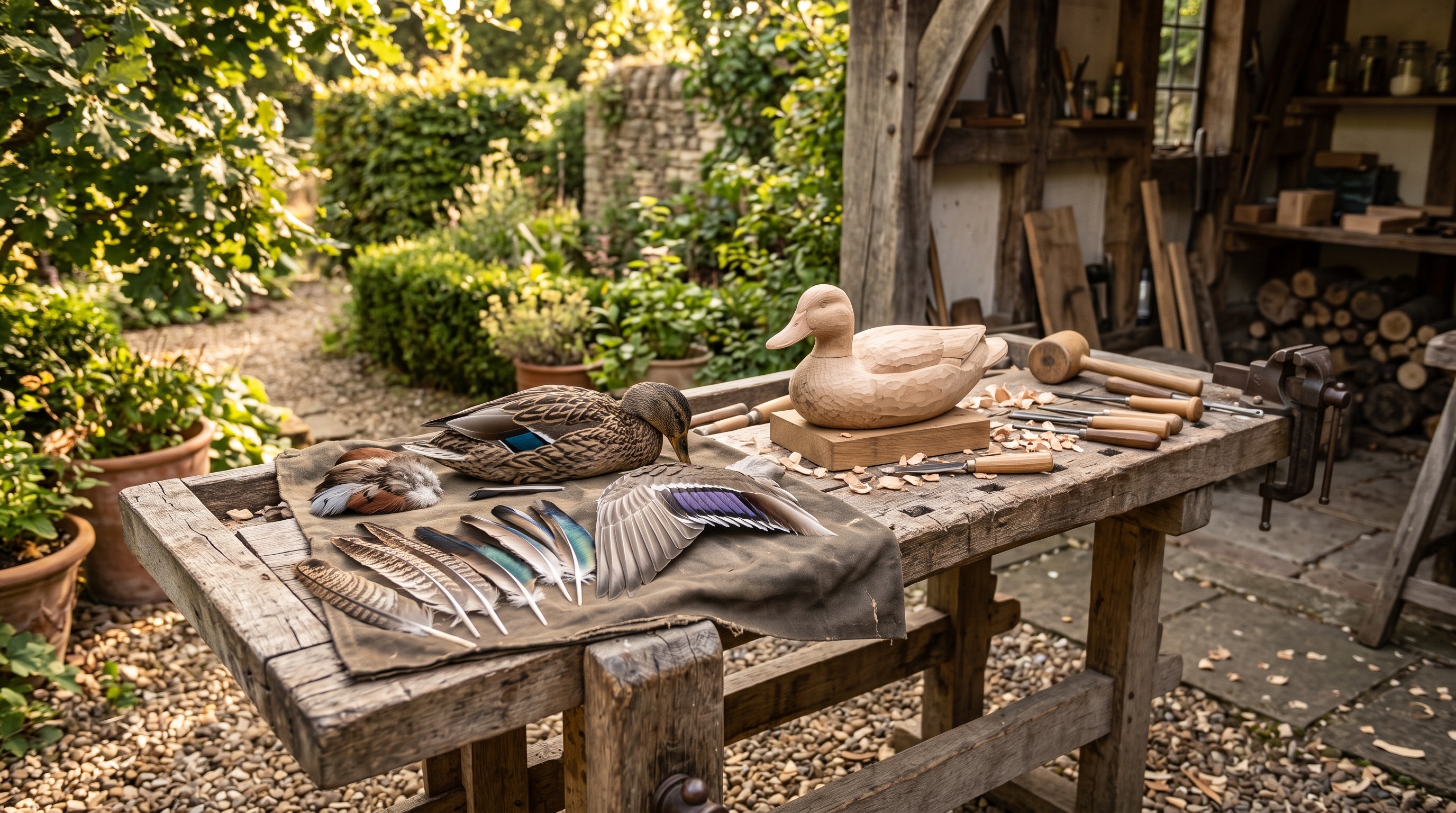
Carvers who work from real birds keep study skins and wings for reference, because paint schemes are far harder to remember than they look and a photograph flattens the colour. A wing in the hand shows how the speculum catches light and where the hard colour edges actually sit. That overlaps directly with the feather crafts already on the site - the same autumn bird supplies fletching, display material and a carver's reference. Know what species you may legally keep parts of before anything goes in a drawer.