Making your own game calls.
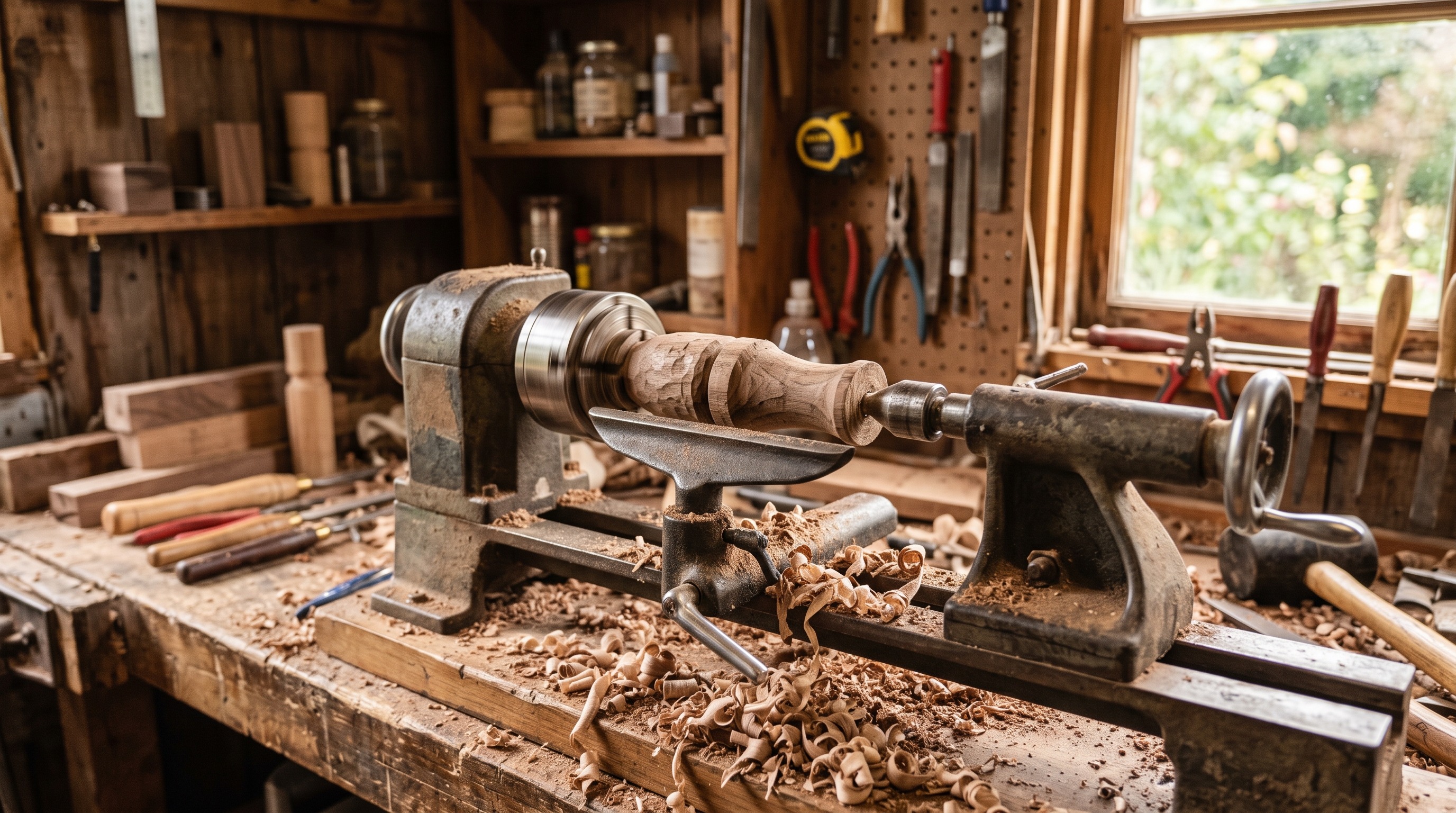
A game call is a small machine for making an animal noise, and it is one of the few pieces of hunting equipment an ordinary person can build at home and end up with something better than what is on the shelf. The tools are a small lathe and a few drills. The skill is in tuning, and that is learned by ear over a lot of attempts.
Call making has a long tradition behind it - the great American call makers were mostly hobbyists working in a shed - and it remains a craft where a beginner's first grunt tube genuinely works in the field. This page is about building them. If you want to know how to use one, that is the game calls guide.
Wood or acrylic
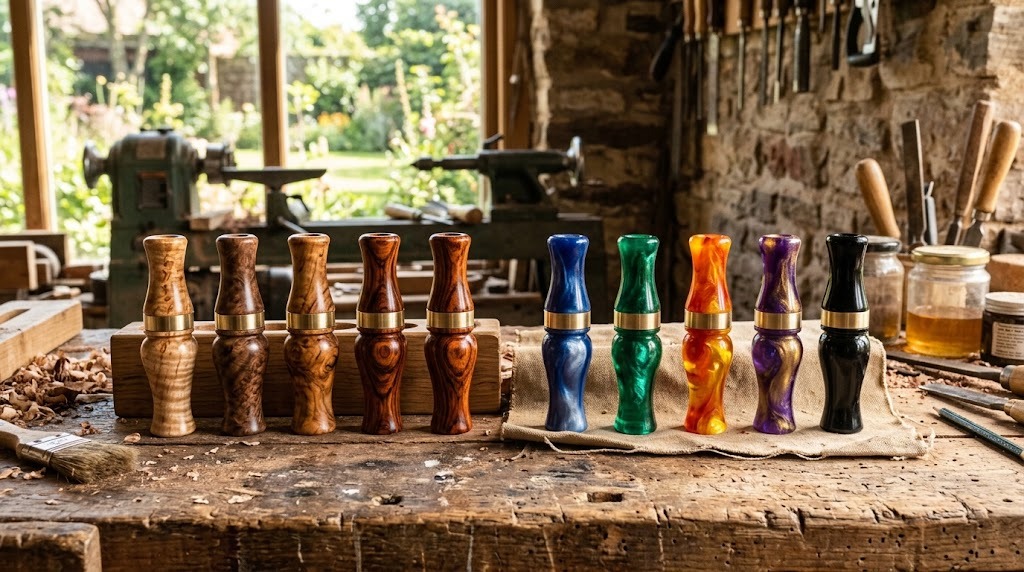
The old calls are wood and the loud ones are acrylic, and the difference is real rather than nostalgia. Dense woods - cocobolo, osage, walnut, bocote - give a softer, rounder note that a lot of hunters prefer on quiet water and in timber. Acrylic is harder, louder and completely stable: it does not move with humidity, does not swell shut on a wet morning, and cuts to a repeatable dimension every time. Most makers start on wood because it turns easily and forgives a bad cut, then try acrylic once the shape is settled.
How a duck call works
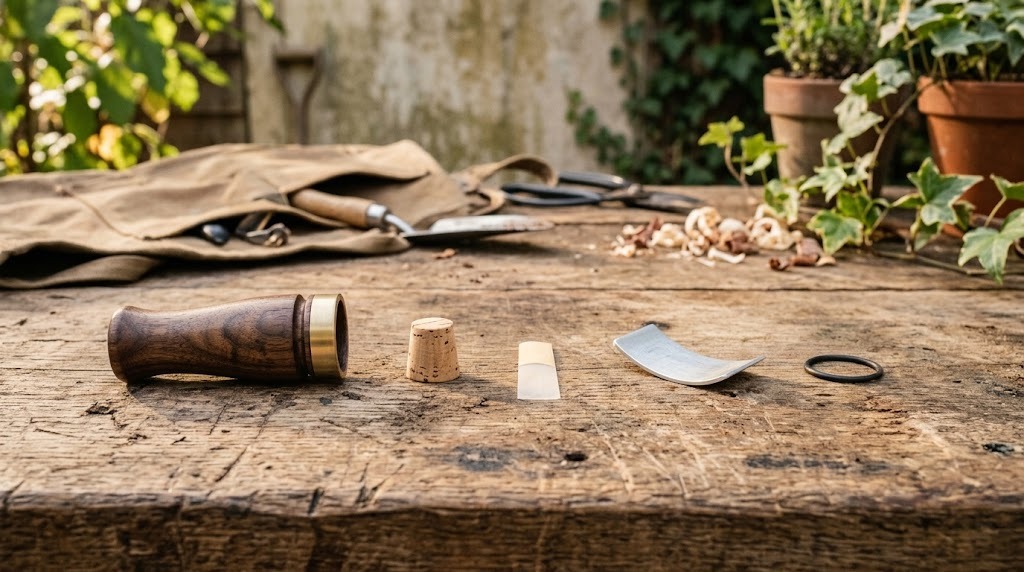
A duck call is three parts. The barrel is the resonating chamber and mostly decides how loud and how deep the call is. The insert holds everything that makes the sound: a tone board, one or two reeds, and a cork or wedge that clamps the reed against the board. The length of reed left free to vibrate sets the pitch, and the curve of the tone board sets how easily it breaks over into the high notes. Understanding those three relationships is the whole craft; everything else is turning and finishing.
Turkey pot calls
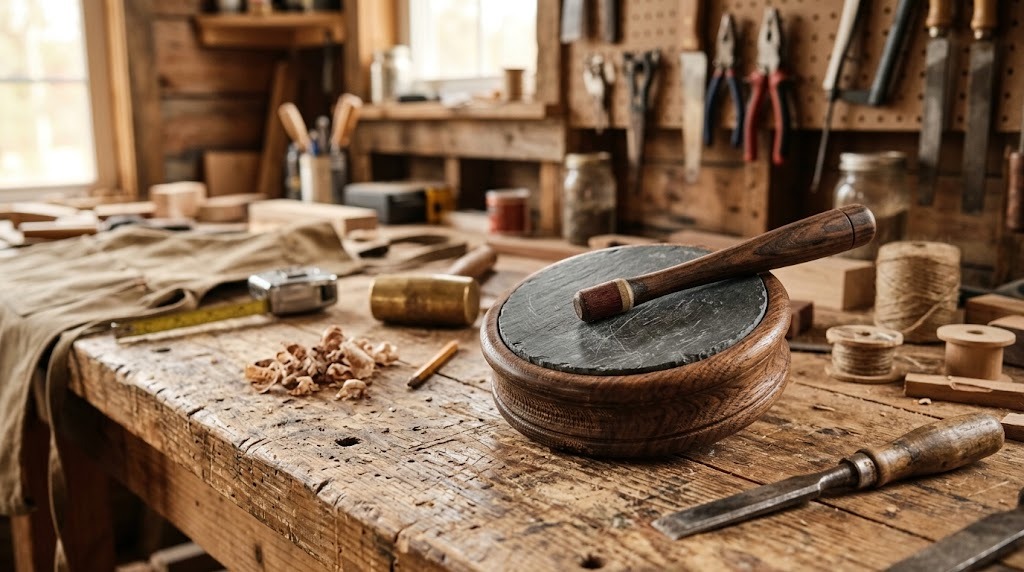
A pot call is a shallow turned bowl with a friction surface set into the top and a soundboard under it, played with a striker. The surface decides the voice: slate is soft and forgiving and good for quiet yelps, glass is louder and cuts wind, aluminium is louder still, and crystal sits between glass and aluminium. The pot itself is turned from a stable hardwood, and the depth of the chamber under the surface tunes the resonance. Strikers are turned separately and a maker usually ends up with several, since the wood of the striker changes the tone as much as the surface does.
Grunt calls and tubes
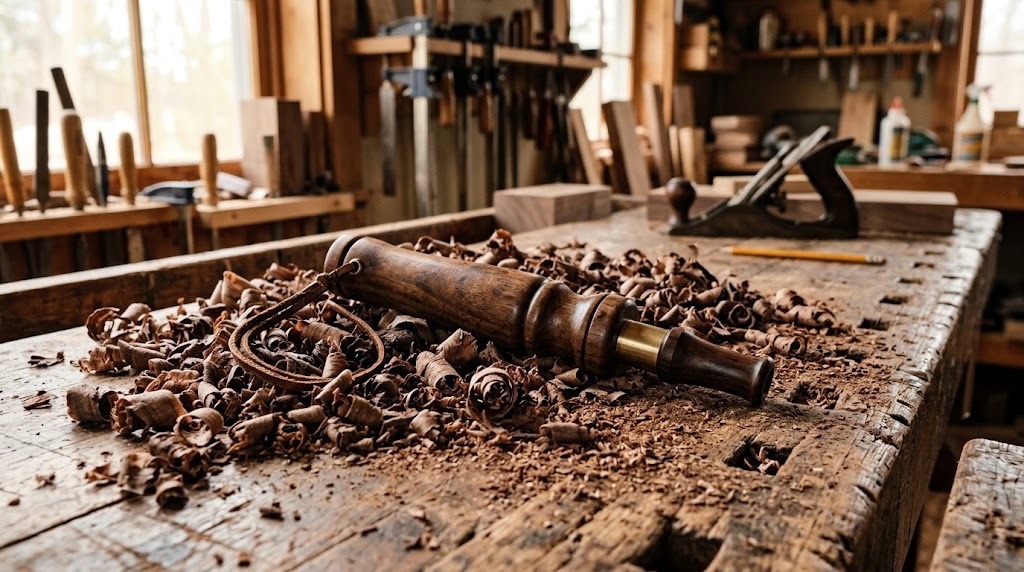
Deer grunt tubes are the easy entry point for a new maker: a straight turned barrel, a simple reed assembly, and a flexible tube on the end that lets you change the tone by bending or stretching it. There is far less to get wrong than in a duck call, the tolerances are looser, and a first attempt usually works. The same construction scales up to fawn bleats and predator calls, which is why most people who start making calls start here and move to waterfowl afterwards.
Tuning by ear
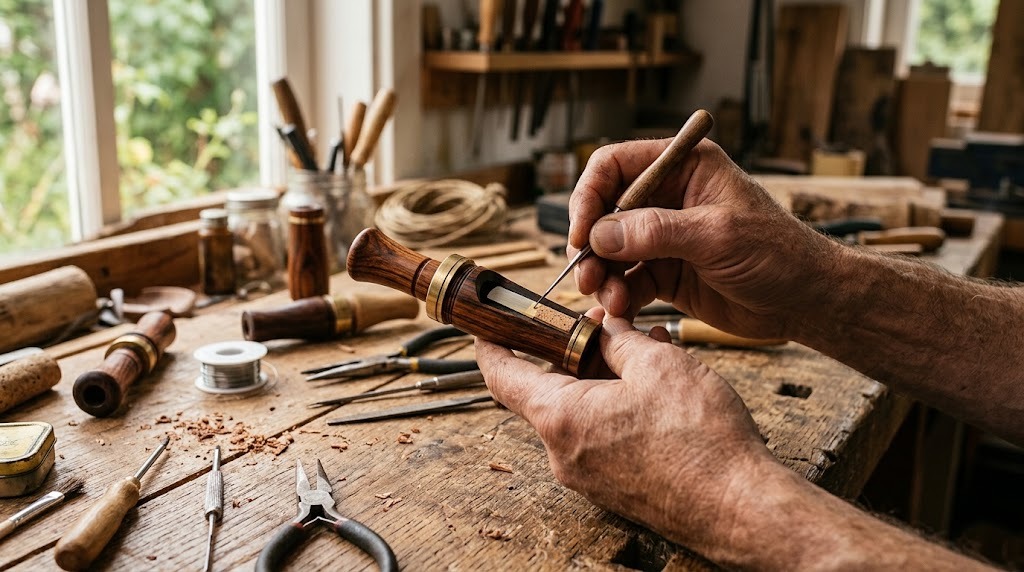
A finished call almost never sounds right first time, and tuning is where the craft actually lives. Moving the reed a fraction longer drops the pitch and makes the call lazier; shorter raises it and makes it break over faster. Cork tension changes how much air it takes to run. Sanding the tone board changes everything at once and is the hardest thing to undo. The method is small adjustments, blow it, listen, adjust again - and keep a note of where the reed sat when it sounded right, because you will want to get back there.
Finishing and care
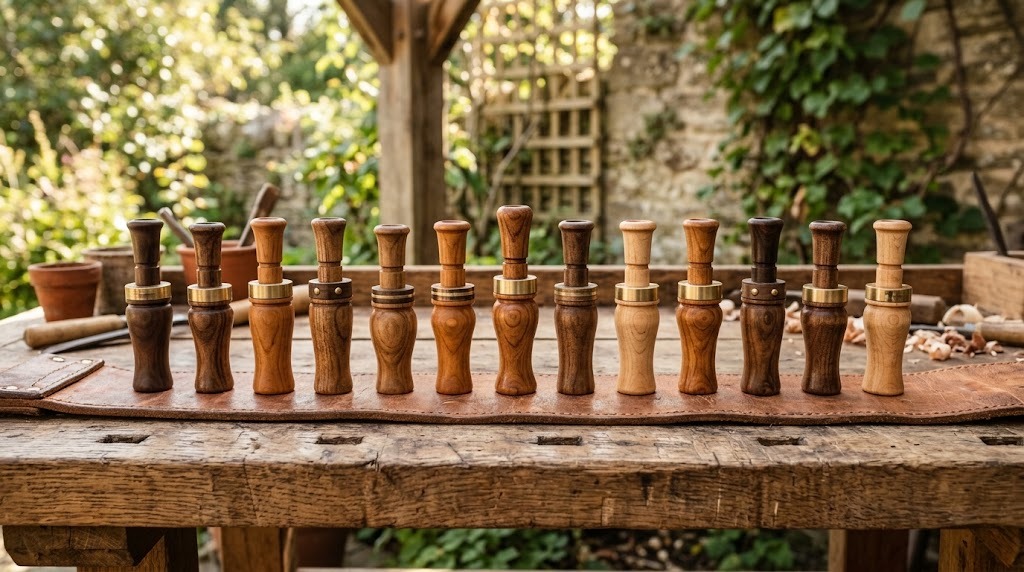
Wooden calls are finished with a penetrating oil or a thin film finish that seals the wood against moisture without deadening it; a heavy plastic finish makes a call look wonderful and sound worse. Acrylic is polished on the lathe through progressive grits and buffed. Either way a call needs drying out after a wet morning and the reeds need checking and occasionally replacing - they take a set over time and lose their snap. A well-kept call outlasts the person who made it.