How to Care for Hunting Boots
Most hunting boots fail from how they are dried and stored, not from miles walked. The routine that keeps leather, membrane and rubber boots working - cleaning, slow drying, conditioning, re-proofing and off-season storage - and the signs a pair is finished.
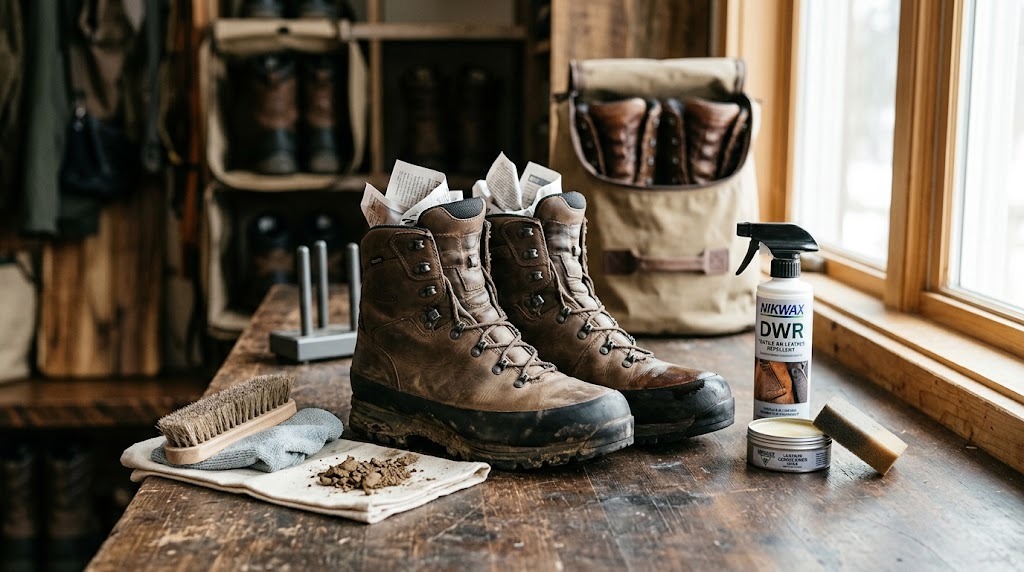
The short version: boots are ruined by three things - mud left to dry on them, heat used to dry them fast, and months in a hot garage or car boot. The routine that prevents all three is simple: brush off dirt after every hunt, pull the insoles, dry slowly at room temperature, condition or re-proof when water stops beading, and store cool, dry and dark. Done consistently, it can add seasons to a pair, and it keeps your feet drier in the meantime.
What “care” means depends on what the boot is made of, so start there.
Know what you are looking after
- Full-grain leather - smooth, thick leather found on mountain and upland boots. It needs cleaning and regular conditioning, and it rewards the effort with the longest life.
- Nubuck, suede and leather-fabric hybrids - lighter and quicker to break in. They take spray-on treatments, not heavy waxes, which flatten the nap and clog the fabric panels.
- Membrane-lined boots - most leather and fabric hunting boots have a waterproof-breathable liner inside. The membrane itself needs no treatment, but it only breathes when the outer material is clean and still sheds water.
- Rubber and neoprene boots - fully waterproof from the start. They need rinsing, drying inside and protection from sun and heat, which is what cracks them.
If you are still choosing a pair, our guide to hunting boots by terrain explains which type suits which country.
After every hunt
This takes five minutes and does most of the work.
- Knock off and brush away mud while it is still damp. Dried mud pulls natural oils out of leather as it dries and works grit into the stitching, where it wears at the thread.
- Rinse if needed with plain cool water and a soft brush. Skip household detergents and bar soap; they leave residues that attract water. A dedicated footwear cleaner is the alternative for heavy grime.
- Loosen the laces fully and take out the insoles. Insoles hold a surprising amount of sweat and dry far faster on their own.
- Open the boot up so air can reach the toe box.
Blood, salt from sweat and stagnant marsh water are worth rinsing off the same day. All three stiffen leather and make a boot smell.
Drying without damage
Heat is the fastest way to shorten a boot’s life. Direct heat from a fire, wood stove, radiator or vehicle heater vent dries leather out so it shrinks and cracks, and it can weaken the adhesives that hold the sole and rand in place. Soles peeling at the toe after a few seasons is often a drying problem, not a manufacturing one.
What works instead:
- Room temperature and moving air. A fan pointed at the open boots does more than a heat source.
- Newspaper. Stuff the boots loosely and change the paper after an hour or two, then again before bed.
- A boot dryer with gentle warm air. The convection type that uses mildly warm air is designed for this job. It also dries the inside of rubber boots, which otherwise stay clammy for days. Check the boot maker’s care notes if you are unsure.
Expect leather boots that were soaked through to need a full day or more. On multi-day hunts, a dry spare pair of socks and insoles matters more than getting the boots bone dry overnight.
Conditioning and re-proofing leather
Leather is skin; it loses oils with wetting and drying. Conditioner puts them back and keeps the fibres supple, and a waterproofing treatment makes water bead instead of soaking in.
When: the practical test is water. If drops stop beading and the leather darkens and wets out quickly, it is time. For regular use that often means a few times a season, plus once before storage. Leather that looks pale, dry or starts to show fine creases at the flex point is overdue.
How:
- Clean first. Conditioner over dirt seals the dirt in.
- Many water-based products go on slightly damp leather, which draws them in more evenly. Follow the instructions on the one you have.
- Use the type the maker recommends. Water-based conditioners and creams suit most membrane-lined boots. Heavier waxes and greases give strong water resistance on traditional unlined leather, but they darken the colour and can reduce breathability.
- Work it into seams, the tongue gusset and the flex crease. Wipe off the surplus after a few minutes.
More is not better. Over-conditioned leather goes soft and loses the support a mountain boot is built to give.
For nubuck, suede and fabric panels, use a spray-on water-repellent made for those materials. It restores the factory finish that makes water roll off. When that finish wears away the outer soaks up water, the boot feels cold and heavy, and the membrane cannot move sweat out - which many hunters mistake for a leak.
One note for deer hunters: many leather products are strongly scented. If you are careful about odour, look for unscented versions and treat boots well ahead of the season so they can air.
Rubber and neoprene boots
Rubber boots ask for less, but they are not maintenance-free.
- Rinse inside and out if they have been in mud or marsh, and dry the interior fully. Turn the tops down or use a boot dryer.
- Keep them out of sunlight and away from heat. Ultraviolet light and ozone make rubber brittle; cracks at the ankle flex point are the usual result. Electric motors can produce ozone, so the spot beside a freezer or furnace is a poor home.
- Use a rubber conditioner once or twice a season if the surface looks dull or develops a white bloom. The bloom itself is usually harmless - it is a normal trait of natural rubber - but a conditioner keeps the surface flexible.
- Store them standing upright or hanging, not folded. A permanent crease becomes a crack.
Off-season storage
Boots spend most of the year not being worn, and that is when a lot of damage happens.
- Clean, dry completely and condition before putting them away.
- Store in a cool, dry, dark place indoors. Attics, sheds, garages and car boots swing between hot and damp, which hardens leather and breaks down the midsole.
- Do not seal them in plastic bags or boxes; trapped moisture brings mould. A cloth bag or an open shelf is better.
- Use boot trees or loose paper to hold the shape.
- Check laces and eyelets now, not on opening morning.
When a pair is finished
Care extends a boot’s life; it does not make it permanent. Signs worth taking seriously:
- Cracked leather at the flex point that goes through the surface. Conditioner will not close it.
- A crumbling or separating midsole. Polyurethane midsoles can break down with age even in boots that were barely worn.
- Lugs worn smooth. Traction on wet rock, leaves and steep ground depends on them. Many mountain boots can be resoled by a cobbler, which is usually worth it if the uppers are sound.
- A leak that survives cleaning and re-proofing. That points to a damaged membrane, which is not a home repair.
Boots are one part of staying warm and dry. Our guide to hunting in cold and snow covers the rest of the system, and the gear hub brings the other equipment guides together.
🛒 Recommended Gear on Amazon
- Convection boot dryer - browse current options and reviews on Amazon.
- Unscented leather conditioner - browse current options and reviews on Amazon.
- Water-repellent spray for nubuck and fabric - browse current options and reviews on Amazon.
- Boot brush - browse current options and reviews on Amazon.
As an Amazon Associate, we earn from qualifying purchases - at no extra cost to you. This helps us keep producing free, in-depth guides.