Yellow-Bellied Marmot
The yellow-bellied marmot, often called a "rockchuck," is a large ground squirrel of the western mountains, pursued mainly as a varmint or small-game animal where legal.
🗓️ Last reviewed: July 2026
Overview
The yellow-bellied marmot, often called a "rockchuck," is a large ground squirrel of the western mountains, pursued mainly as a varmint or small-game animal where legal. It is a legitimate huntable species in several western states, but legal status, seasons, and bag limits vary widely by state and land ownership, so it demands a regulation check before any trip.
Identification & Appearance
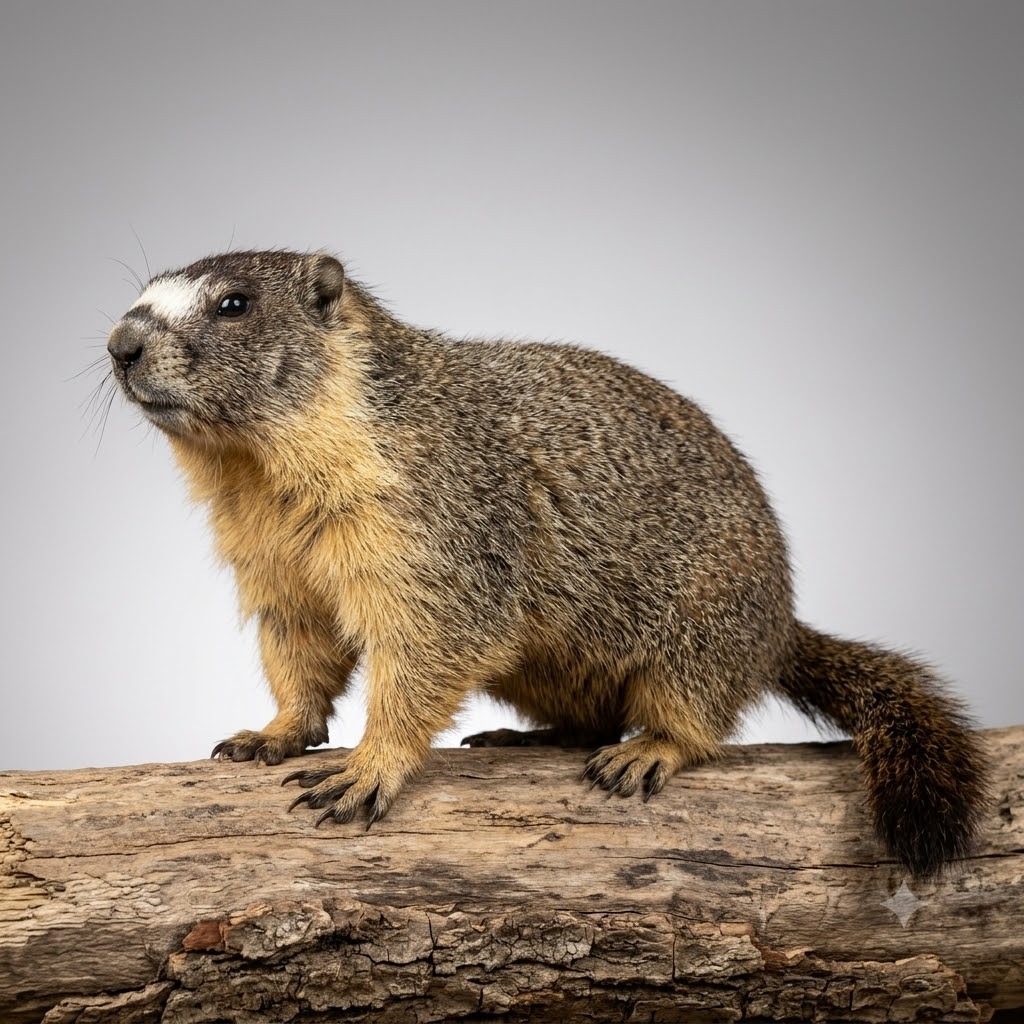
Stocky and roughly house-cat-sized, adults commonly run about 5-11 lbs, heaviest just before hibernation. Look for a grizzled brown-to-yellowish coat, a distinctly yellow or buff belly, a white patch between the eyes, short legs, small ears, and a dark bushy tail.
Range & Habitat
It occupies the Rocky Mountains and Great Basin - Colorado, Wyoming, Montana, Idaho, Utah, Nevada, and the mountainous parts of California, Oregon, and Washington. It favors talus slopes, boulder fields, rock piles, and subalpine or alpine meadows, usually at mid to high elevation, denning in burrows tucked under rocks.
Behavior & Sign
Diurnal and colonial, marmots often sun themselves on prominent boulders and give a sharp alarm whistle when alarmed, earning the "whistle pig" nickname. Sign includes burrow entrances beneath rocks, worn trails, scat piles, and clipped vegetation near dens. They hibernate for many months, disappearing underground through the cold season.
Hunting Seasons & Timing
In some states they carry varmint or unprotected status with liberal or no closed season, but this is not universal - a few states require a small-game license or protect them, so confirm locally. The realistic window is late spring through summer when they are active above ground; mid-morning to midday, when animals are sunning, is prime.
Hunting Methods
Spot-and-stalk and long-range shooting suit the open, rocky terrain best. Glass the slopes, locate a marmot on a lookout rock, build a stable rest, and take a deliberate shot. Ambushing near an active burrow entrance can also produce.
Gear & Optics
Rimfires like the .22 LR, .22 WMR, or .17 HMR handle close work, while varmint centerfires such as the .223 or .22-250 reach across canyons. Bring quality binoculars, a magnified riflescope, a bipod or pack rest, and a rangefinder for angled mountain shots.
Shot Placement & Field Care
A head shot gives a clean, instant kill at moderate range; a behind-the-shoulder heart-lung shot works with larger centerfires. Wear gloves when handling - western marmots can host fleas carrying plague (Yersinia pestis) and tularemia, so never handle an animal that looks sick.
Meat & Eating Quality
The meat is edible and was historically eaten, but it is dark and can be musky or greasy, especially in late summer when the animal is fattened for hibernation. Remove scent glands, trim the fat, and favor leaner spring animals; it does reasonably in slow-cooked stews.
Common Mistakes
Assuming "varmint" means no rules - status varies and sometimes a license is required. Handling bare-handed despite disease risk, taking greasy late-season animals for the table, and shooting off an unstable rest on steep ground are all avoidable errors.
Regulations & Conservation
The yellow-bellied marmot is common and not threatened, but its legal classification differs sharply by state, from year-round take to full protection. Always confirm current state regulations, and note that many national parks and some public lands prohibit shooting entirely.
FAQ
Q: Do I need a license to hunt them? It depends on the state - some treat them as unprotected varmints, others require a small-game license, so check your state's current rules.
Q: Is the meat safe to eat? Yes when thoroughly cooked, but wear gloves while field-dressing because of plague and tularemia risk from fleas and tissue.
Q: When is the best time to hunt? Late spring through summer, mid-morning to midday, while they are active and sunning; they hibernate through fall and winter.