Common Porcupine
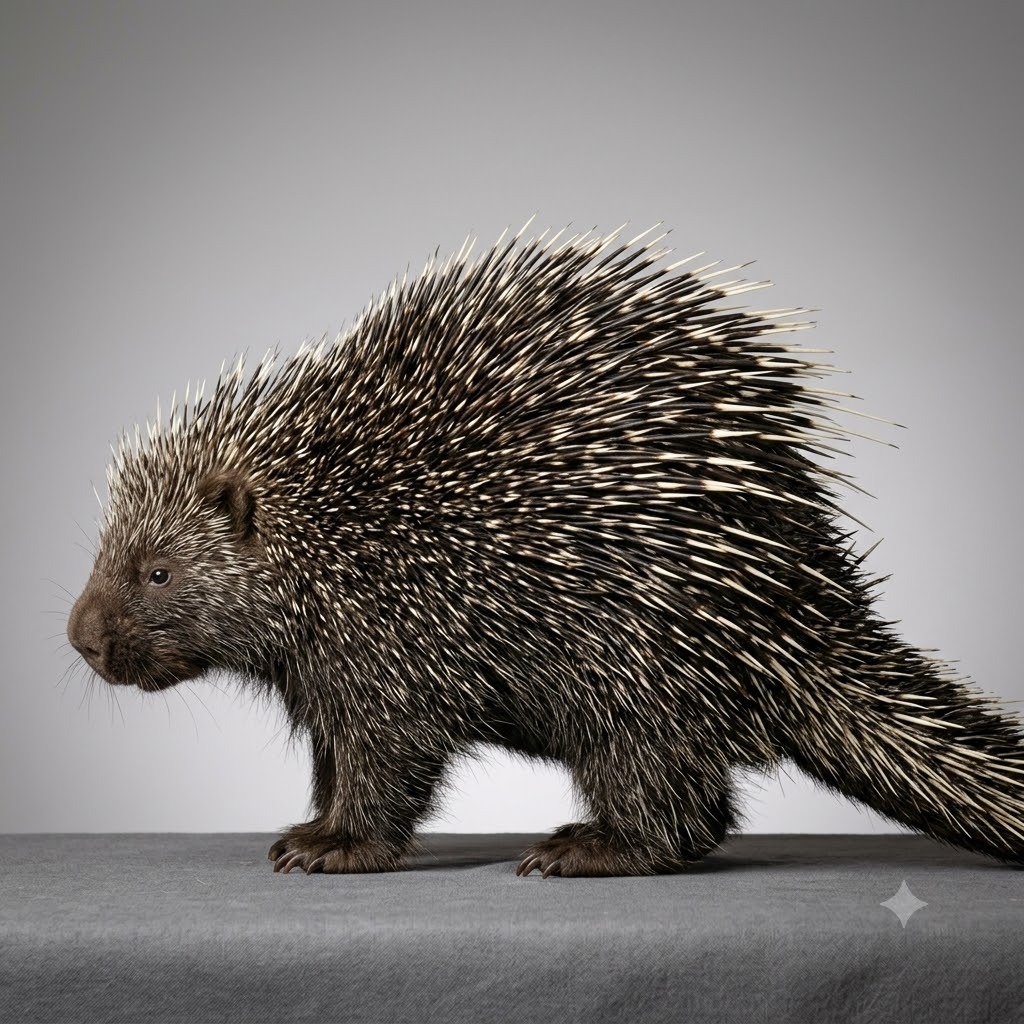
The Common (North American) porcupine is a large, slow-moving, quill-covered rodent - the continent's second-largest rodent after the beaver.
🗓️ Last reviewed: July 2026
Overview
The Common (North American) porcupine is a large, slow-moving, quill-covered rodent - the continent's second-largest rodent after the beaver. A bark-eating herbivore and notorious forestry pest, it is treated in many states as unprotected nongame rather than classic small game. Few hunters pursue it for sport; most encounters are incidental or nuisance-related.
Identification & Appearance
Stocky and rounded, with a small head, short legs, and a thick, muscular tail. The body is dark brown to blackish, overlaid with an estimated 30,000 barbed quills tipped white or yellow, concentrated over the back, rump, and tail. Adults commonly weigh 12 to 35 pounds. The lumbering gait and hunched silhouette are unmistakable.
Range & Habitat
Found across much of Canada, Alaska, the western US (including the arid Southwest), the upper Midwest, and the Northeast, but largely absent from the Southeast and much of the south-central US. It favors coniferous and mixed forests, and also uses shrublands, riparian corridors, desert scrub, and tundra edges. Dens are set in rock crevices, hollow logs, and standing trees.
Behavior & Sign
Mostly nocturnal, solitary, and a capable if unhurried climber, it spends much of winter feeding on inner bark high in trees. Look for patches of gnawed, girdled bark, nipped twigs under feed trees, oblong scat pellets, shed quills, and worn trails to dens. Porcupines crave salt and will chew bones, antlers, and sweat-soaked tool handles.
Hunting Seasons & Timing
Seasons vary enormously by state - some set no closed season for unprotected nongame, a few list them as small game with defined seasons and small bag limits, and others give full protection. Where legal, fall and winter concentrate animals in feed trees and make snow tracking easy. Always confirm current state regulations first.
Hunting Methods
Spot-and-stalk works well because porcupines are slow and often visible feeding in trees or crossing openings. Still-hunting near active feed trees, girdled timber, or den ledges is productive. Since the animal is neither wary nor fast, the emphasis falls on a clean, ethical shot rather than pursuit.
Gear & Optics
A .22 LR, .17 HMR, or air rifle where legal is plenty at close range; a shotgun with heavy shot also works. Optics needs are minimal - open sights or a low-power scope suffice. Critically, pack thick leather gloves and a sturdy knife for the quill-heavy field dressing that follows.
Shot Placement & Field Care
Aim for the head or the chest vitals, and avoid raking the quilled back. Approach any downed animal cautiously, since contact still drives barbed quills into flesh. Skin from the quill-free belly, rolling the hide back so quills point away, and keep gloves on throughout.
Meat & Eating Quality
Porcupine is edible and was historically prized as reliable survival food because the animal is so easy to catch. The fatty meat can carry a strong, piney or gamey flavor from a bark-and-conifer diet, so soaking and slow braising help. Remove the fat and glands, and cook it thoroughly.
Common Mistakes
The biggest error is careless handling - grabbing or dragging the carcass drives quills deep into hands and gear. Hunters also wrongly assume porcupines are legal everywhere, when they are protected in some states. Finally, rushing the skinning job spreads quills through the meat.
Regulations & Conservation
Legal status ranges from fully protected to unregulated nongame, so check your specific state's rules every season. The species is not threatened rangewide, though fisher recovery and local control efforts shift numbers in some areas. Fair chase still applies: take clean shots, use the meat or hide, and respect closures.
FAQ
Q: Can a porcupine throw its quills? No. That is a myth; the loosely rooted, barbed quills simply detach on contact and lodge in whatever touches them.
Q: Is porcupine good to eat? It can be. The fatty meat is edible and traditionally valued as survival food, but it benefits from careful cleaning and slow cooking.
Q: Do I need a hunting license for porcupine? Usually yes, and rules vary widely - some states protect them while others treat them as nongame. Confirm local regulations first.