Nine-Banded Armadillo
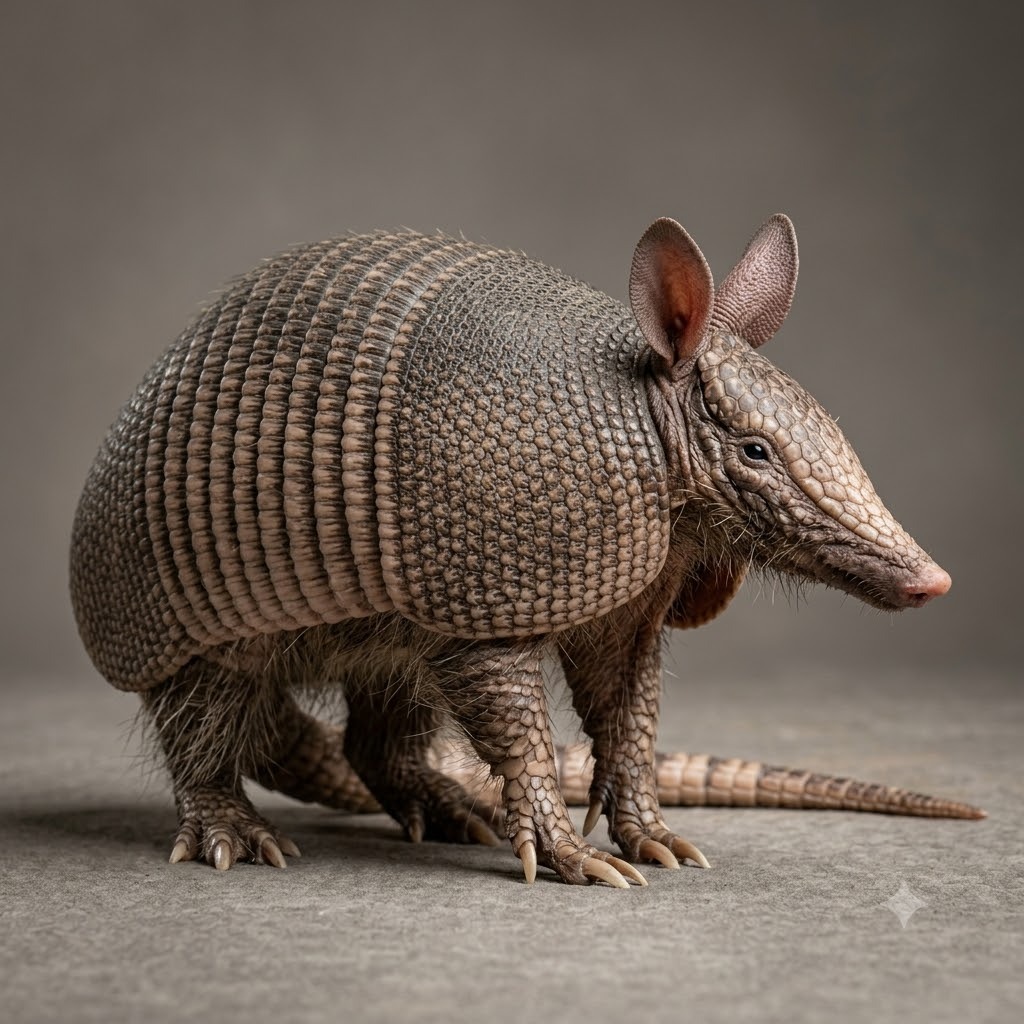
The nine-banded armadillo is a range-expanding mammal, a relatively recent arrival that spread into the US from Mexico (with local introductions in Florida), now common across the South and pushing north and west.
🗓️ Last reviewed: July 2026
Overview
The nine-banded armadillo is a range-expanding mammal, a relatively recent arrival that spread into the US from Mexico (with local introductions in Florida), now common across the South and pushing north and west. Most hunters pursue it as a nuisance or varmint rather than table game, though it is edible. The biggest reason for caution: armadillos are the only wild animal besides humans widely known to carry the bacterium that causes leprosy (Hansen's disease).
Identification & Appearance
A cat-sized animal in a leathery, bony shell, with a jointed midsection (usually eight to eleven movable bands despite the "nine" name), a long tapering armored tail, and a pointed, piglike snout. Sparse hair, large upright ears, and strong clawed forefeet built for digging. Adults typically run roughly 8 to 15 lbs.
Range & Habitat
Widespread in Texas, Louisiana, and across the Gulf and Southeast, with an expanding front into the lower Midwest and mid-Atlantic. Favors brushy, wooded bottomlands, riverbanks, and loose, diggable soil. Hard freezes and drought limit how far north it spreads.
Behavior & Sign
Mostly nocturnal and crepuscular, solitary, with poor eyesight but a keen nose. Sign includes shallow cone-shaped "nose pokes" where they root for grubs, extensive burrows, and rooted-up turf. Startled animals often leap straight up, which is why so many die on roads.
Hunting Seasons & Timing
Rules vary sharply by state, so verify locally. In Texas and several southern states they are non-game or nuisance animals that may be taken year-round with a hunting license; other states restrict methods or tie removal to landowner nuisance provisions. Warm evenings after rain, when soil is soft and animals forage actively, are most productive.
Hunting Methods
Spot-and-stalk at dusk and after dark is standard: walk field edges and creek bottoms slowly with a light and catch them rooting. Their weak vision and noisy digging let you close distance. Night hunting and light, thermal, or night-vision use are regulated differently state to state.
Gear & Optics
A .22 rimfire or a shotgun is plenty for their size; larger centerfire varmint rounds work where legal. A headlamp or hunting light and, where allowed, thermal or night vision help greatly. Always pack sturdy gloves for handling.
Shot Placement & Field Care
Aim for the head or the softer flank and shoulder just behind the armor, since the shell can deflect glancing hits. Always wear gloves when field-dressing, avoid contact with blood and fluids, and wash thoroughly afterward. This leprosy precaution is not optional.
Meat & Eating Quality
Historically eaten in the rural South (the "Hoover hog"), the meat is pale and pork-like. If you eat it, handle with gloves and cook it fully to well done; undercooked armadillo has been linked to Hansen's disease. Many hunters skip eating it for this reason.
Common Mistakes
Handling bare-handed, undercooking the meat, and expecting an easy shot when armor deflects poorly placed rounds. Also assuming rules are uniform: seasons, legal methods, and night-hunting laws differ widely between states.
Regulations & Conservation
Not threatened or endangered; listed as Least Concern and still expanding. Legally treated as non-game or nuisance across most of its US range, but confirm your state's license, method, and night-hunting rules before you go.
FAQ
Q: Can you really catch leprosy from an armadillo? Yes, it is documented but uncommon; wear gloves when handling and cook any meat thoroughly.
Q: Do I need a license? In most states yes, a basic hunting license, though nuisance and non-game status vary, so check locally.
Q: Is the meat safe to eat? Only if cooked well done and handled carefully; many hunters choose not to eat it at all.