Swamp Rabbit
The swamp rabbit, or "cane-cutter," is the largest cottontail in North America and a classic quarry of southern bottomland hunts, often chased with beagles through flooded timber and canebrakes.
🗓️ Last reviewed: July 2026
Overview
The swamp rabbit, or "cane-cutter," is the largest cottontail in North America and a classic quarry of southern bottomland hunts, often chased with beagles through flooded timber and canebrakes. Big, strong and at home in the water, it is a favorite of Deep South small-game traditions.
Identification & Appearance
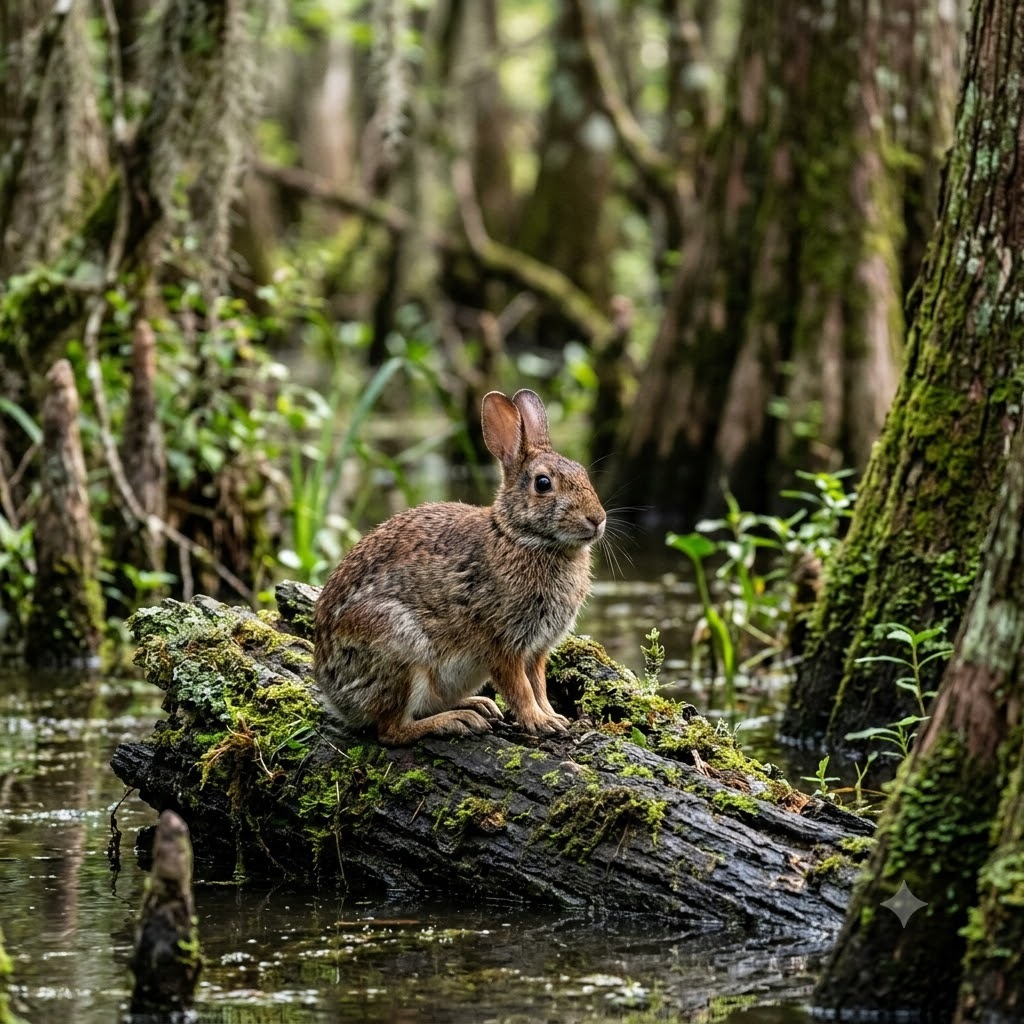
Swamp rabbits are large, dark, rusty-brown cottontails with a small buff eye-ring and coarse fur. They are noticeably bigger and darker than an eastern cottontail and are strong swimmers.
Range & Habitat
They live in the bottomland swamps, floodplain forests, canebrakes and wet thickets of the southern and lower Mississippi Valley states, always near water.
Behavior & Sign
Swamp rabbits take to water readily, swimming or hiding in it to escape, and use logs and high ground as feeding platforms - their droppings on logs are a classic sign. They run big circles ahead of hounds.
Hunting Seasons & Timing
Hunted in the fall and winter small-game seasons of the South, often best after a cold snap or a rise in water pushes rabbits onto higher ground.
Hunting Methods
The traditional method is running them with beagles through the bottoms and taking the shot as they circle back; jump-shooting the thickets and logs works too.
Gear & Optics
A 12 or 20-gauge with #6 shot, waterproof boots or waders for the wet ground, and blaze orange in thick cover with dogs and other hunters around.
Shot Placement & Field Care
Take clean going-away or crossing shots and field-dress promptly. As with all wild rabbits, wear gloves when cleaning and cook thoroughly.
Meat & Eating Quality
Swamp rabbit is excellent - a Southern table staple, best fried or slow-braised in gravy.
Common Mistakes
Losing rabbits to the water without a plan, poor footing in the bottoms, and not handling the meat safely.
Regulations & Conservation
Managed as small game with fall-winter seasons and limits by state. Handle with gloves and cook thoroughly for food safety. Confirm the local rules. We do not give legal advice.
FAQ
Why 'cane-cutter'? For its size and its canebrake haunts.
Do they really swim? Yes - readily, to escape hounds.