Antelope Jackrabbit
The antelope jackrabbit is one of the largest hares in North America, a long-eared sprinter of the southern Arizona desert named for the flashing white flanks it shows when it runs.
Last reviewed: October 2026
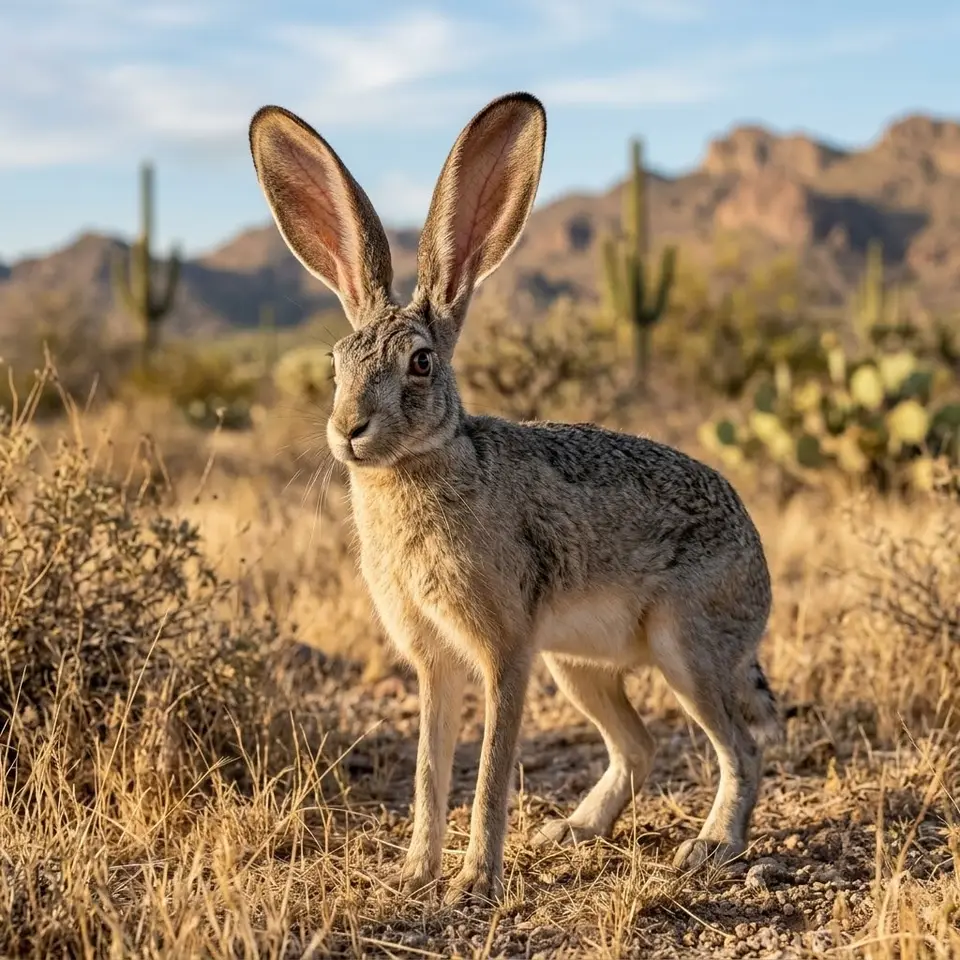 AI illustration
Overview
The antelope jackrabbit is one of the largest hares in North America, a long-eared sprinter of the southern Arizona desert named for the flashing white flanks it shows when it runs. Fast and wide-ranging, it offers challenging spot-and-stalk and running shots in stark desert country.
Identification & Appearance
Antelope jacks are big hares with enormous ears, pale gray-brown backs, and bright white sides and rump that flash as they run, giving the impression of a bounding antelope. They are larger and paler-sided than the black-tailed jackrabbit.
Range & Habitat
They occupy the open desert grassland, mesquite and cactus flats of southern Arizona and northern Mexico, in hot, sparse country.
Behavior & Sign
Antelope jacks are largely nocturnal, rest in shallow forms by day, and burst away at high speed flashing their white flanks. Sign includes forms, tracks and droppings on the desert floor.
Hunting Seasons & Timing
Often huntable year-round as small game or lightly regulated where locally abundant; cooler months are more comfortable. Confirm the local status.
Hunting Methods
Spot-and-stalk across open desert and walking them up from forms, with fast running shots the rule.
Gear & Optics
A flat-shooting rimfire-magnum or centerfire for longer open shots, or a shotgun for runners, plus good binoculars to pick them out of the scrub.
Shot Placement & Field Care
Steady rests on sitting hares or leading shots on runners; field-dress promptly, wear gloves, and cook the lean meat thoroughly.
Meat & Eating Quality
Jackrabbit is lean and strong, best in slow braises and stews, and always cooked well done. Rabbits and hares can carry tularemia: the Missouri Department of Conservation advises wearing gloves when cleaning them, discarding any animal whose liver shows numerous pinhead-size white spots, and cooking the meat to at least 165°F.
Mistakes That Cost a Shot
Misjudging desert distances and not cooking the lean, tough meat long enough.
Regulations & Conservation
Status varies from small game to unprotected by state. As with all wild hares, handle with gloves and cook thoroughly. Confirm the local rules. We do not give legal advice.
FAQ
Why 'antelope' jackrabbit? For the white flanks it flashes when running, like a pronghorn.
Biggest hare? Close - it is one of the largest hares in North America.
Field gear for small game
Links go to Amazon or a partner store (such as OpticsPlanet) and may earn us a commission at no extra cost to you. As an Amazon Associate we earn from qualifying purchases. We link gear types, not sponsors' picks: you choose the exact product.