White-tailed Jackrabbit
The white-tailed jackrabbit is a large hare of the northern plains and high sagebrush country, a fast, wide-open small-game target that turns white in winter.
🗓️ Last reviewed: July 2026
Overview
The white-tailed jackrabbit is a large hare of the northern plains and high sagebrush country, a fast, wide-open small-game target that turns white in winter. It offers challenging spot-and-stalk and running shots across big, empty terrain.
Identification & Appearance
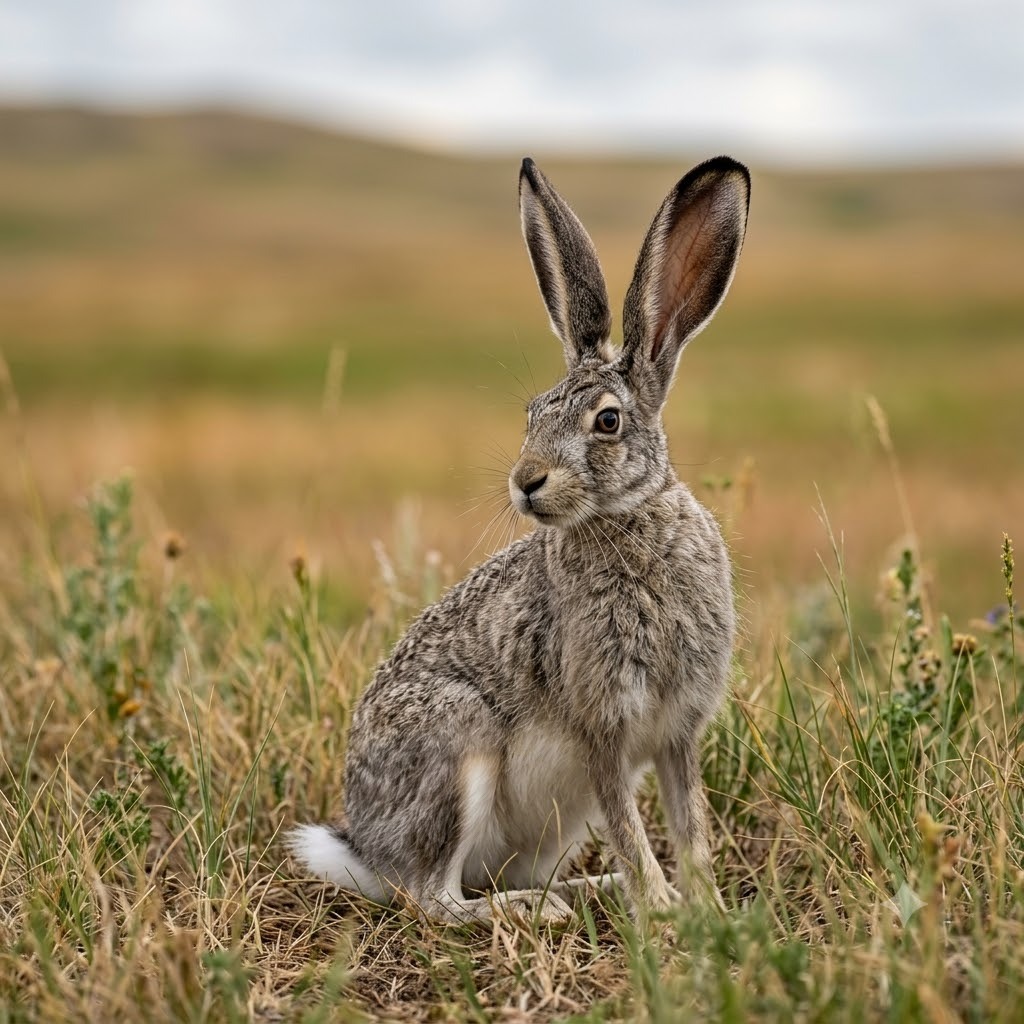
It is a big hare with very long ears and legs, brownish-gray in summer and largely white in winter, with an all-white tail. It is bigger than a cottontail and told from the black-tailed jackrabbit by its white tail and northern range.
Range & Habitat
White-tailed jacks occupy open prairie, grassland and high sagebrush across the northern Great Plains and Intermountain West, favoring wide, sparse country.
Behavior & Sign
They are largely nocturnal, rest in shallow forms during the day, and rely on speed - bursting away at up to 40 mph. Sign includes forms, tracks and droppings on open ground.
Hunting Seasons & Timing
Often huntable year-round as small game or unprotected where locally abundant; winter offers white coats against variable cover. Confirm the local status.
Hunting Methods
Spot-and-stalk across open country and walking them up out of forms, with fast running shots common. Some hunters use rimfire or shotgun.
Gear & Optics
A .22 rimfire or a rifle for longer open shots, or a shotgun with #4 to #6 for running birds-and-hares work. Good binoculars help pick them out of cover.
Shot Placement & Field Care
Steady rifle shots on sitting hares or leading shotgun patterns on runners. Field-dress promptly and check for signs of disease before keeping.
Meat & Eating Quality
Jackrabbit is lean, strong and best in slow braises and stews rather than quick cooking; always cook thoroughly.
Common Mistakes
Misjudging the long open-country distances and not cooking the lean, tough meat long enough.
Regulations & Conservation
Status varies from managed small game to unprotected by state. As with all wild hares, handle carefully and cook thoroughly for food safety. Confirm the local rules. We do not give legal advice.
FAQ
Cottontail or jack? Jacks are much larger with huge ears and legs and are hares, not rabbits.
Good eating? Lean and strong; best slow-cooked and always cooked through.