Nutria
The nutria is a large, invasive semi-aquatic rodent native to South America, introduced to the US via the fur trade in the early 20th century.
🗓️ Last reviewed: July 2026
Overview
The nutria is a large, invasive semi-aquatic rodent native to South America, introduced to the US via the fur trade in the early 20th century. Populations now damage wetlands, levees, and crops across the Gulf Coast and Pacific Northwest, so many states actively encourage hunting and trapping to control them. For hunters, it offers year-round, low-pressure shooting with genuine conservation value.
Identification & Appearance
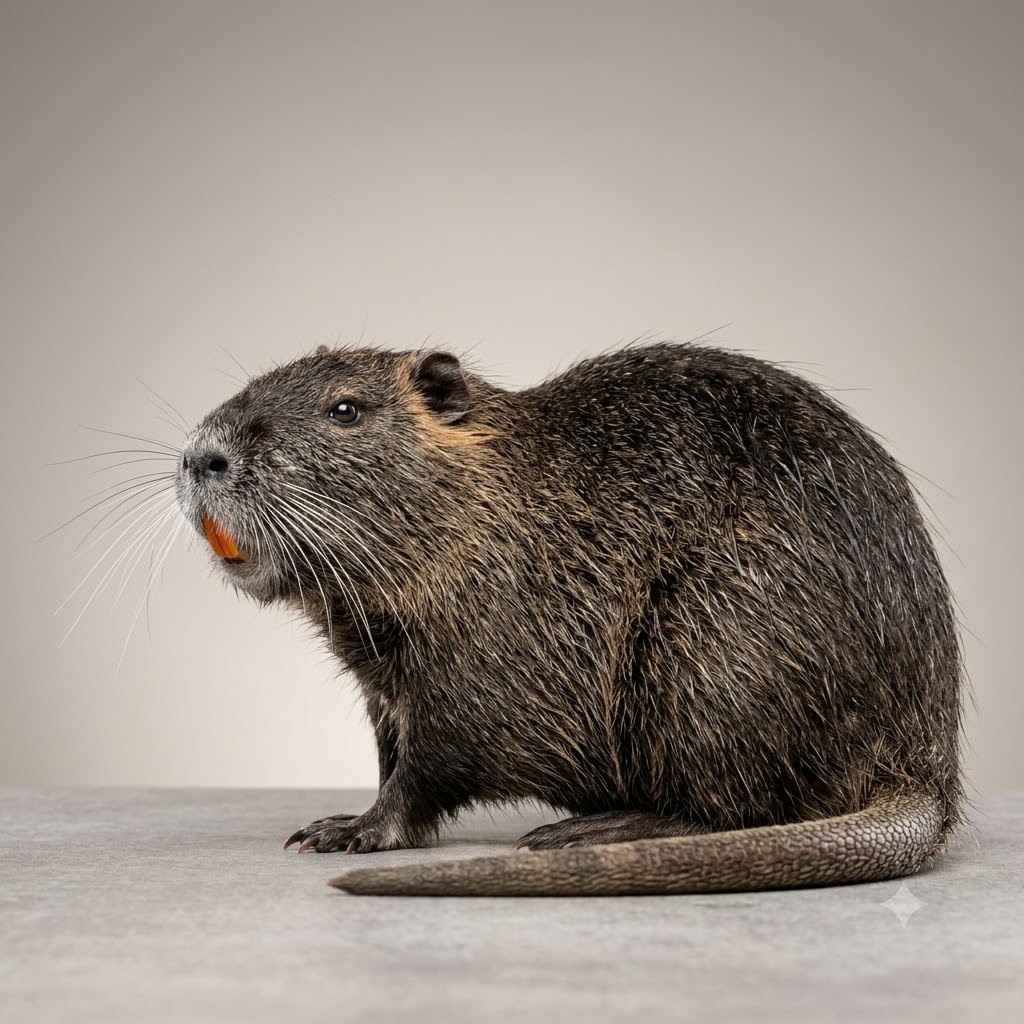
Nutria are stocky rodents, typically 15-25 pounds, roughly the size of a large housecat with a heavy body. Key features are large bright orange-yellow front incisors, a round nearly hairless rat-like tail (unlike a beaver's flat paddle or muskrat's flattened tail), and prominent white whiskers. Coat is coarse dark brown; the hind feet are webbed while the front feet are not.
Range & Habitat
They thrive in freshwater and brackish marshes, swamps, rivers, drainage canals, and pond edges. The largest US populations are along the Gulf Coast, especially Louisiana, with established populations in the Pacific Northwest, mid-Atlantic, and scattered other states. Look for them wherever slow water meets soft, vegetated banks they can burrow into.
Behavior & Sign
Nutria are most active from dusk through early morning but are readily seen feeding during daylight, especially in cooler months. Sign includes burrow openings in banks, well-worn "slides" and trails, floating feeding platforms of clipped vegetation, and distinctive scat. They are strong swimmers and dive when alarmed, often surfacing a short distance away.
Hunting Seasons & Timing
In many states nutria are classified as invasive or nuisance and can be hunted year-round with no bag limit, though rules vary widely, so always confirm locally. Some states regulate them as furbearers with defined trapping seasons. Cooler months are best for pelt quality and daytime activity, and low-light hours produce the most sightings.
Hunting Methods
Common approaches are spot-and-stalk along banks, ambush at active feeding areas or crossings, and boat-based hunting on canals and marsh edges. Calling is not typical; patience near fresh sign is more effective. Trapping with body-grip or foothold sets in water is widely used for control, subject to local trapping regulations.
Gear & Optics
A .22 LR is adequate at close range, though .22 Magnum, .17 HMR, or a small-caliber centerfire give cleaner kills at distance. Shotguns with heavy shot work well in thick marsh. A basic riflescope or red dot, hip waders or a small boat, and gloves for handling are the practical essentials.
Shot Placement & Field Care
Aim for the head or high-chest/shoulder for a quick, humane kill, as nutria are tough for their size. Retrieve promptly since dead animals sink or drift. Wear gloves when field dressing: nutria can carry parasites and diseases, so avoid contact with fluids and wash thoroughly afterward.
Meat & Eating Quality
Nutria meat is lean, mild, and edible, often compared to rabbit, and has been promoted in Louisiana as a sustainable protein. Cook it thoroughly to a safe internal temperature. Only take meat from healthy-looking animals and never from those appearing sick.
Common Mistakes
Hunters often mistake nutria for beaver or muskrat; check the round tail and orange teeth. Others skip gloves and disease precautions, or wound animals near water and lose them because carcasses sink. Assuming "invasive means no rules" is another error - seasons and methods still vary by state.
Regulations & Conservation
Nutria are not protected and are widely treated as invasive pests, but legal status, allowed methods, and licensing differ by state and locality. Some areas run bounty or removal programs. Always verify current regulations with your state wildlife agency before hunting or trapping, and follow firearm-discharge and trapping laws.
FAQ
Q: Can I hunt nutria year-round? In many states yes, since they are invasive, but rules vary, so confirm with your state wildlife agency first.
Q: Is nutria meat safe to eat? Yes when taken from healthy animals and cooked thoroughly; wear gloves during handling to avoid parasites and disease.
Q: How do I tell a nutria from a beaver or muskrat? A nutria has a round rat-like tail and bright orange front teeth, unlike the beaver's flat paddle tail or muskrat's smaller flattened tail.