Tundra Swan
The tundra swan is North America's most common wild swan and a rare, permit-only waterfowl trophy in the handful of states that allow a limited hunt.
Last reviewed: October 2026
 AI illustration
Overview
The tundra swan is North America's most common wild swan and a rare, permit-only waterfowl trophy in the handful of states that allow a limited hunt. Enormous, all-white and hunted over fields and water, a swan is a special once-a-year tag for dedicated waterfowlers.
Identification & Appearance
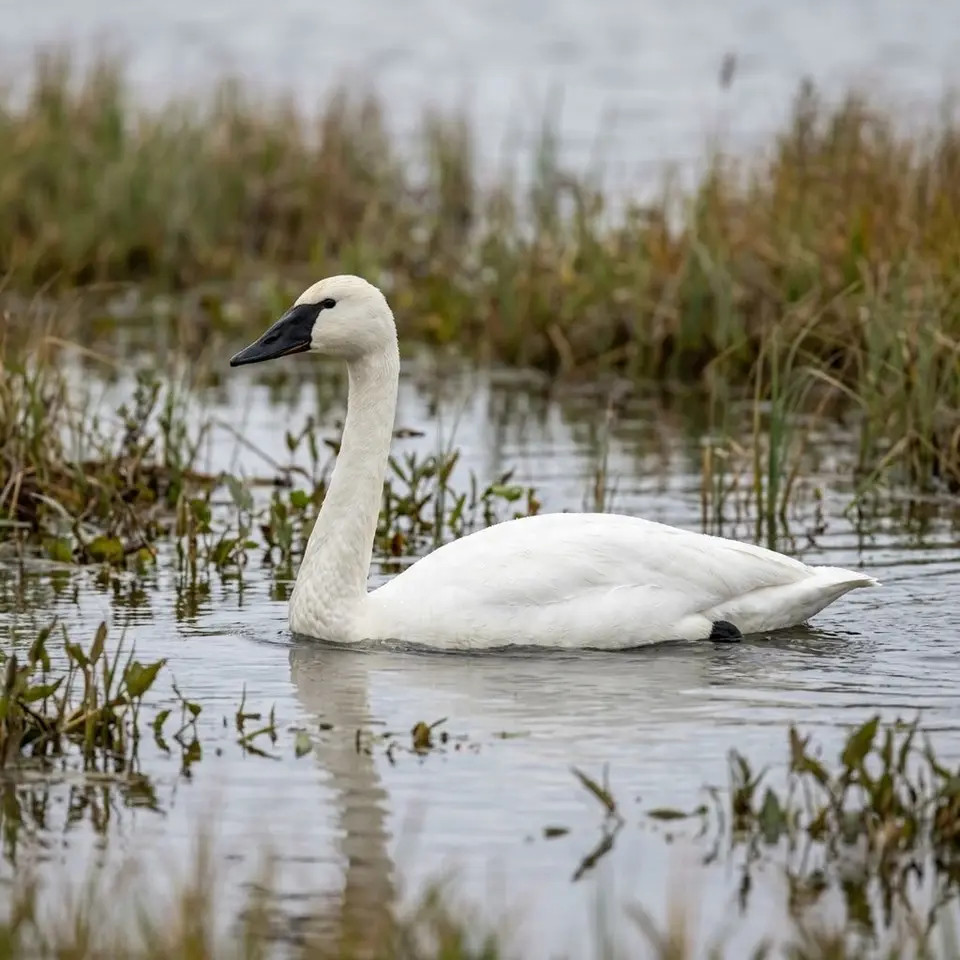
Tundra swans are huge, pure-white birds with a black bill often marked by a small yellow spot at the base, and a long straight neck. They dwarf every duck and goose in the marsh.
Range & Habitat
They breed on the Arctic tundra and winter on coastal bays, large lakes and farm fields in scattered flyway areas where limited hunts occur.
Behavior & Sign
Swans travel in family groups and flocks, feed in grain fields and shallow water, and are wary and vocal. Sign includes very large tracks and feathers in feeding fields.
Hunting Seasons & Timing
Hunted only in specific states under a limited swan permit during the fall and winter waterfowl seasons, over fields and roost water.
Hunting Methods
Large goose or swan decoy spreads in feeding fields and over water, with patient concealment; identifying the legal species is essential where trumpeter swans are protected.
Gear & Optics
A hard-hitting 12-gauge with steel BBB to T, big decoys and layout blinds. This is heavy-goose-style hunting for a very large bird.
Shot Placement & Field Care
Take clean, close shots and be certain of the species before firing. Cool the large bird promptly and pluck for the table.
Meat & Eating Quality
Grain-fed tundra swan is surprisingly good - dark, rich meat best roasted or braised.
Where Hunters Go Wrong
The critical error is misidentifying a protected trumpeter swan; always confirm the species before shooting.
Regulations & Conservation
Swan hunting is by limited permit in only a few states, with strict quotas, tagging and species-identification rules to protect trumpeter swans. Always confirm the current permit process and regulations before hunting. We do not give legal advice.
FAQ
Are tundra swans endangered? No. The IUCN lists the tundra swan as Least Concern; the whistling swan, its North American form, is the continent's most common swan, estimated at almost 170,000 around 1990. It breeds on Arctic and subarctic tundra and winters in grassland and marsh, often near the coast (Wikipedia).
Can I just go hunt a swan? No - it requires a special limited permit in specific states only.
Trumpeter vs tundra? Trumpeters are protected; know the difference before you shoot.
Field gear for waterfowl
Links go to Amazon or a partner store (such as OpticsPlanet) and may earn us a commission at no extra cost to you. As an Amazon Associate we earn from qualifying purchases. We link gear types, not sponsors' picks: you choose the exact product.