Black-Bellied Whistling Duck
The black-bellied whistling duck is a long-legged, goose-like waterfowl of the Gulf Coast and Southwest, once called the black-bellied tree duck.
🗓️ Last reviewed: July 2026
Overview
The black-bellied whistling duck is a long-legged, goose-like waterfowl of the Gulf Coast and Southwest, once called the black-bellied tree duck. It is one of the few US ducks that perches and nests in trees, and its range has been expanding steadily north and east. For hunters it is a legal, increasingly common addition to the duck bag in southern states.
Identification & Appearance
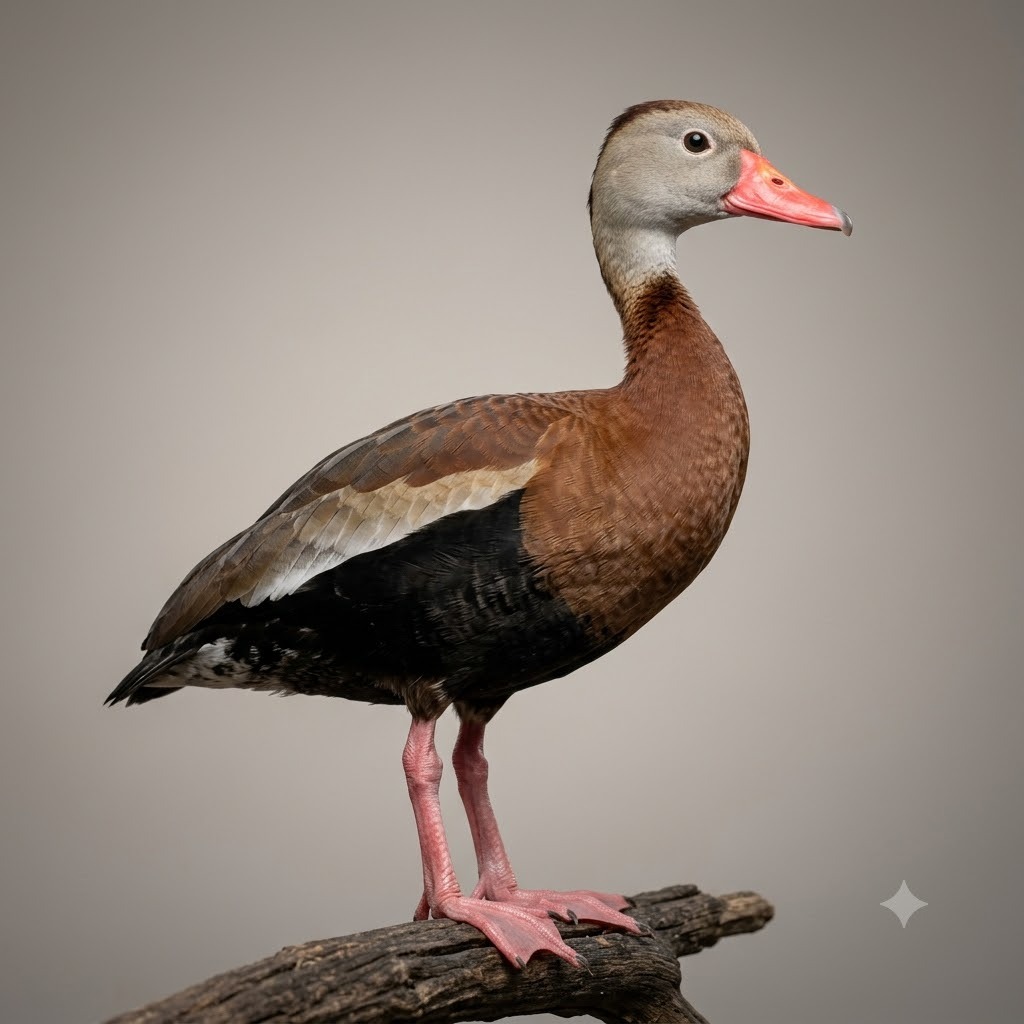
Both sexes look identical: a bright coral-pink bill, pink-red legs, a gray face with a white eye-ring, chestnut crown, neck, and breast, and a solid black belly. In flight a broad white wing patch flashes across the upper wing, and the long legs trail well past the tail. The high, squealing whistle is often heard before the bird is seen.
Range & Habitat
Core US range centers on southern Texas, Louisiana, and Florida, with strong footholds in Arizona and along the Gulf, plus scattered records pushing farther north and east. They favor shallow wetlands, flooded fields, stock ponds, and wooded margins near water. Nest cavities and waste grain largely dictate where flocks settle.
Behavior & Sign
Highly social and vocal, they gather in noisy flocks and often feed at night in grain and rice fields, loafing near water by day. They perch readily on branches, snags, fences, and nest boxes - unusual behavior among ducks. Look for whistling flocks moving at dawn and dusk and heavy use of harvested croplands.
Hunting Seasons & Timing
They are hunted under the federal migratory bird framework during each state's regular duck season, and they count toward the daily duck bag limit. The best shooting is usually early season in the South, when local birds concentrate on fields and ponds. Always confirm your state and flyway dates, since seasons and any species limits change year to year.
Hunting Methods
Pass-shooting and decoying over flooded fields, rice, or small ponds both work well, since the birds commit readily to feed and roost sites. They respond to whistling-duck decoys and their own call, and often fly low in loose flocks. Scouting evening field patterns the day before is the surest setup.
Gear & Optics
Standard duck gear covers them: a 12 or 20 gauge with non-toxic steel shot in #2 to #4 and an improved-cylinder to modified choke. A field or marsh blind and a small spread of floating or full-body decoys is plenty. Binoculars help confirm the species and read incoming flocks.
Shot Placement & Field Care
Take clean, in-range shots and aim for the head, neck, and forward body as birds decoy. Retrieve promptly, since wounded birds can dive and swim into cover. Cool the birds quickly and keep them dry until cleaning.
Meat & Eating Quality
Because they feed heavily on grain, black-bellied whistling ducks are widely considered good table fare, with mild, dark breast meat. Breast them out or pluck whole; the meat suits searing rare-to-medium or slow braising. As with all wild waterfowl, cook to your comfort and remove any shot.
Common Mistakes
Assuming they are protected and off-limits - they are legal game in season - or, conversely, forgetting they count against the duck limit. Many hunters also overlook their tree-perching and field-feeding habits and set up only on open water. Confusing them with the similar fulvous whistling duck is another frequent error.
Regulations & Conservation
Populations are stable and expanding, and the species is not threatened. It is protected by the Migratory Bird Treaty Act and may be taken only in legal season, with non-toxic shot and a valid license plus federal duck stamp where required. Verify current bag limits and shooting hours before every hunt.
FAQ
Q: Are black-bellied whistling ducks legal to hunt? Yes, in states with a season they are legal migratory game and count toward the daily duck bag limit.
Q: Do they really nest in trees? Yes, they are cavity nesters that use tree hollows and readily take to nest boxes.
Q: Are they good to eat? Generally yes; their grain-heavy diet gives mild, pleasant dark meat that many hunters rate highly.