Cackling Goose
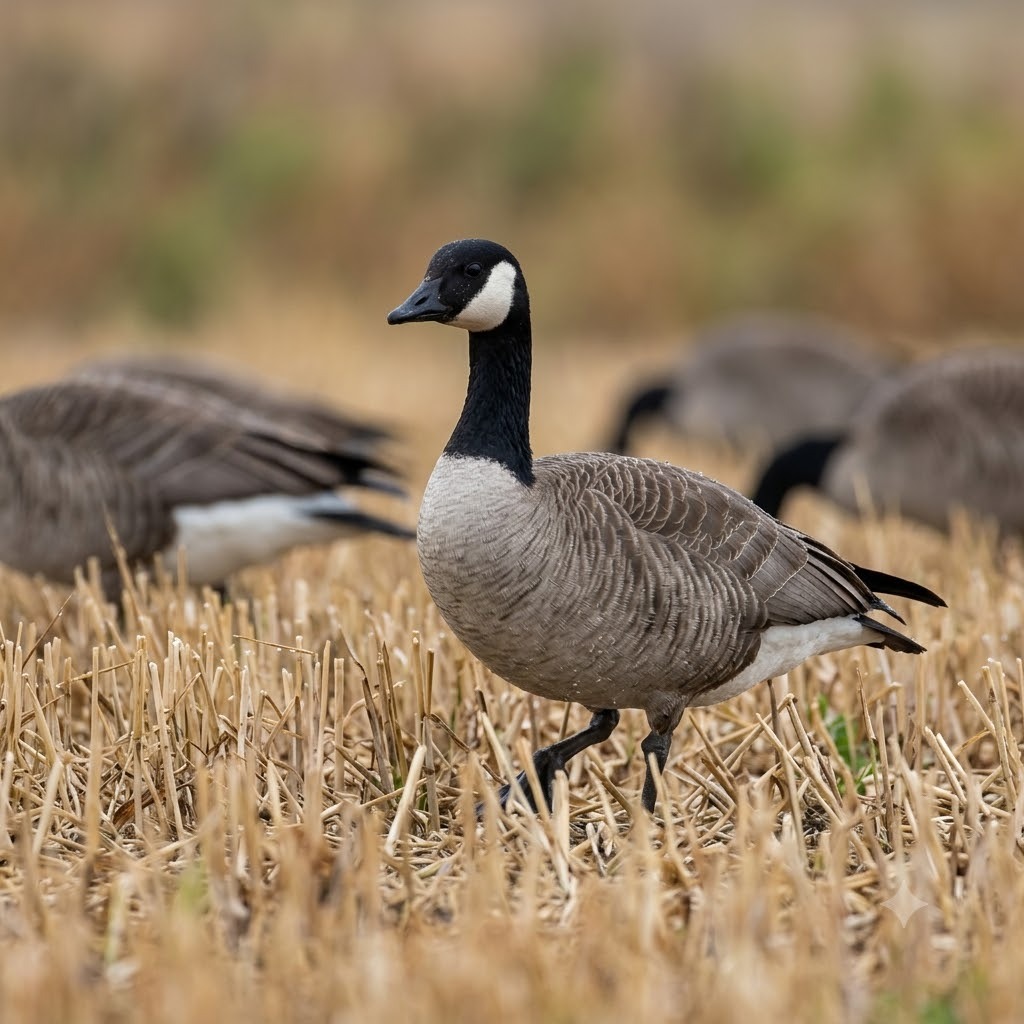
The cackling goose is the compact, small-bodied cousin of the Canada goose, only recently recognized as a separate species.
🗓️ Last reviewed: July 2026
Overview
The cackling goose is the compact, small-bodied cousin of the Canada goose, only recently recognized as a separate species. Fast, high-pitched and often mixed into Canada goose flocks, these little "cacklers" are a favorite of West Coast and prairie goose hunters.
Identification & Appearance
Cackling geese look like miniature Canada geese with the same black neck and white cheek patch but a much smaller body, short stubby bill and steeper forehead, and a higher-pitched call. Size and the tiny bill are the keys.
Range & Habitat
They breed in the far Arctic and winter in the Pacific and Central flyways, feeding in grain fields, pastures and shallow wetlands, often alongside Canada geese.
Behavior & Sign
Cacklers flock in large, fast-flying, high-pitched groups and pile into fields to feed. They decoy well to goose spreads but flare from poor concealment.
Hunting Seasons & Timing
Hunted in the regular goose seasons of fall and winter, over fields and roost water, sometimes with separate bag limits from Canada geese.
Hunting Methods
Field spreads of goose decoys, layout blinds and calling under the flight lines; they respond to the same setups as Canada geese.
Gear & Optics
A 12-gauge with steel #2 to BB, goose decoys and layout blinds. Standard field-goose gear works.
Shot Placement & Field Care
Take clean shots over the decoys and cool the birds promptly. They pluck and roast well.
Meat & Eating Quality
Grain-fed cacklers are excellent - tender and mild, among the better-eating geese.
Common Mistakes
Confusing bag limits with Canada geese and skimping on concealment for a wary field bird.
Regulations & Conservation
Cacklers may carry separate seasons and limits from Canada geese in some areas. Always confirm the current federal and state regulations before hunting. We do not give legal advice.
FAQ
Cackling or Canada goose? Cacklers are much smaller with a tiny stubby bill and a high-pitched call.
Good eating? Yes - tender, mild, grain-fed birds.