Fulvous Whistling Duck
The Fulvous Whistling Duck is a tall, long-legged, goose-like waterfowl of southern marshes and flooded rice country.
🗓️ Last reviewed: July 2026
Overview
The Fulvous Whistling Duck is a tall, long-legged, goose-like waterfowl of southern marshes and flooded rice country. It is legal game in the handful of states where it regularly occurs, where it counts toward your general daily duck bag limit (typically six) rather than carrying a species-specific sublimit in most frameworks. Because it is scarce and localized in the US, most hunters take it incidentally rather than filling a strap with them. Take it seriously as a fair-chase bird: identify it cleanly before you shoot, because it is scarce and easily confused with protected look-alikes.
Identification & Appearance
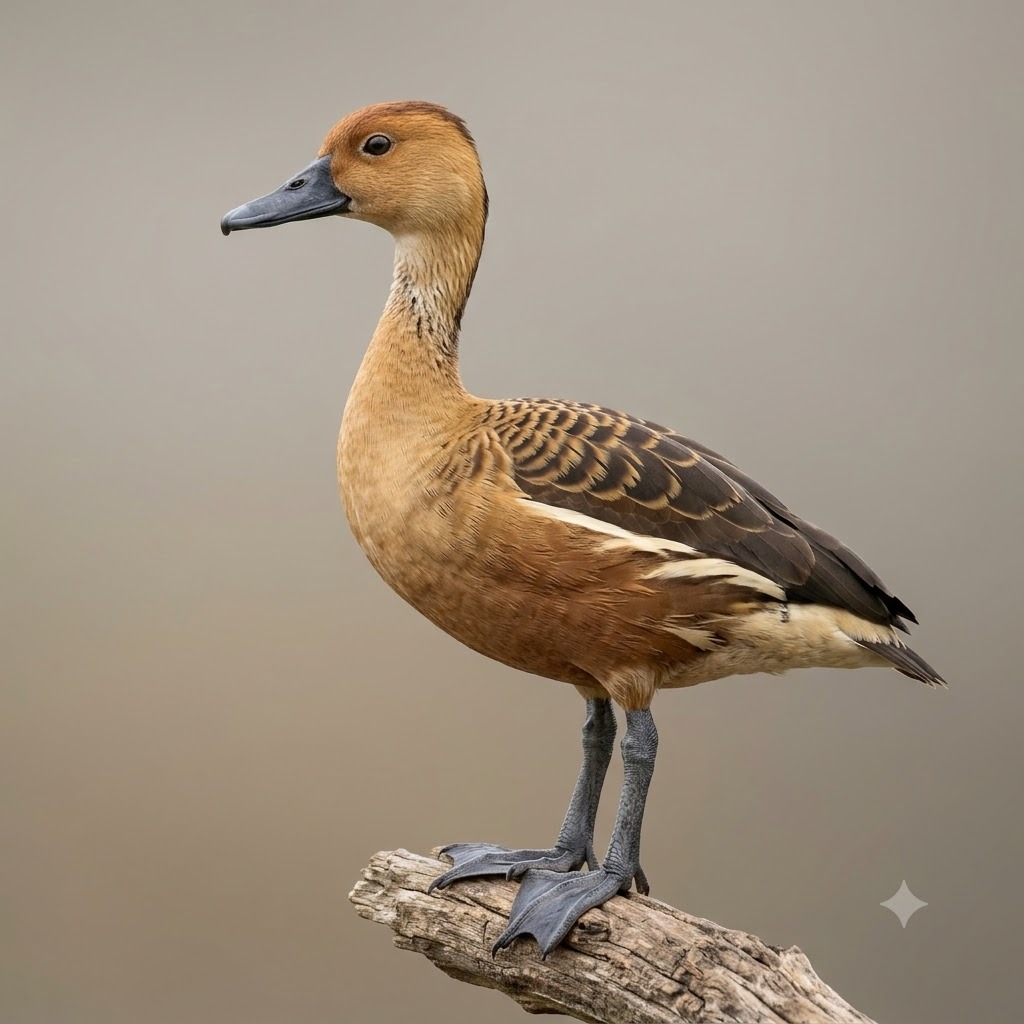
Warm tawny (fulvous) head, neck, and underparts sit above a dark brown back scalloped with buff feather edges. The dead giveaway is a line of creamy-white feathers forming a stripe along each flank, plus a white U-shaped band across the rump that flashes in flight. The bill and long legs are dark bluish-gray, and the legs trail well past the tail on the wing. Sexes look alike, and the call is a squealing two-note whistle.
Range & Habitat
In the US it is concentrated along the Gulf Coast of Texas and Louisiana and across peninsular Florida, with smaller and more erratic numbers elsewhere in the South. It favors freshwater marshes, flooded rice fields, shallow impoundments, and weedy pond edges rather than open big water. Globally the species is widespread across the tropics, but US birds are a limited resource.
Behavior & Sign
Gregarious and vocal, they gather in loose flocks and feed heavily at night and dusk on seeds, especially waste rice and marsh-plant seed. Listen for whistling flocks moving at low light; look for them loafing on levees and shallow flats. Unlike its cousin, this species nests in dense emergent vegetation over water rather than in tree cavities.
Hunting Seasons & Timing
There is no special season; you may take it only during your state's regular duck season, and only where the species occurs. Best odds come early and late in the day near rice and freshwater wetlands in the Gulf and Florida. In most states it simply counts toward your general daily duck bag limit rather than carrying its own sublimit, but confirm your state's framework before you hunt.
Hunting Methods
Most are taken incidentally over decoys in rice fields, marshes, and flooded pastures during general duck hunts. Pass-shooting flocks trading between roost and feed at first and last light also works. Small mixed-duck or whistling-duck decoy spreads near shallow feed are the practical setup.
Gear & Optics
A standard 12- or 20-gauge waterfowl shotgun with an improved-cylinder to modified choke covers typical decoying ranges. Federally required nontoxic shot (steel #2 to #4) is plenty for a bird of this size. Bring a lanyard-mounted call only as backup; good hides and correct field placement matter more than optics here.
Shot Placement & Field Care
Take clean, in-range wingshots and pass on marginal, high birds to avoid crippling a scarce species. Retrieve promptly, keep birds cool, and field-dress soon in warm southern weather. Leave a fully feathered wing attached where regulations require it for identification.
Meat & Eating Quality
Because they feed on rice and seeds, whistling ducks are generally rated good table fare, with dark, lean breast meat. Breast them out or pluck and roast whole; do not overcook. Quality drops if birds sit warm, so ice them quickly.
Common Mistakes
The biggest error is misidentification: do not confuse it with the Black-bellied Whistling Duck (red bill, gray face, black belly) or protected marsh birds. The second is losing track of your general daily duck bag limit, since this bird counts toward that aggregate rather than being unlimited. The third is skybusting a rare bird instead of waiting for a fair shot.
Regulations & Conservation
You need a state hunting license, HIP registration, and a federal Duck Stamp, plus compliance with nontoxic-shot rules. The species is not endangered, but US numbers are modest and localized, so most hunters treat it as an incidental bird and lean on voluntary restraint; know your specific state framework before hunting. When in doubt about identity or legality, do not shoot.
FAQ
Q: How many can I legally shoot in a day? In most states it counts within your overall daily duck bag limit (typically six) with no fulvous-specific sublimit, but confirm your state's exact rule since frameworks change.
Q: Is it good to eat? Yes, its grain-and-seed diet makes it well-regarded table fare with dark, lean meat.
Q: How do I tell it from a Black-bellied Whistling Duck? The fulvous is tawny overall with a dark bill and a white flank stripe, while the black-bellied has a bright red bill, gray face, and black belly.