Venison Ribs, Brisket & Flank
The thin belly-side cuts carry the deer's tallow - which coats the palate cold. The honest playbook: trim hard, braise-then-crisp what's worthy, grind or stock the rest.
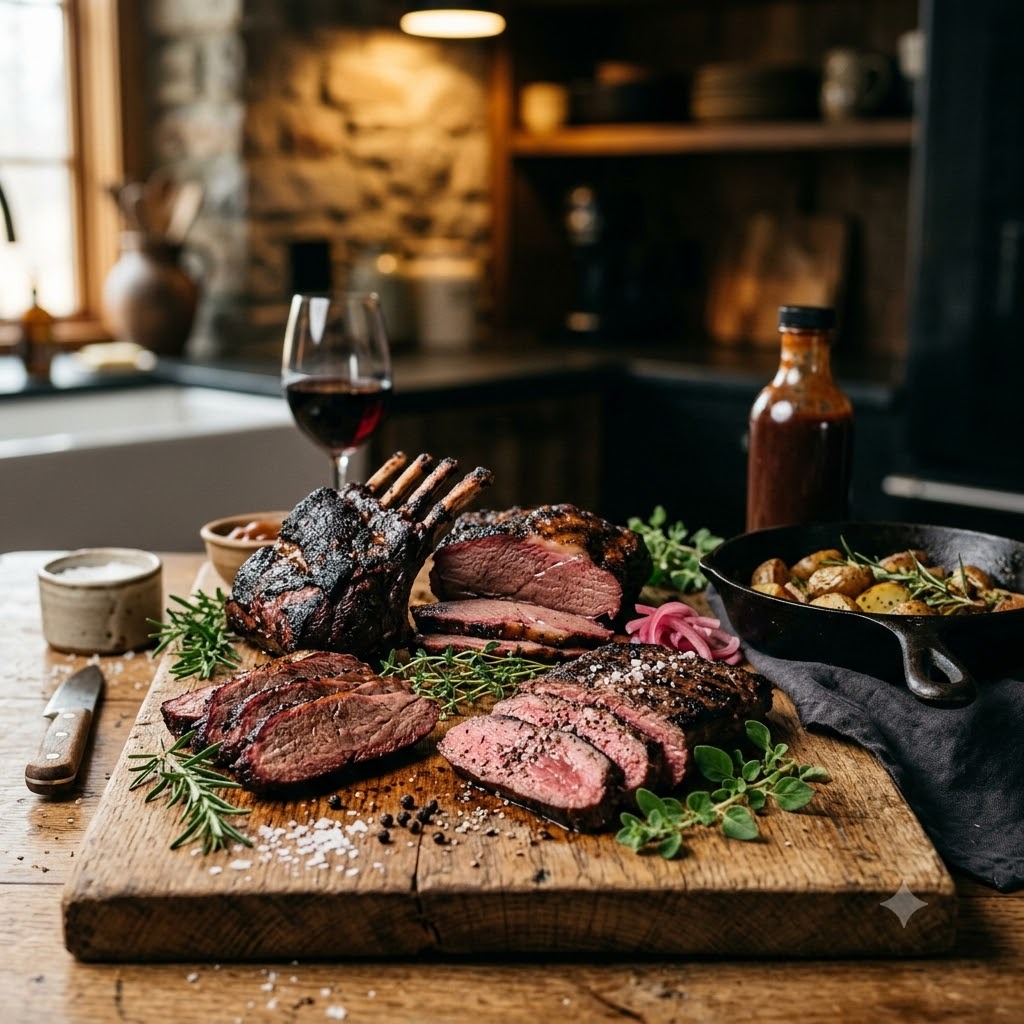
Here's the cut family where honesty beats romance: deer ribs, brisket and flank LOOK like barbecue's promised land and eat like its cautionary tale - because deer fat is tallow-hard, coats the palate at anything below piping hot, and lives thickest exactly here. The playbook that actually works: trim the waxy fat ruthlessly, give the meaty specimens a braise-then-crisp treatment (never a naked smoke like pork), and send thin or fat-laced pieces to the grinder and stockpot without guilt. Done that way, rib meat and brisket earn their place; done wishfully, they're the freezer's most abandoned packages.
What it is
The body-wall trio: ribs (thin intercostal meat between prominent bones), brisket (the chest plate - thin on whitetails, real on elk), and flank/belly flaps (the thin abdominal sheets). All carry heavy deposits of the deer's hard, high-melting-point fat.
Why it eats this way
Deer fat isn't beef fat: it's tallow-saturated, melts high and re-sets on your palate as wax - the source of most 'gamey coating' complaints. The meat itself is fine (rib meat is genuinely rich); the fat and membrane management decides everything.
Breaking it down
Trim visible fat aggressively - on these cuts especially, fat is not flavor, it's the off-flavor. Ribs: take slabs where meat over the bones exceeds a finger's thickness, strip the rest as trim. Brisket: peel the plate, trim hard, assess honestly (elk/moose briskets are real cuts; small whitetail ones are grind). Flank: thin sheets = grind, jerky sheets, or roulade wrappers.
How to cook it
Braise-then-crisp is the family recipe: rib slabs braised or pressure-cooked tender first, THEN glazed hot and fast over coals or broiler - served hot enough to keep the remaining fat liquid. Elk brisket takes a barbacoa braise or corning brine. Flank (trimmed well) can grill hot-and-fast to medium-rare sliced thin across the grain - the one dry-heat exception here.
Recipes that fit
Glazed braised rib slabs finished over the fire; corned venison brisket (elk-class) with cabbage; barbacoa-braised brisket tacos; flank 'deer bulgogi' sliced paper-thin; everything else into chorizo-spiced grind where seasoning meets the fat head-on.
Common mistakes
Low-and-slow smoking deer ribs like pork spares (tallow + 6 hours = candle dinner), keeping the fat 'for moisture' (beef logic, wrong species), serving any of it lukewarm, bone-sawing rib racks with meat too thin to bother (weigh the yield honestly), and guilt about grinding - the grinder is the CORRECT destiny for most of this family; the exceptional pieces are the exception.
🍳 Home-cooking guidance from the hunting kitchen, not food-safety authority - for temperatures, CWD-area advice and handling rules, follow your official food-safety and wildlife agencies. See our shot to freezer guide for the field-care chain that quality starts with.