Venison Bones & Stock
The frame, joints and marrow bones simmer into the darkest, most gelatin-rich stock in your kitchen - the last part of the deer, and the base of next year's best meals.
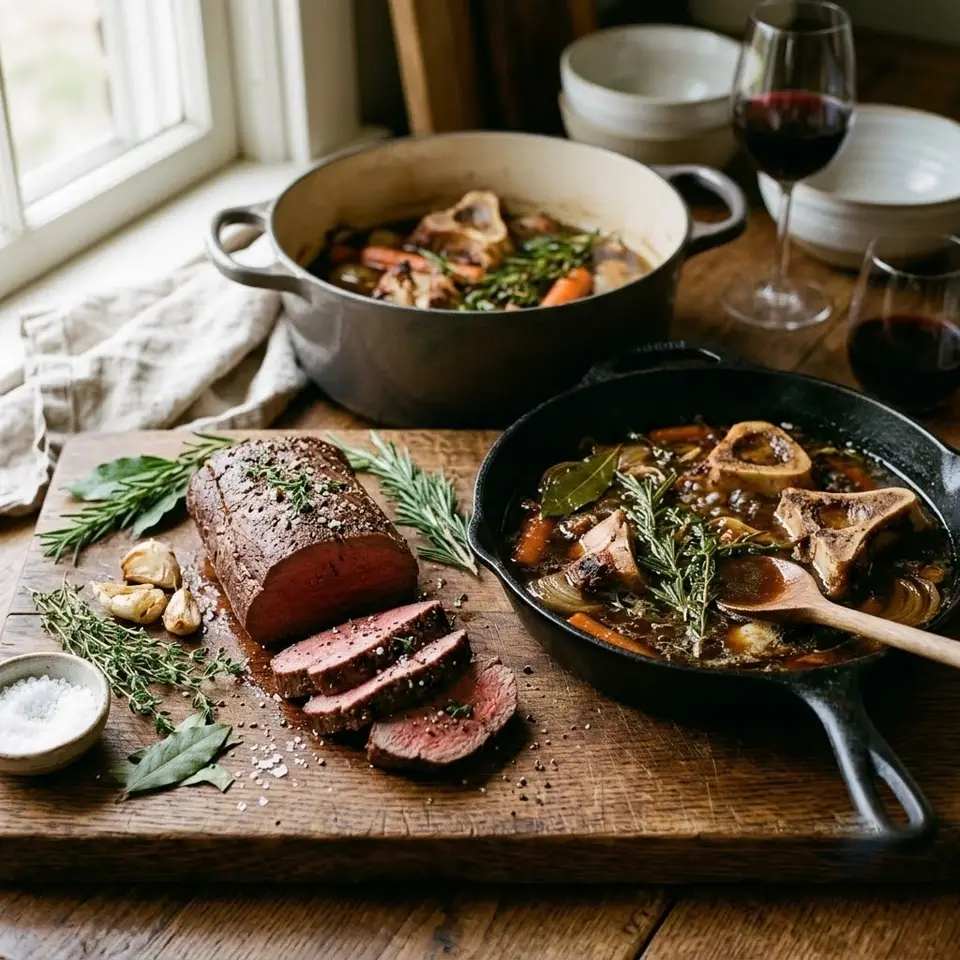
After the last package is wrapped, many deer frames go to the burn pile carrying a final harvest nobody claimed: stock. Venison bones (joints, spine sections, shanks' spent bones, the marrow femurs) roast dark and simmer into a stock so gelatin-rich it sets like aspic in the fridge, deeper and gamier-in-the-good-way than any beef carton. It's the difference between venison stew made with water and the version people ask about; it costs a sheet pan, a tall pot and a lazy Sunday; and it's the tidy ethical bow on using the whole animal.
What it is
The stock skeleton: leg bones split or sawn for marrow access, joint knuckles (the gelatin motherlode), spine and rib sections with their clinging meat, plus the braise-spent bones from neck and shank dinners (already half-rendered - save them frozen). Where chronic wasting disease is present, the rules change. The CDC, as the Arkansas Game and Fish Commission quotes it, strongly recommends having a deer or elk tested before eating the meat when it was taken where CWD is known, so wait for the result before any bone goes in the pot. Leave the spine and head out altogether: North Dakota Game and Fish, for one, counts only meat with no part of the spinal column or head attached among a carcass's lower-risk portions. When in doubt, follow your state agency's word, not ours.
Why it eats this way
Bones contribute what meat can't: collagen from joints and connective tissue converts to gelatin (body, silkiness, the fridge-set test of a proper stock), marrow adds roasted richness, and the deep-roast fond on the bones is where the color and half the flavor live.
Breaking it down
Saw or ask your processor for stock-cut sections (10-15 cm); at home, a folding saw on a clean tailgate does fine. Roast everything dark - 220°C until deeply browned, tomato-paste-smeared for the classic French depth. Freeze bones in pot-sized batches if stock day isn't today.
How to cook it
The long game: roasted bones + charred onion, carrot, celery + bay, peppercorns, a splash of vinegar, water to cover, then the barest simmer (never a boil) for 8-12 hours (or a pressure cooker's 3). Strain, chill, lift the tallow cap off the set stock, and portion: ice-cube trays for pan sauces, pints for stews.
Recipes that fit
Venison stew rebuilt on its own stock (the flagship); French onion soup with game stock (outrageous); demi-glace reduction cubes that turn any pan-seared backstrap into a restaurant plate; ramen broth for the ambitious; the braising liquid for next season's shanks - the deer feeding its own recipes forward.
Kitchen mistakes
Burn-piling the frame unexamined, boiling hard (cloudy, greasy stock - the simmer should barely shiver), skipping the roast ('white' venison stock tastes thin and livery), leaving the tallow cap stirred in (lift it off the chilled stock. It's candle wax in soup), and salting the stock itself (salt the DISH later; reduced salted stock becomes brine).
Home-cooking guidance from the hunting kitchen, not food-safety authority - for temperatures, CWD-area advice and handling rules, follow your official food-safety and wildlife agencies. See our shot to freezer guide for the field-care chain that quality starts with.
Butchering gear
Links go to Amazon or a partner store (such as OpticsPlanet) and may earn us a commission at no extra cost to you. As an Amazon Associate we earn from qualifying purchases. We link gear types, not sponsors' picks: you choose the exact product.