Hunting Fence Lines & Crossings
Deer can jump any fence but prefer not to - they cross at low wires, washouts, gates and gaps, turning fence lines into man-made funnels with marked, huntable crossings.
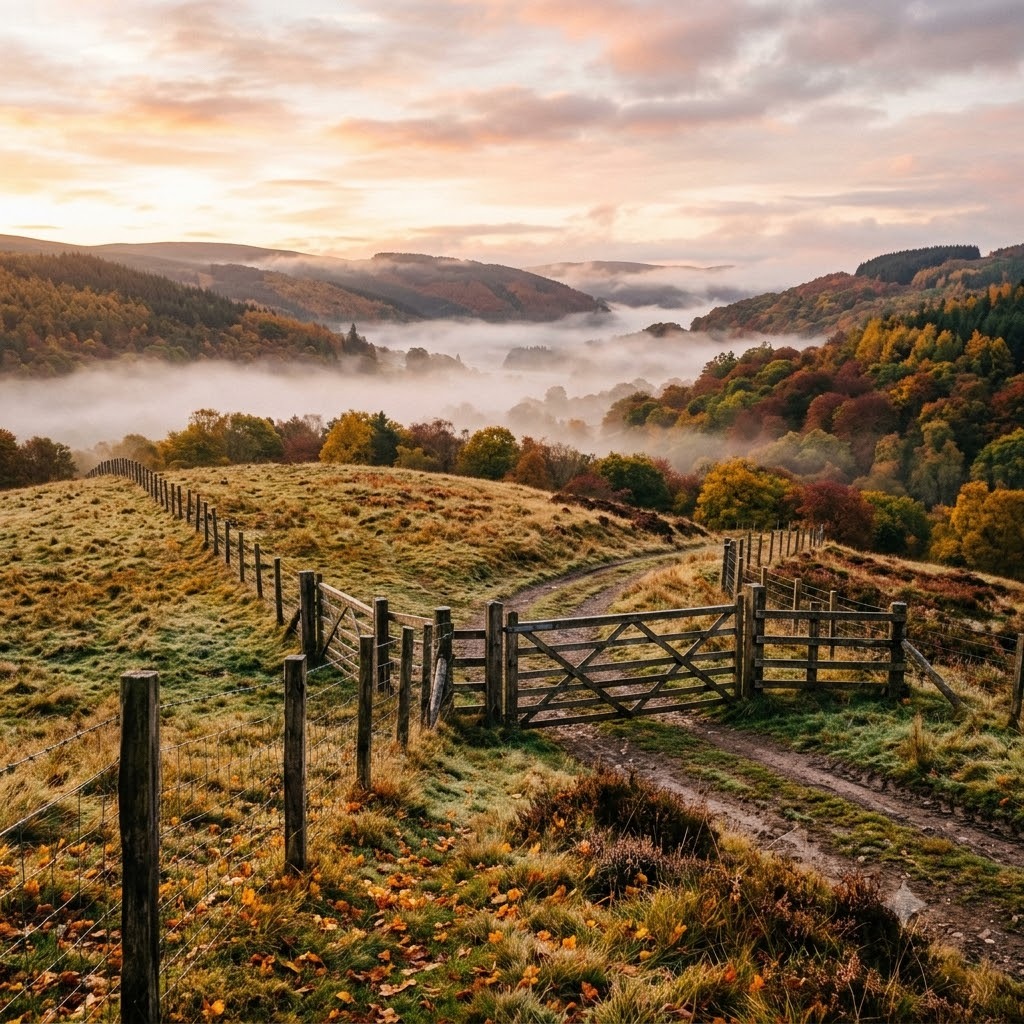
A fence is a funnel someone built for you. Deer clear 2.5 meters when they must - and almost never choose to: the herd crosses fences at specific, traditional low points - the sagging wire where a limb fell, the washout under the bottom strand, the corner post gap, the open gate - and they beat trails to these crossings like spokes to a hub. A brushy fencerow doubles the gift, adding a travel corridor along the wire between woodlots. Reading a fence line takes an hour and pays for seasons.
What it is
The crossing points and travel corridors created by fences: over-crossings (low or sagging wire - look for hair on the top strand), under-crossings (washouts and gaps below the bottom wire), gaps (corners, gates, fallen sections), and the brushy fencerow corridors linking cover blocks across open ground.
Why game is here
Energy and habit: crossing where it's easy becomes tradition, worn into obvious trails and hair-flagged wire. Fencerow corridors offer the only cover across open ag - deer, turkeys, and every small-game species commute inside them.
How to hunt it
Walk the wire and inventory crossings (hair, trail depth, tracks in the washout dirt) - then hunt the busiest crossing's downwind side, 15-20 m back. Evening: crossings between bedding and the field they feed. Corner-post double-crossings (two fences meeting) are the premium version. On fencerow corridors, take the mid-point pinch where the brush thins.
Playing the wind
Open-country fence sets have honest wind - the challenge is cover for YOU: a fencerow cedar, a corner brush pocket, a blind brushed into the line itself. Keep your scent parallel to the fence, never blowing along the corridor deer approach inside.
Finding it on a map
Aerials show every fencerow as a stitched line between fields; property-line tools mark fences that aerials miss. Cross-reference trails visible in crop stubble converging at a point on the line - that's the crossing, visible from your desk, confirmed by one walk.
Common mistakes
Hunting a random pretty spot ON the line instead of the marked crossing 80 m away, forgetting hair-on-wire is the cheapest trail camera there is, breaking the landowner-relations rules (never damage a fence making YOUR crossing), and ignoring how a single opened/closed gate rewires the whole pattern overnight.