Hampshire Sheep: A Homesteader's Meat Breed Guide
A large, fast-growing English meat breed with a dark face and legs, kept mainly for heavy, well-muscled market lambs. Hardy and calm, but hungry and space-hungry too.
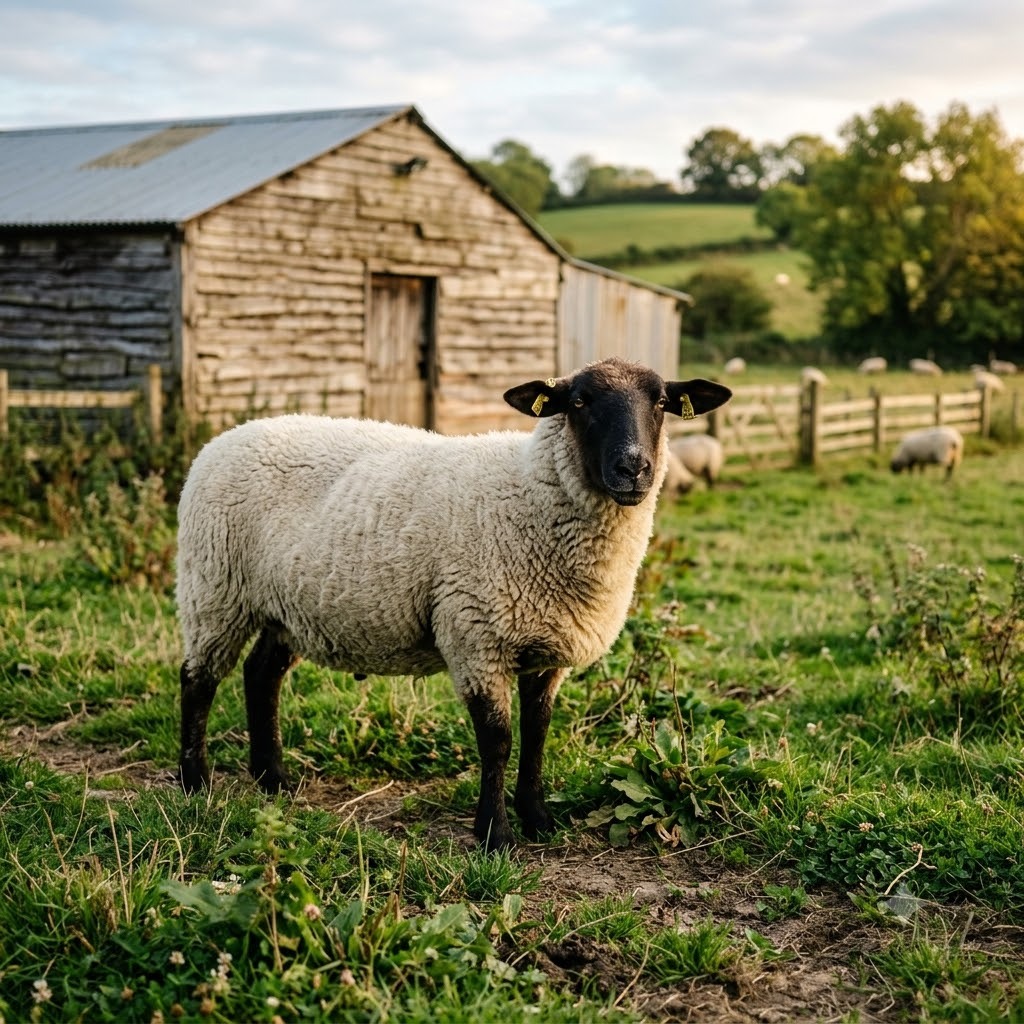
Hampshire sheep (often called "Hampshire Down") are a big, dark-faced meat breed from the chalk downs of southern England, developed in the 1800s. Homesteaders keep them for one main reason: they grow fast and put on heavy, well-muscled carcasses. They are a classic "terminal sire" breed - rams are crossed onto other ewes to produce quick-finishing market lambs.
Is it right for you?
Good if your goal is meat and you have real pasture. Best for owners with room, decent fencing, and a plan for the freezer or sale. Beginners can manage them, but the size means you need to be comfortable handling a large animal.
What you get
Meat, first and foremost. Mature rams reach roughly 250-300 lb, ewes about 200 lb. Lambs grow quickly and can finish to market weight (around 100-130 lb) in about 4-6 months. Fleece is a bonus, not the point: a medium wool, roughly 4-7 lb per year, useful but not prized.
Space & Housing
Allow good pasture - a few sheep per acre on decent grass. They need a simple three-sided shelter or barn for wind, rain, and lambing. Fencing must be solid: woven wire or multi-strand electric, since a determined ram is strong.
Feeding & Daily Care
Mostly grass and good hay, with clean water and a sheep-safe mineral (no copper). Growing lambs and pregnant ewes need supplemental grain. Being large, they simply eat more than smaller breeds, so budget for higher hay and feed bills, especially over winter.
Temperament & Handling
Generally calm and docile, easy to move and handle. Rams can get pushy in breeding season - respect their strength. Not noisy beyond normal sheep chatter.
Health & Hardiness
Hardy and adaptable to cold, wet climates; they cope less well with severe heat and humidity. Watch feet and parasites as with any sheep. For health decisions, buy from reputable breeders and work with a livestock veterinarian.
Getting Started
Start with 3-4 ewes and one unrelated ram, or just ewes bred to a borrowed sire. Buy from established breeders with health records. Learn basic sexing and lambing before your first season.
Common Mistakes
Underfeeding fast-growing lambs, so they never finish well. Weak fencing that a big ram walks through. Underestimating winter hay costs for a large breed.
FAQ
Are Hampshires good for beginners?
Yes, if you accept their size. They are calm and forgiving, but a 250 lb ram demands respect and strong fences.
Can I keep them just for wool?
You can, but it is the wrong breed for it. Their fleece is decent, medium-grade wool - fine for crafts, not a specialty fiber flock.
🎯 Kit for small livestock
Links go to Amazon or a partner store (such as OpticsPlanet) and may earn us a commission at no extra cost to you. As an Amazon Associate we earn from qualifying purchases. We link gear types, not sponsors' picks: you choose the exact product.