American Crow
The American Crow is one of the few small, non-waterfowl birds legally hunted in the US, managed as a migratory game bird under a federal framework.
🗓️ Last reviewed: July 2026
Overview
The American Crow is one of the few small, non-waterfowl birds legally hunted in the US, managed as a migratory game bird under a federal framework. It is abundant, intelligent, and famously wary, so decoy-and-call hunting is a real test of concealment and calling rather than an easy shoot. Most hunters pursue crows for wingshooting practice, off-season action, and localized pest control rather than for the table.
Identification & Appearance
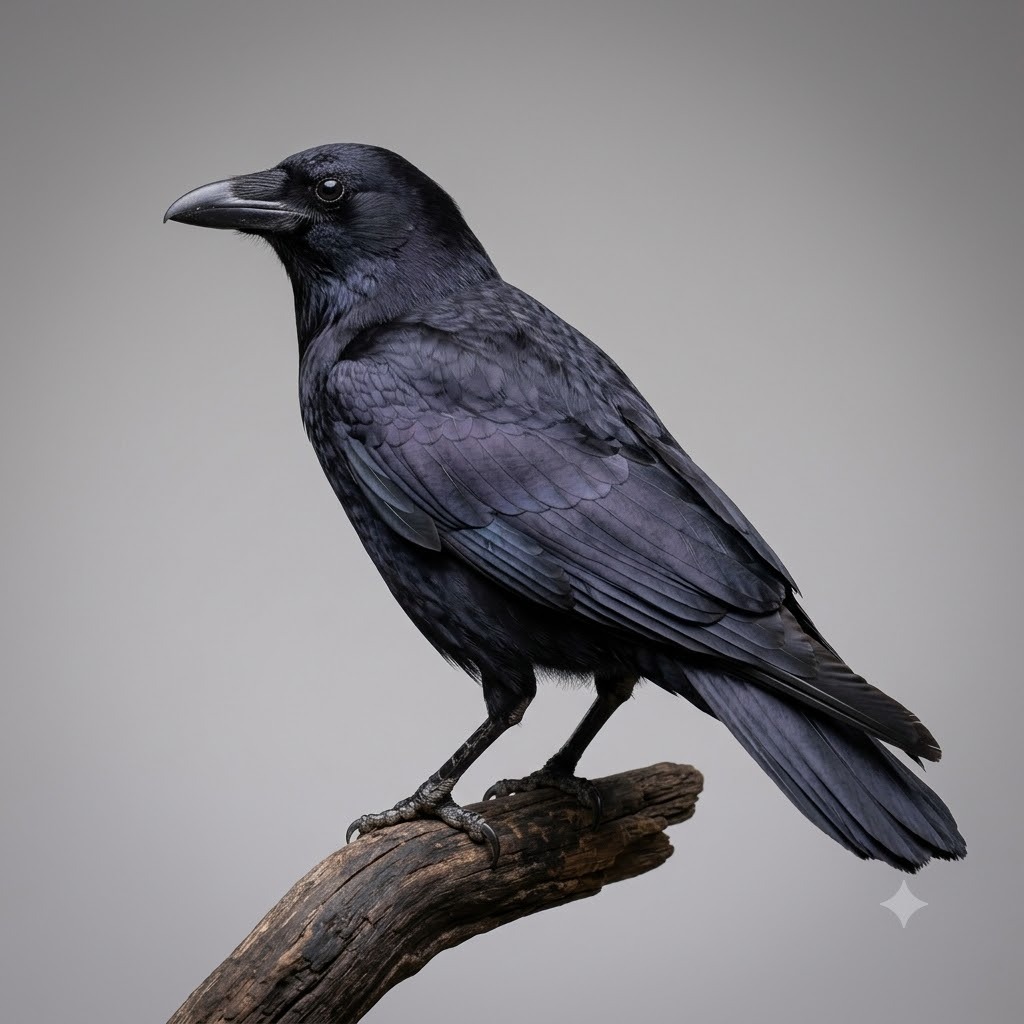
Entirely glossy black - feathers, stout bill, legs, and eyes - often with a faint purple sheen in good light. Adults run roughly 16-21 inches long with a fan-shaped, rounded tail, which separates them from the larger Common Raven and its wedge-shaped tail. The clear, familiar "caw-caw" is the surest field ID; ravens croak instead.
Range & Habitat
Found across nearly all of the Lower 48 and much of Canada, largely absent only from the driest Southwestern deserts. A true generalist, it thrives in farmland, woodland edges, river bottoms, suburbs, and city parks. In winter, crows gather into large communal roosts that can number in the thousands.
Behavior & Sign
Crows are highly intelligent, social, and wary - they post sentinels, remember faces, and quickly learn to avoid places where they have been shot at. They mob owls and hawks aggressively, a behavior hunters exploit with owl decoys and distress calls. Look for concentrations near grain fields, roost trees, and reliable water.
Hunting Seasons & Timing
Under the Migratory Bird Treaty Act, states set crow seasons that may not exceed 124 days per year and may not fall during the peak nesting period. Seasons are often split across fall and late winter, with the roost-heavy late winter typically most productive. Confirm your state's exact dates, since they vary widely.
Hunting Methods
Decoy-and-call hunting dominates: set crow decoys, often with an owl decoy, then call to imitate a fight, a feeding flock, or crows mobbing a predator. Hide in a natural or portable blind with full camo, because crows spot movement and bare skin instantly. Pass-shooting flight lines to and from roosts is a solid second approach.
Gear & Optics
A shotgun choked improved cylinder to modified with #6 to #8 shot is standard for these thin-skinned birds. Bring reliable calls, several decoys, complete camo including face mask and gloves, and a comfortable blind. Optics matter little; sharp eyes for reading incoming birds matter far more.
Shot Placement & Field Care
Crows are wingshooting targets - swing through, lead the bird, and take clean shots in range instead of skybusting. There is little field dressing involved; cool any birds you keep promptly. Wear gloves when handling harvested crows, as the species is highly susceptible to West Nile virus.
Meat & Eating Quality
Crow is edible but honestly mediocre - dark, lean, and often described as gamey, with tough older birds. Those who eat it favor young birds, breasting the meat for braises or slow cooking. Most crow hunters do not eat their birds, so hunting for pest control is the common and legal reality here.
Common Mistakes
The biggest error is poor concealment: crows read movement, shine, and out-of-place shapes from a long way off. Overcalling and hunting the same setup repeatedly educates local birds fast, and they then flare or leave. Skybusting at high birds only wounds and further educates the flock.
Regulations & Conservation
Crows are federally protected under the MBTA and may be hunted only within the seasons and methods each state sets - they may not be sold, and hunting during nesting is prohibited. No federal duck stamp is required, but state licenses and any HIP or method rules apply, so read your regulations. Populations are abundant and of least concern; a West Nile-driven dip in the 2000s has largely recovered.
FAQ
Q: Do I need a duck stamp to hunt crows? No federal duck stamp is required for crows, but you still need your state hunting license and must follow state crow-season rules.
Q: Can I shoot crows any time they are a pest? Not freely - hunting happens within the set season, though federal rules do allow limited depredation control when crows are actively damaging crops or property; check your state.
Q: Are crows good to eat? They are edible but generally considered poor eating; most hunters pursue them for sport and pest management, not the table.