Clapper Rail
The clapper rail, called the "marsh hen" by coastal hunters, is a chicken-sized salt-marsh bird and one of the few rails legally hunted in the US.
🗓️ Last reviewed: July 2026
Overview
The clapper rail, called the "marsh hen" by coastal hunters, is a chicken-sized salt-marsh bird and one of the few rails legally hunted in the US. It is a legitimate migratory game bird of the Atlantic and Gulf coasts, pursued in a distinctive high-tide tradition. Eastern and Gulf populations are generally stable, though the bird depends entirely on tidal marsh.
Identification & Appearance
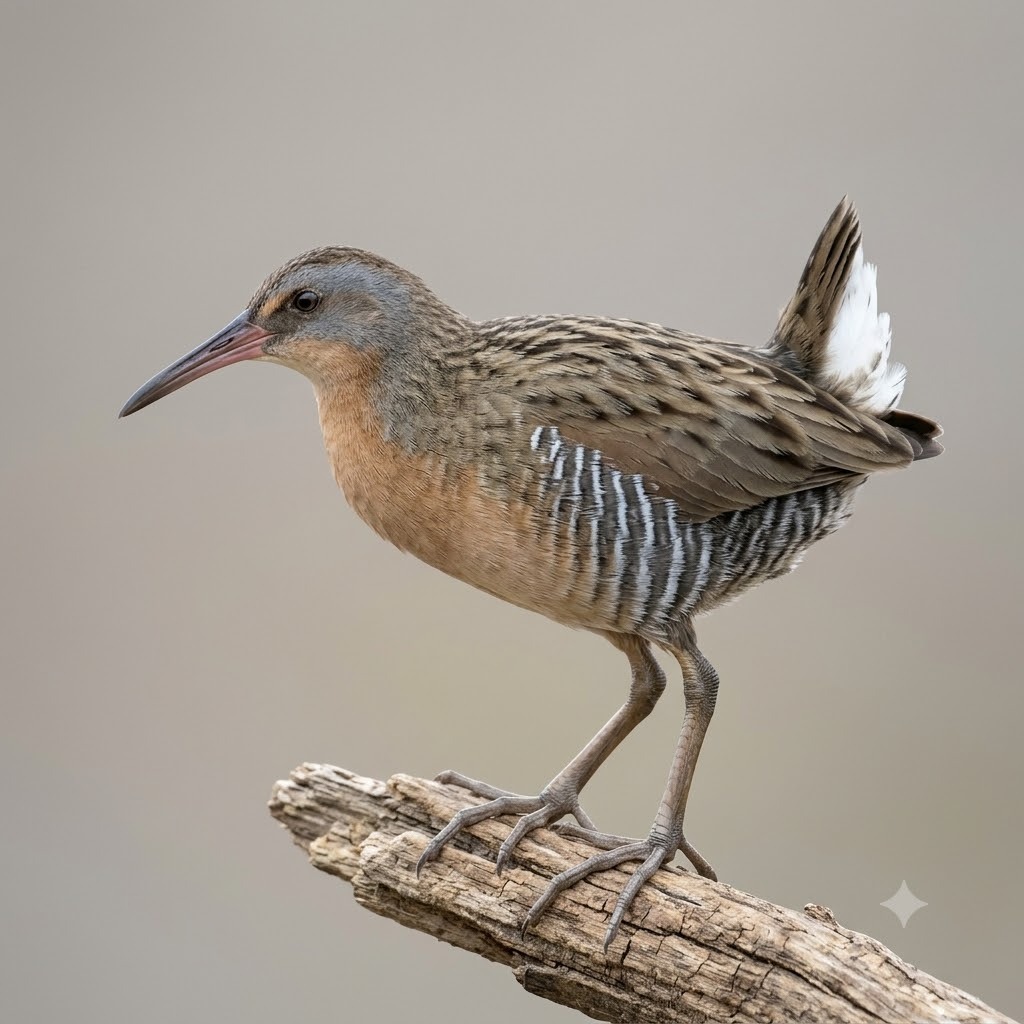
A lanky, drab rail about the size of a small chicken: grayish-brown above, warm cinnamon-buff across the breast, with boldly barred gray-and-white flanks. The bill is long and slightly downcurved, and the short tail is often cocked to flash white undertail coverts. It resembles the brighter, more rufous freshwater king rail, and the two hybridize in brackish marsh, so color alone is not definitive.
Range & Habitat
Clappers live in tidal salt and brackish marshes along the Atlantic coast from New England south and throughout the Gulf of Mexico, favoring cordgrass flats cut by tidal creeks. Note that West Coast "clapper" rails are now treated as the separate, federally endangered Ridgway's rail and are fully protected.
Behavior & Sign
Secretive and reluctant to fly, clappers run through dense grass and give a loud, clattering "kek-kek-kek" that is the source of their name. Look for tracks and runways in tidal mud along creek edges. When forced up, they flush weakly with legs dangling and drop back into cover fast.
Hunting Seasons & Timing
Rail seasons fall under federal migratory-bird frameworks and typically open around September 1 in coastal states. The hunt depends on the month's highest tides, when flood water shrinks available cover and pushes birds up. Dates and open areas change yearly, so check state and flyway regulations before you go.
Hunting Methods
The classic method is poling a shallow skiff or pirogue through flooded marsh on a high spring or wind-driven tide while a partner shoots flushed birds; walking marsh edges at high water also works. Fair chase means shooting only clearly identified, flying birds and never ground-swatting runners.
Gear & Optics
A light 20- or 12-gauge with an open choke and small non-toxic shot suits the close, quick flushes. A stable pushpole boat, waders or old boots, bug repellent, and sun protection matter more than optics here. Non-toxic shot is required in most marsh hunting areas.
Shot Placement & Field Care
Flushes are close and low, so mind your poler's safety and take clean going-away shots. Birds are small and easily lost, so mark falls and retrieve promptly. In warm early-season weather, cool and clean birds quickly.
Meat & Eating Quality
Clapper rail is edible and traditionally eaten on the coast, with dark, lean breast meat. Flavor can run strong or muddy because the birds feed heavily on fiddler crabs and marsh invertebrates. Trimming, soaking, and braising help tame it.
Common Mistakes
The big one is misidentifying protected species: never shoot where endangered Ridgway's or black rails may occur. Others include hunting the wrong tide, with too little water to move birds, and losing downed birds in thick grass.
Regulations & Conservation
Clapper rails are legal game across most Atlantic and Gulf states under regulated seasons and bag limits (clapper and king rails often share a combined daily limit, but verify locally). The western Ridgway's rail and the eastern black rail are protected or endangered and off-limits. Tidal-marsh loss is the main long-term threat to the species.
FAQ
Q: Is the clapper rail legal to hunt? Yes, in most Atlantic and Gulf coast states during regulated migratory-bird seasons, but always confirm current state and flyway rules.
Q: How is it different from the endangered "clapper" out west? West Coast birds are now the separate Ridgway's rail (Rallus obsoletus), which is federally endangered and fully protected.
Q: Do clapper rails taste good? Opinions vary; the lean breast can be good but often tastes marshy from their crab-heavy diet, so trim and braise it.