Black Wildebeest
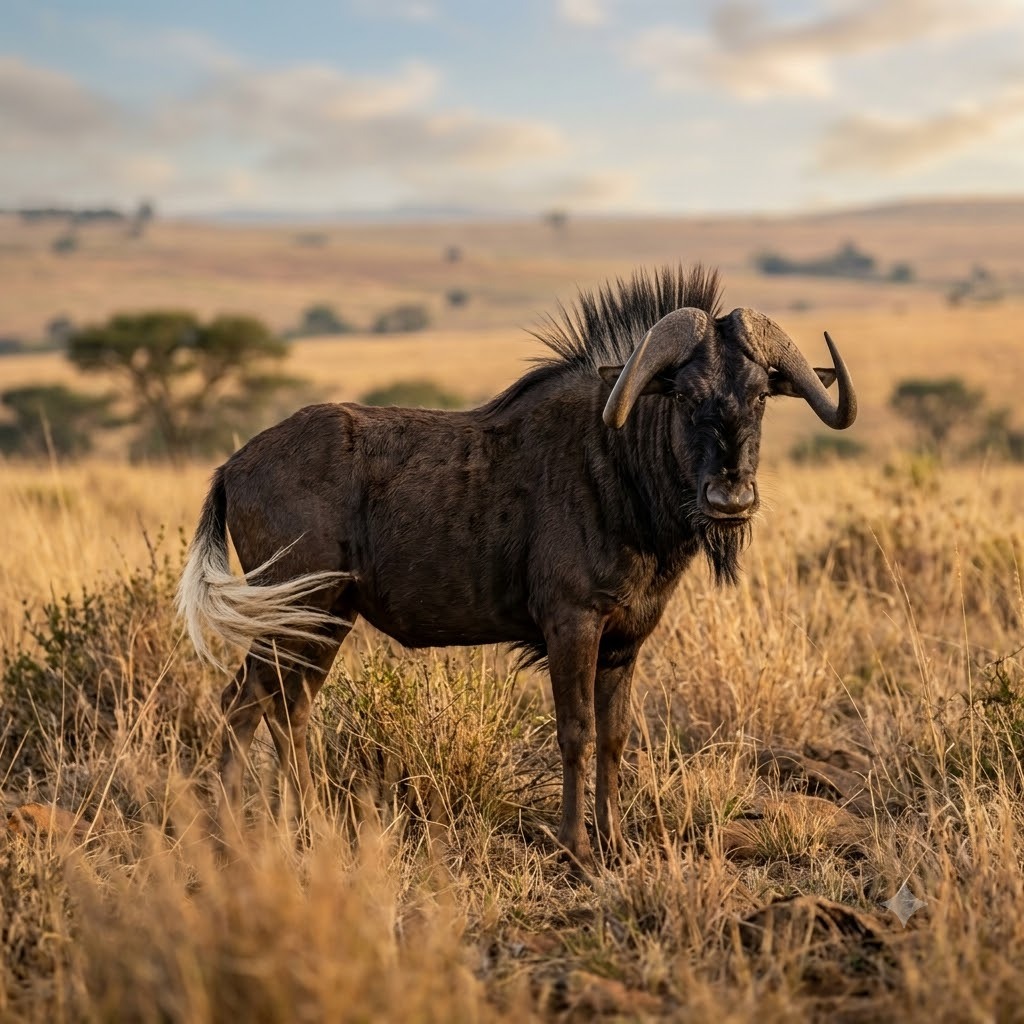
The black wildebeest, or white-tailed gnu, is a quirky, high-energy antelope of the South African highveld, known for its clownish antics and its distinctive forward-hooking horns and pale, flowing tail.
🗓️ Last reviewed: July 2026
Overview
The black wildebeest, or white-tailed gnu, is a quirky, high-energy antelope of the South African highveld, known for its clownish antics and its distinctive forward-hooking horns and pale, flowing tail. Once nearly extinct, it is now a popular plains-game trophy.
Identification & Appearance
Black wildebeest are dark brown to black with an upright mane, a face brush, forward-curving horns, and a conspicuous long white tail. They are smaller than the blue wildebeest and told apart by the tail and horn shape.
Range & Habitat
They occupy the open highveld grassland and plains of South Africa, grazing in herds on wide, treeless country.
Behavior & Sign
Black wildebeest are famous for cavorting, snorting and running in circles, but they are also alert and quick to flee. Sign includes grazed grass, dung middens and churned dust.
Hunting Seasons & Timing
Hunted year-round on many ranches, with cooler months best for the open walking.
Hunting Methods
Open-country spot-and-stalk into grazing herds, picking a mature bull as the herd mills and circles.
Gear & Optics
A .30 caliber and up with premium bullets is recommended; wildebeest are notably tough. Good glass and sticks help judge a bull.
Shot Placement & Field Care
Place the bullet firmly on the shoulder into the heart-lung area and expect a hardy animal. The maned cape and hooked horns make a dramatic mount.
Meat & Eating Quality
Wildebeest meat is lean and good, widely used in camp and for biltong.
Common Mistakes
Undergunning a tough animal and shooting into a bunched, circling herd.
Regulations & Conservation
A conservation success now common on game ranches, hunted under standard licensing. Confirm import paperwork. This is a reading guide, not legal advice.
FAQ
Black or blue wildebeest? Black have a white tail and forward-hooking horns; blue are larger with a black tail.
Why the antics? Cavorting is natural herd behavior - but they turn wary fast.