Bushbuck
The bushbuck is a small, secretive spiral-horned antelope often called the "poor man's kudu" for the challenge it offers in thick riverine cover.
🗓️ Last reviewed: July 2026
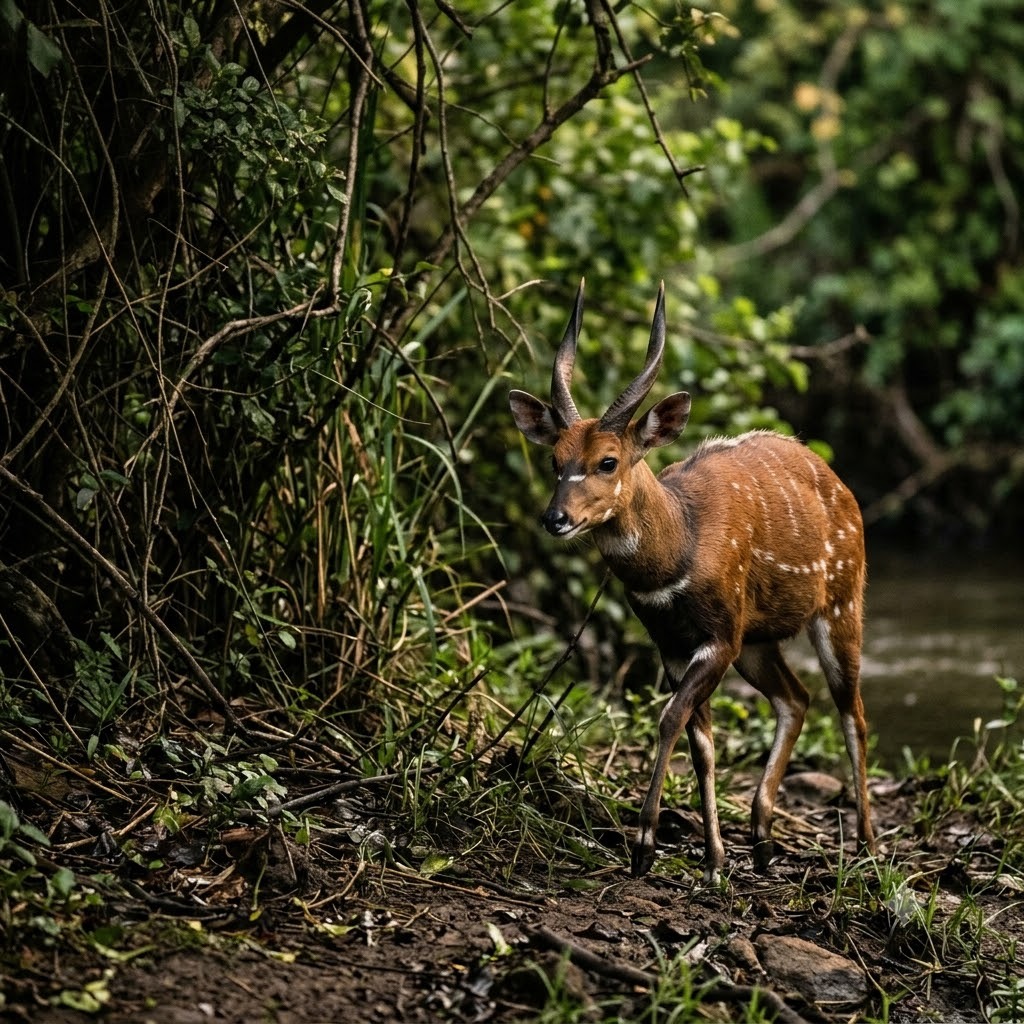
Overview
The bushbuck is a small, secretive spiral-horned antelope often called the "poor man's kudu" for the challenge it offers in thick riverine cover. Wary, largely nocturnal and quick to vanish, a good ram is one of the more satisfying plains-game trophies to earn.
Identification & Appearance
Bushbuck are rich brown to chestnut with white spots and stripes that vary by region; rams are darker with short, nearly straight spiral horns. Ewes are hornless and lighter.
Range & Habitat
They live in dense riverine bush, forest edge and thickets across much of sub-Saharan Africa, almost always tied to water and heavy cover.
Behavior & Sign
Bushbuck are solitary, skittish and mostly active at dawn, dusk and night, barking like a dog when alarmed. Sign includes narrow trails, tracks along water and browse in thickets.
Hunting Seasons & Timing
Hunted on the plains-game calendar with the best odds in the first and last light of the dry season, when rams edge out of cover to feed.
Hunting Methods
Still-hunting and glassing thicket edges at first and last light, or ambushing feeding lanes near water. Quick, close shots are the rule.
Gear & Optics
A handy medium rifle in .270 to .30 caliber with a low-power variable scope suits close, fast work in cover. Bright binoculars help in shadowed thickets.
Shot Placement & Field Care
Take the broadside lung shot when the ram clears the brush; do not risk a shot through cover. A full cape makes a fine shoulder mount.
Meat & Eating Quality
Bushbuck is tender and mild, rated among the best-eating of the small antelopes.
Common Mistakes
Hunting them in the heat of the day when they are bedded, and shooting too quickly at movement in the brush.
Regulations & Conservation
Common and hunted under standard plains-game licensing. Confirm import paperwork. This is a reading guide, not legal advice.
FAQ
Why the challenge? They are secretive, nocturnal and stick to thick cover.
Best time? The first and last thirty minutes of light.