Red Clover Plots
Red clover is white clover's taller, faster, cheaper cousin - a 2-year legume that establishes quickly, tolerates worse soil, and fits rotations and logging roads perfectly.
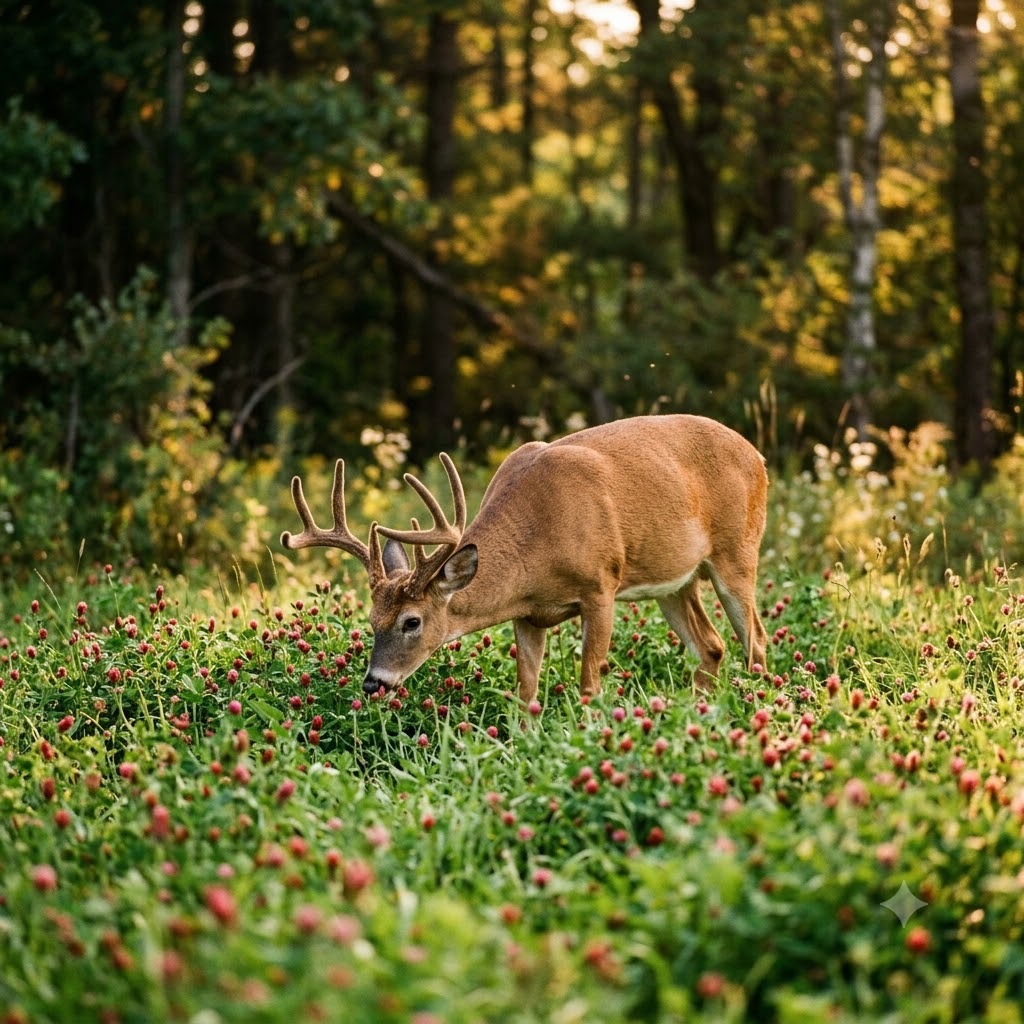
Red clover trades white clover's longevity for speed and forgiveness: it establishes faster, grows taller (more tonnage), tolerates poorer and wetter soils, costs less per pound, and burns out in about two years - which makes it ideal for rotations, freshly cleared ground, and 'I want deer food THIS year' impatience.
Why deer love it
Same high-protein legume nutrition (20-28%) with more bulk per acre; deer graze it as readily and turkeys nest and bug in it.
When & how to plant
Frost-seed in late winter or drill/broadcast in spring; germination is quick and seedlings assertive - it out-races weeds better than white clover. Same shallow-seed rule.
Soil & pH
More tolerant than white: pH 5.8+ workable (6.0-6.8 ideal), handles heavier and damper ground; still lime toward neutral for best stands.
Maintenance
Mow once or twice; expect the stand to peak year one-two then fade - plan the rotation (red clover → brassicas → grain → back) that keeps a property's plots cycling.
When it draws best
Spring through fall like all clovers; year-one stands often out-draw year-one white clover simply on establishment speed.
Common mistakes
- Expecting 5-year persistence (it's a 2-year tool)
- Skipping lime on marginal soil
- Not exploiting its rotation value - it fixes nitrogen the NEXT crop uses free
🌦️ Planting dates and varieties shift with your zone and rainfall - your county extension office gives free localized advice and cheap soil tests. Also note: rules on hunting over planted plots vs 'baiting' differ by state - plots are legal most places, bait often isn't; confirm your regulations. We don't give legal advice.