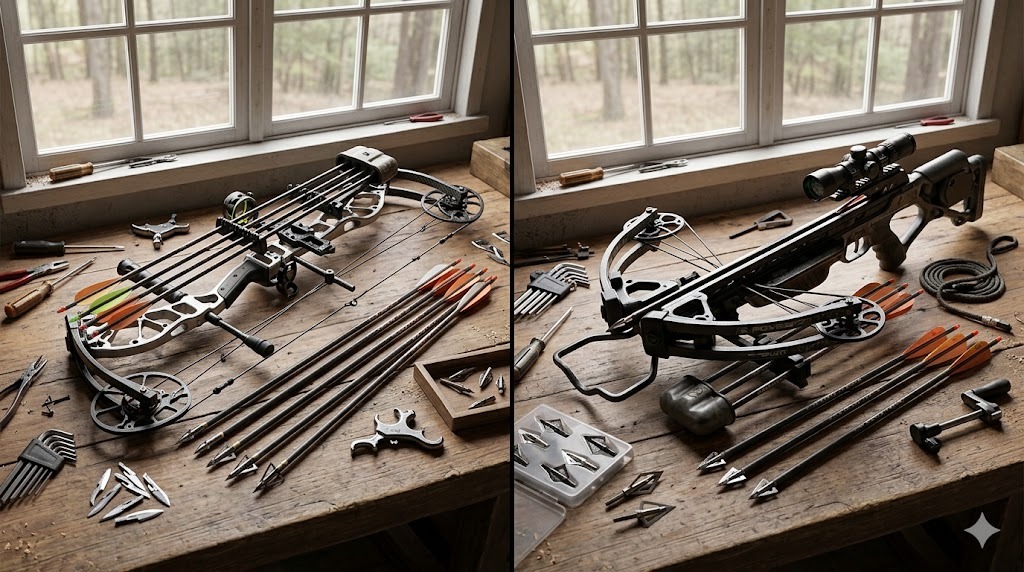
Fixed vs Mechanical Broadheads
Fixed blades forgive less in flight and more on impact; mechanicals fly like field points and spend energy opening. How the choice actually depends on your setup speed, your shot distances and your game, plus the legality question you have to answer locally.
Read your regulations, and treat broadheads as edged tools. Several states and provinces restrict broadhead design - minimum cutting diameter, blade count, and in a few places mechanical heads outright - and those rules change. Your state or provincial wildlife agency’s current regulations are the authority on what is legal where you hunt, not this article or a forum thread. Broadheads are surgically sharp and cause serious injuries in the hand, the quiver and the pack; handle them with a wrench or a purpose-made tool. We do not give legal or safety advice - check with your agency and your hunter education instructor.
The short version: neither design is better, and the honest answer depends on three things about your setup - how well your bow is tuned, how fast it is, and how far you actually shoot. Fixed blades are more demanding in flight and give up nothing on impact. Mechanicals fly like field points and spend part of their energy opening. A well-tuned bow at moderate range kills cleanly with either. A poorly tuned bow exposes a fixed head and partly hides behind a mechanical, which is the real reason the argument never ends.
Archery seasons are opening across much of the country right now, which makes this a practical question rather than a theoretical one.
What each design actually does
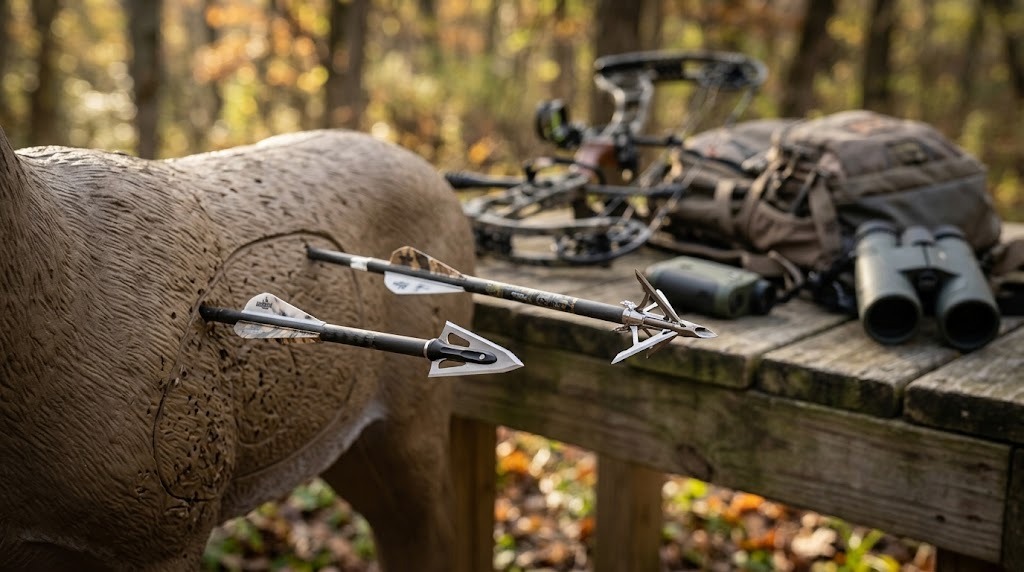
A fixed-blade head has blades that are rigid and always exposed - typically two, three or four, either one piece or replaceable. Nothing has to happen on impact. All the kinetic energy that arrives goes into cutting and penetrating. The cost is aerodynamic: those exposed blades are surfaces the air pushes on, so any imperfection in arrow flight gets amplified. A fixed head will steer a badly tuned arrow, and it will show you every flaw in your setup on the target face.
A mechanical (expandable) head flies with its blades folded against the ferrule, so it presents roughly the profile of a field point. It opens on impact, deployed by a collar, an O-ring, a clip or by the blades themselves catching. That gives you flight that matches your practice points and, usually, a wider cutting diameter. The cost is a portion of energy consumed by deployment, more moving parts that can fail, and a dependence on hitting hard enough to open reliably.
There is a middle category - hybrids with fixed main blades plus deploying bleeders - which try to split the difference and generally do, at a weight penalty. The broadhead types reference breaks the categories down further with the geometry that goes with each.
The three questions that actually decide it
How well is your bow tuned? This is the first question, not the last. If your bareshafts and fletched arrows do not group together, a fixed blade will punish you and a mechanical will mask the problem - it will still hit, but the arrow is arriving with a yaw that costs penetration exactly when you need it. Fixing arrow flight is worth more than any head choice, which is why bow tuning deserves the time before a broadhead decision gets made at all.
How much energy does your setup deliver? A deployment mechanism takes a cut of what the arrow arrives with. On a fast bow with a reasonable arrow weight, that cut is affordable. On a lower-poundage setup, a youth or a crossbow-adjacent configuration, or a long shot where velocity has bled off, it can be the difference between a pass-through and a stuck arrow. Run your own numbers rather than trusting a rule of thumb - the arrow kinetic energy calculator will tell you what your specific arrow weight and speed produce, and a marginal figure argues for a narrower fixed head.
What are you actually shooting, and how far? Bigger, heavier-boned animals argue for penetration - narrow fixed heads, heavier arrows, high front-of-centre. Thin-skinned game at moderate range is where wide mechanicals do their best work, because the extra cutting diameter buys a larger margin on marginal hits and a better blood trail. Longer distances favour mechanicals for flight predictability, but stretch the energy question at the same time. Those two pull against each other, and where they cross depends on your equipment, not on a general rule.
Where each one earns its place
Fixed blades make sense when: you are shooting a lower-poundage setup, hunting larger or heavier-boned animals, hunting in wind or through anything that might clip brush, shooting a crossbow at the top end of its speed range where some mechanicals have deployment issues, or hunting a jurisdiction that restricts expandables. They are also the pragmatic choice if you want gear that cannot fail mechanically, because there is nothing to fail.
Mechanicals make sense when: your bow is well tuned and fast, your shots are at moderate range on thin-skinned game, you want practice points and broadheads to hit the same place without a separate sight-in, or you are shooting a setup where a large fixed head would be hard to stabilise with your current fletching.
The honest summary is that the head matters less than three things that sit upstream of it - arrow flight, shot placement and your discipline about range. A bad hit with the best broadhead made is still a bad hit and a long night of tracking, which is a scenario worth being prepared for rather than optimistic about.
The practical checks before opening weekend
Whichever you choose, do these:
- Shoot the actual broadheads you will hunt with, at hunting distance. Not just field points, and not just one arrow. Three heads, three arrows, at your longest realistic shot. Keep a separate set for practice so the ones going in the quiver stay sharp.
- Check each head spins true on the shaft. A wobble on a spin test is a bent ferrule or a squaring problem in the insert, and it will show up as a flier at distance.
- Confirm your point of impact. Fixed heads commonly print away from field points on an imperfectly tuned bow. Either tune until they converge or sight in with the broadheads - do not guess the offset.
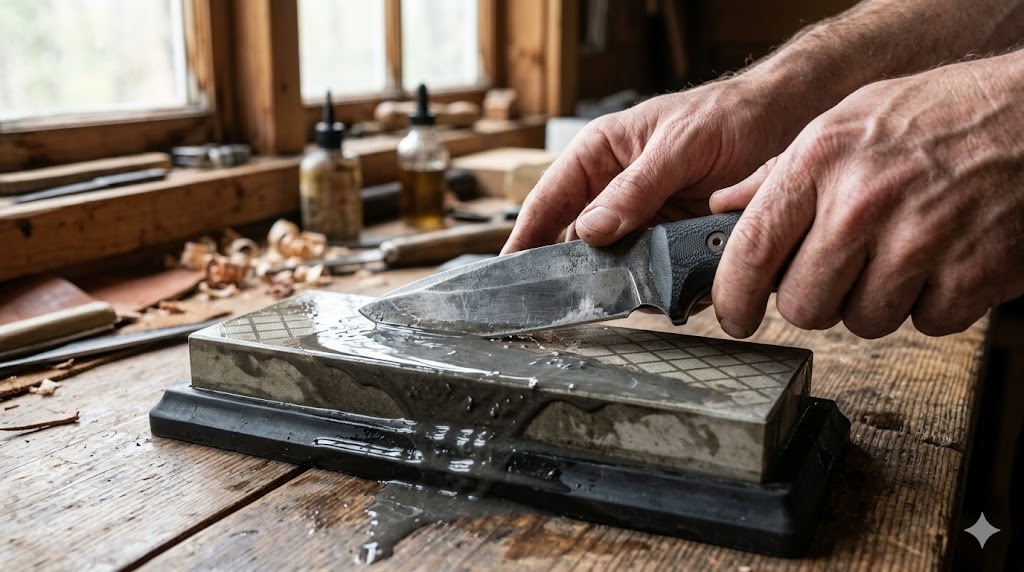
- Replace or resharpen before the season, not during it. Practised-with blades are dull blades. A dull broadhead is the one genuinely indefensible choice in this whole debate.
- Check the current regulations for every state you hunt. Not last year’s booklet. Blade and diameter rules differ across state lines and occasionally by weapon type within a state.
How the head fits into the rest of the arrow - shaft spine, insert weight, front-of-centre balance and fletching - is a system question rather than a component question, and the arrow system guide covers it properly. If you are early enough in the process that broadhead choice is not yet the limiting factor, bowhunting for beginners is the better starting point; the head is close to the last decision you should make, not the first.