Hindquarter Roasts (The Round)
The hindquarter seam-separates into distinct roasts - top round, bottom round, sirloin tip, eye - each with its own best use, from steaks to roast beef to jerky sheets.
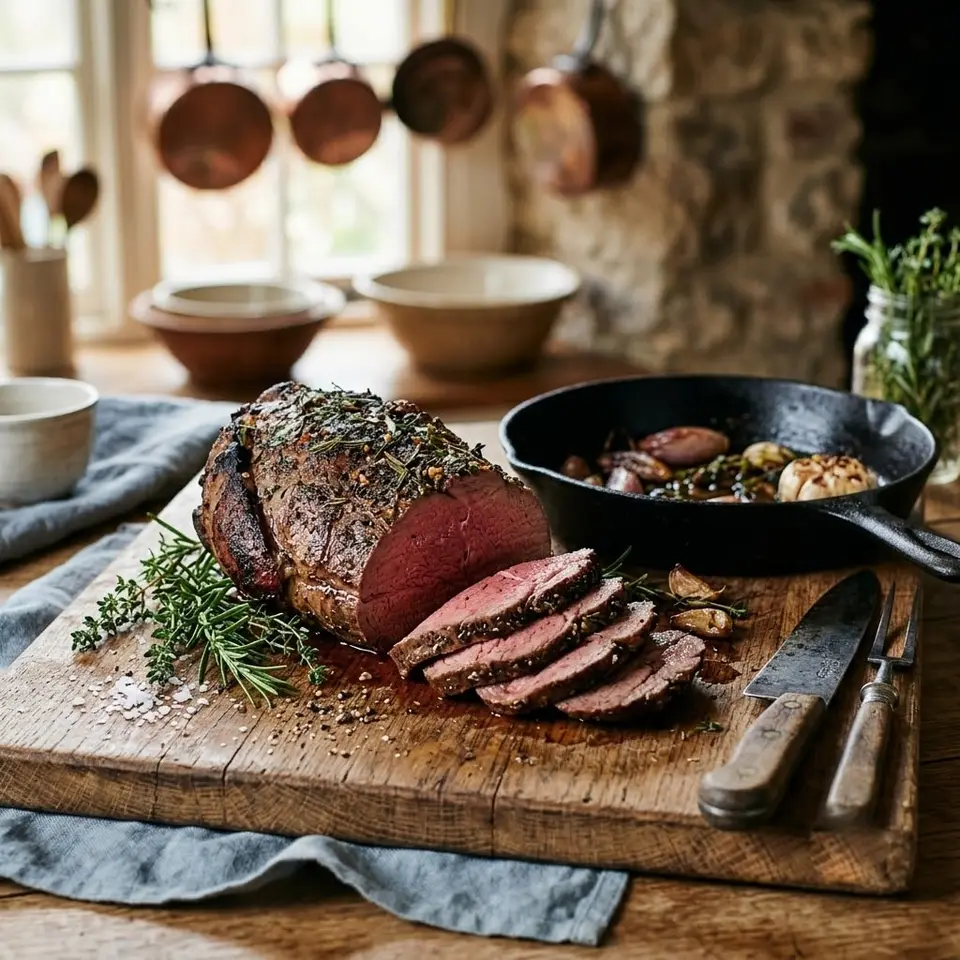
The hindquarter is where a deer stops being 'venison' and becomes a butcher's case: seam-separate the big leg and it falls into distinct muscles - top (inside) round, bottom (outside) round, sirloin tip, eye of round, sirloin. Each with its own grain, tenderness and destiny. This is most of the deer's boneless yield and the freezer's real wealth: steak-tender top round, roast-beef sirloin tip, jerky-perfect eye. Learn the seams once and you'll never wrap a package labeled just 'roast' again.
What it is
The rear leg's muscle system: top/inside round (biggest, tenderest - the deer's 'London broil'), bottom/outside round (chewier, grindable or jerky), eye of round (uniform cylinder), sirloin tip/football (three-muscle knuckle over the femur), and the sirloin proper up top.
Why it eats this way
Working muscles with a gradient: the inside round works least (near-backstrap tenderness in its center), the outside round and shanks-adjacent cuts work most. All are LEAN - each muscle rewards its own treatment and punishes the one-size-fits-all 'roast' label.
Breaking it down
Follow the seams, not a saw: with the leg on the table, natural membrane lines separate every muscle with fingertip-and-blade-tip work - no bone cuts needed once the femur's out. Bag and LABEL by muscle. De-silver each; the membranes between muscles are where 'gamey' lives.
How to cook it
By muscle: top round = thick steaks (hot/fast, medium-rare) or whole roast to 55°C sliced thin; sirloin tip = the Sunday roast-beef cut (low oven, thin slices, gravy); eye of round = jerky's favorite shape or roast-and-shave; bottom round = jerky, grind, or braise ONLY - its chew never negotiates with dry heat.
The 55°C here is a cook's choice, not the official line: the FDA's chart gives 63°C (145°F) with a three-minute rest for whole cuts of beef, pork, veal and lamb, and the CDC recommends at least 74°C (165°F) for wild game meat.
Recipes that fit
Whole roasted top round with garlic slivered in; sirloin-tip 'deer beef' French dips; classic soy-brown-sugar jerky from the eye and bottom round; grilled marinated sirloin steaks.
What ruins the meat
Cross-cutting the whole leg into bone-in 'round steaks' with a saw (every slice contains four muscles with four different ideas), roasting the bottom round like the top (it's the chewy one), packages labeled 'roast' that become mystery-thaw roulette in February, and overcooking - the round family is lean everywhere; 55-58°C or braise, nothing between.
Home-cooking guidance from the hunting kitchen, not food-safety authority - for temperatures, CWD-area advice and handling rules, follow your official food-safety and wildlife agencies. See our shot to freezer guide for the field-care chain that quality starts with.
Butchering gear
Links go to Amazon or a partner store (such as OpticsPlanet) and may earn us a commission at no extra cost to you. As an Amazon Associate we earn from qualifying purchases. We link gear types, not sponsors' picks: you choose the exact product.