Hunting Swamp Islands
Dry humps in marsh and swamp are the ultimate pressure refuges - bucks vanish to them when the orange army arrives. Getting in clean (and out) is the whole game.
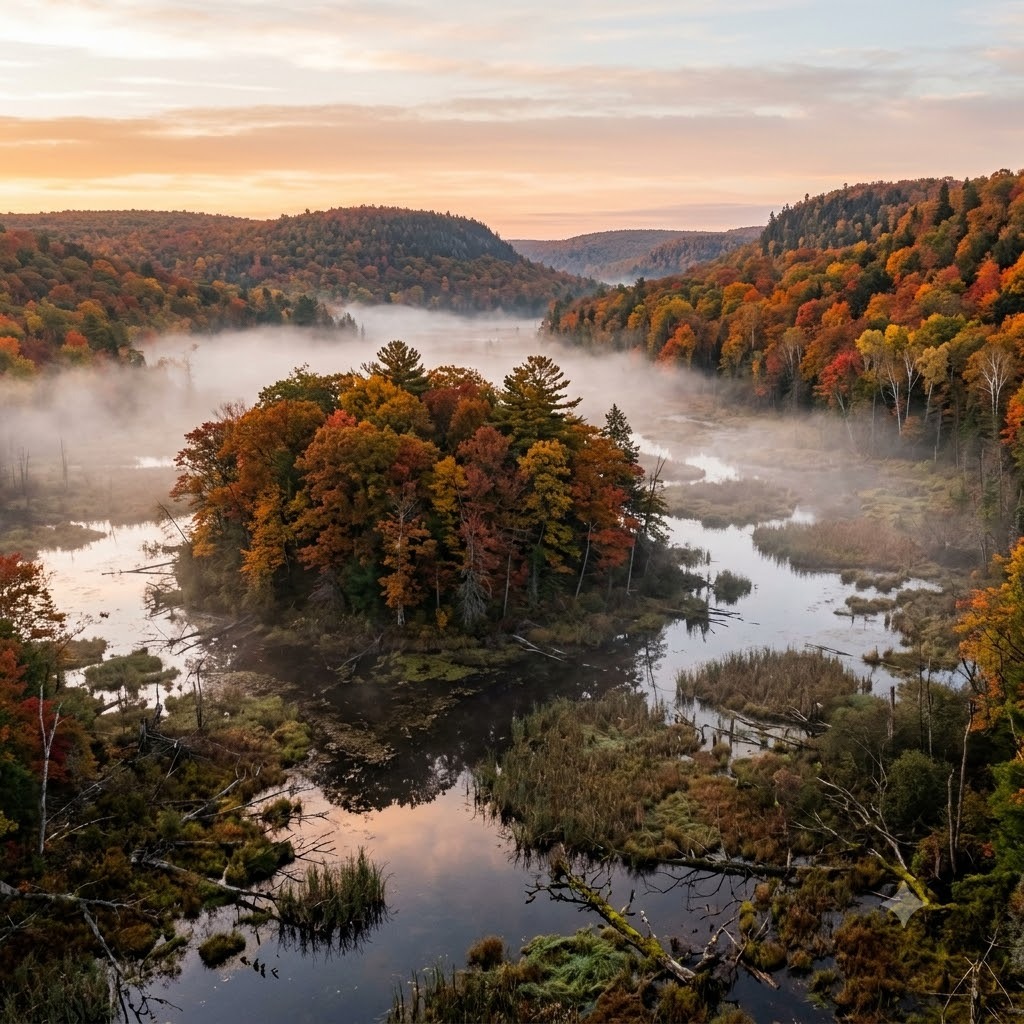
When hunting pressure crushes a property, the biggest bucks don't leave - they relocate to the spots hunters won't go, and nothing repels hunters like water. A dry island of oaks or brush amid a cattail marsh, a cedar hump in a swamp, the high spine through a bottomland flood - these refuges offer 360° scent-and-sound moats, zero human traffic, and often surprising food. Swamp-island hunting is expedition hunting: waders, pre-dawn slogs, one perfect wind - and some of the most reliable pressured-season bucks in the whole playbook.
What it is
Any elevated dry ground surrounded by wetland: timbered islands in marsh, brush humps in beaver flowages, cane ridges in swamps, even a half-meter rise that stays dry in a wet year. Size from one-bed dots to multi-acre oak islands.
Why game is here
Security above all: water carries sound, holds scent lines, stops casual human entry, and gives a bedded buck total confidence - which converts to DAYLIGHT movement pressured deer won't risk elsewhere. Add island oaks or adjacent marsh browse and there's no reason to leave.
How to hunt it
Scout in the off-season (walk it once, map beds, trails, and the water entries deer use - they wade established shallow routes). In season: enter by water or the least-likely line, hours early, hunt the island's downwind exit trails or the marsh-edge staging points, and get out clean. One or two sits per season per island - these spots die loudly.
Playing the wind
Open marsh wind is steady but island timber creates eddies; the classic setup takes the island's downwind shoreline with your scent pushing over open water where nothing walks. Morning thermals off warming water can lift and hold your scent - later entries sometimes beat earlier here, a rare exception.
Finding it on a map
Aerial + contour combo: green timber dots inside marsh signatures, one-contour humps inside swamp flats, and the connecting shallow-water saddles between islands (their travel routes). Public-land gold: the island 300 m past where the boot-trails end.
Common mistakes
Burning the island with a casual in-season scout, hunting it on a marginal wind because the slog was long (the moat works both ways - your scent pooled over the water is a fence alarm), noisy water entries at gray light, and overhunting the one island instead of building a rotation.