Hunting Staging Areas
The pocket of cover 50-150 m inside the timber where bucks linger, scent-check and wait for full dark before entering open feed - your daylight window on a 'nocturnal' buck.
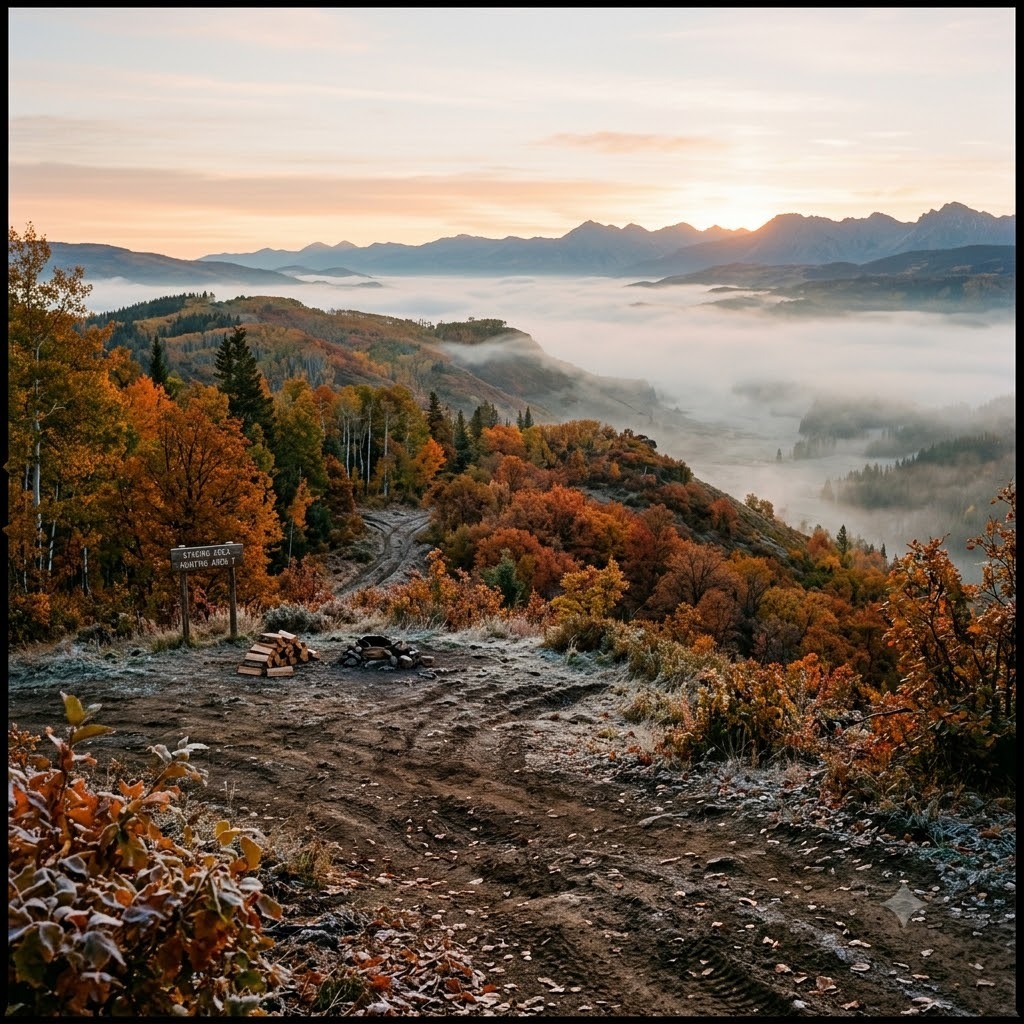
The oldest frustration in deer hunting: the field cameras full of giants, every photo at midnight. Those bucks aren't nocturnal - they're STAGED: at last light they're on their feet, drifted to within 100 m of the field, killing time in a security pocket - browsing, working licking branches, scent-checking - until dark makes the open safe. That pocket is the staging area, and hunting IT instead of the field edge moves your encounter 20-40 minutes back into shooting light. It's the difference between watching a field go dark and watching a buck at 25 meters.
What it is
A loafing zone in cover between bedding and open feed - typically 50-150 m inside the timber off a field, marked by clustered rubs, licking branches over faint scrapes, braided trails going nowhere in particular, and browse sign - the terrain equivalent of a smoker's porch.
Why game is here
Risk management: open fields at dusk are where deer die, so mature bucks buffer the transition - close enough to enter feed quickly at dark, covered enough to stand in daylight. Does stage too (shorter); the rut then turns staging pockets into scent-check hubs off doe feeding fields.
How to hunt it
Find it by working IN from a heavily-tracked field entry: 50-150 m along the trail until the sign blooms (rub cluster, scrape line under low branches, trail braid). Hang downwind of the pocket, not on the trail. Evening-only in most terrain, entered from the field side early afternoon; exit after full dark, ideally with the field cleared or a quiet loop route.
Playing the wind
You're hunting inside cover close to bedding-to-feed traffic: the margin is thin. The stand needs wind carrying scent toward the OPEN (field-ward, off-line of trails) and an entry that never crosses the inbound trail. If the pocket only works on one wind - that's normal; wait for it.
Finding it on a map
Maps only shortlist it: mark the likely band 50-150 m inside cover off every good feeding edge, weight toward benches, flat pockets, and cover thickening along the trail line. Then confirm with one off-season walk - staging sign (rubs, branch-work) is unmistakable and persists year to year.
Common mistakes
Hunting the field edge and educating staged deer 80 m behind you, walking in ON the deer's trail, over-visiting the pocket (it's close to bedding - two or three sits a season, best winds only), and quitting ten minutes early: staging encounters happen at the raggedy end of legal light by design.