Hunting Ridge Points & Spurs
The fingers descending off a main ridge - points and spurs carry travel between elevations, bed bucks at their tips, and turn into cruising highways in the rut.
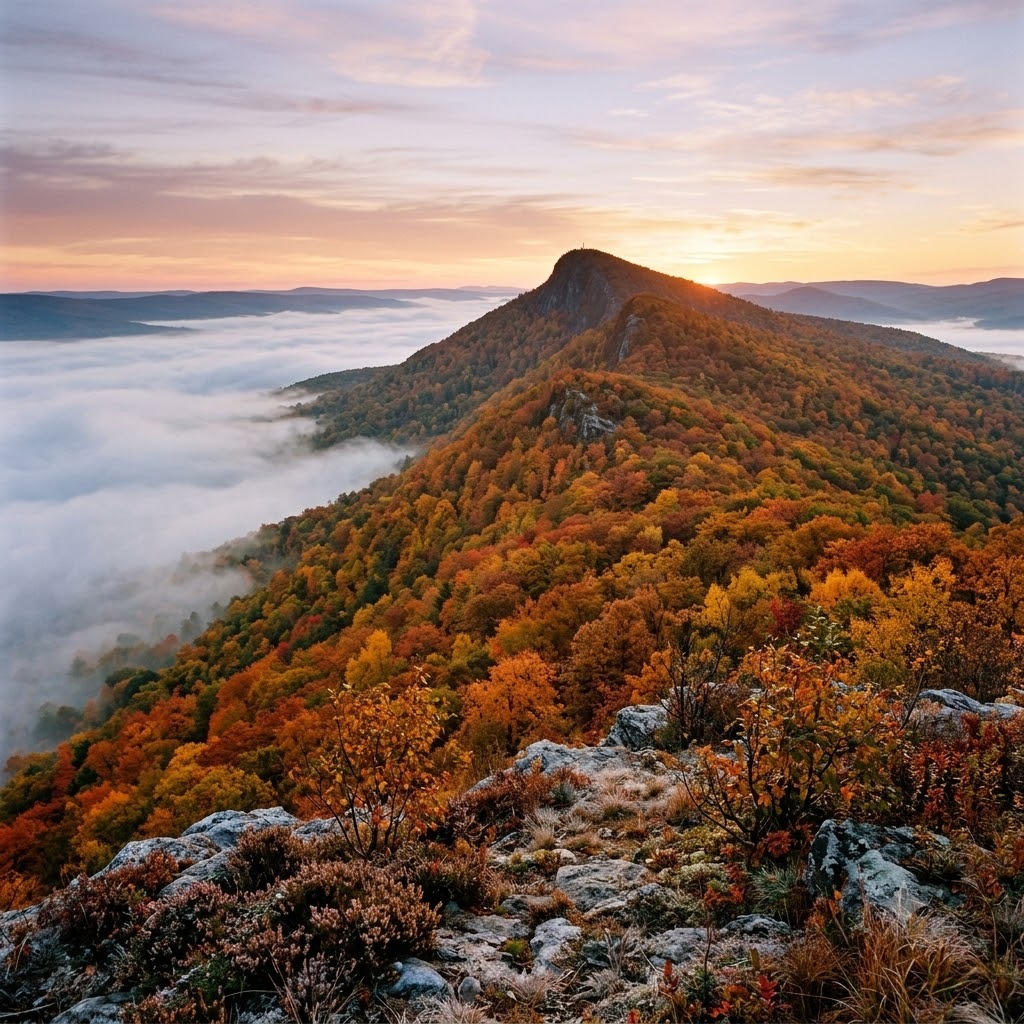
Main ridges rarely drop off evenly - they send down fingers: points and spurs descending toward the valley like roots from a trunk. Each finger is a graded ramp between elevations, which makes them the natural staircases of deer movement - and their tips, with wind advantage and panoramic view, are premium bedding. In the rut, bucks run the connecting sidehills from point to point to point, scent-checking each spur's does, and a stand where spurs meet the main ridge intercepts the whole circuit.
What it is
A point is a broad finger descending off a ridge's end or side; a spur is its smaller cousin. Contour signature: U or V shapes nesting downslope, the ridge's spine forking downhill.
Why game is here
Graded travel (animals climb ramps, not walls), bedding tips (bucks bed at a point's end, wind at their back covering the backdoor, eyes down both sides), and rut geometry: the junction where several spurs meet the main ridge is a scent-checking crossroads.
How to hunt it
Three setups: the junction (where spurs join the main ridge - rut cruising traffic), the sidehill trail crossing a spur's flank 1/3 down (all-season travel), and the tip approach (evening-only, thermal-dependent, for a specific bedded buck - expert mode). Morning access up the valley, not over the top.
Playing the wind
Points split and bend wind around their noses; the two sides of one spur can carry opposite quartering winds. Bucks bed on the leeward tip for exactly this - your play is a crosswind cutting across the spur, never a wind running its spine toward the tip.
Finding it on a map
Contours in nested Us pointing downhill mark every spur; count them along a ridge system and mark the junctions and any spur linking straight into ag fields or oak flats. Aerials add the cover story - the brushiest spur tip on the leeward side is your buck bed suspect.
Common mistakes
Walking the spine of the spur in (your ground scent crosses every trail on it), hunting the tip in the morning (rising thermals feed your scent straight to the bed), ignoring the junctions in November, and picking the obvious biggest point when the subtle brushy spur next door holds the actual bed.