Hunting Creek Bottoms
Water, dense edge cover and gentle grades make creek bottoms the interstate of game movement - with inside bends, crossings and adjacent benches as the exits worth watching.
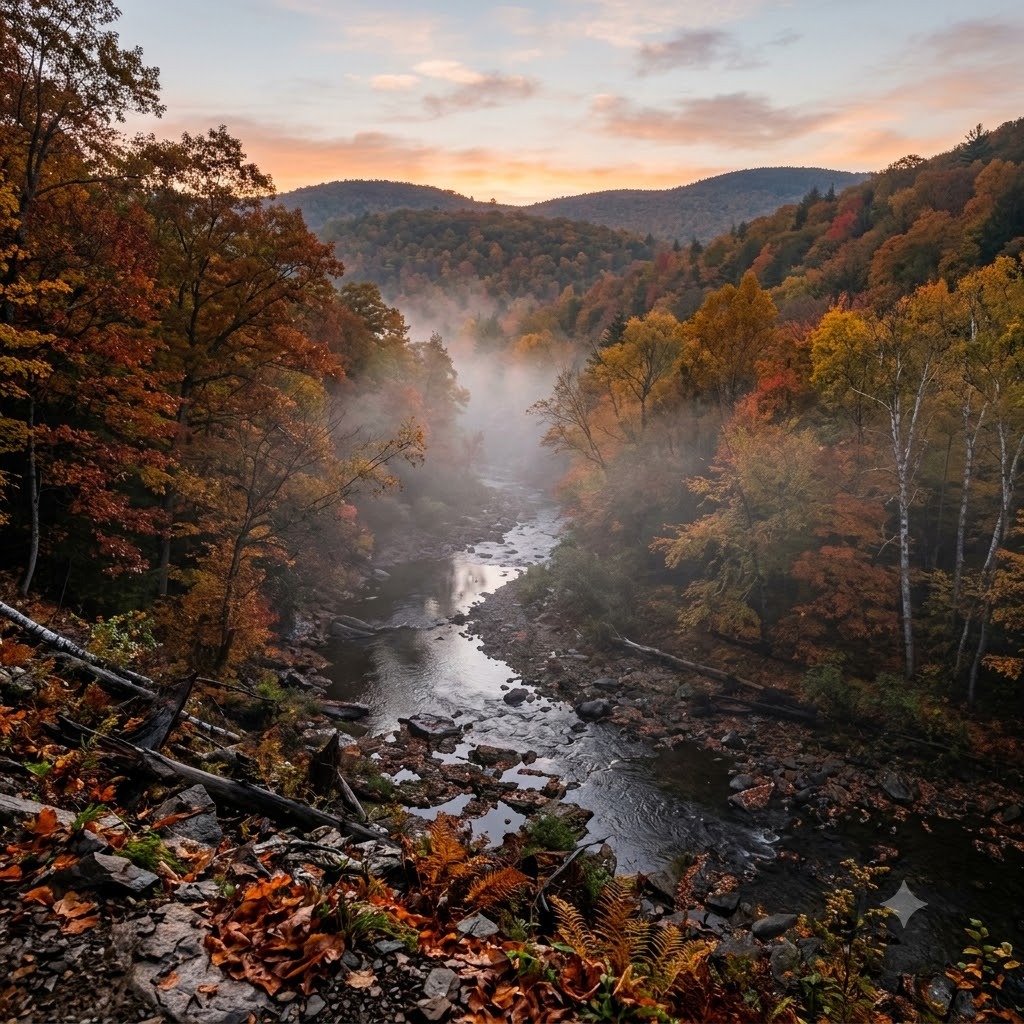
Creek bottoms bundle everything game needs into one strip: water, the lushest browse and mast on the property, dense security cover along the banks, and a flat, quiet, graded travel lane hidden below the surrounding terrain's sight lines. Deer, turkeys, hogs and predators all use them like an interstate - and like an interstate, the fishing is best at the exits: crossings, inside bends, confluences and the points where upland features funnel INTO the bottom.
What it is
The floodplain corridor of a stream: the channel, its banks, the flat bottomland (often oak-rich) and the edge where valley walls rise - from a prairie trickle's brush line to a hardwood river bottom half a kilometer wide.
Why game is here
Water daily, food seasonally (early greens, summer browse, fall acorns dropping FLAT where they land), thermal shelter in cold snaps, and concealed low-energy travel - a deer moving down a bottom is invisible to the whole upland.
How to hunt it
Hunt the constrictions: established crossings (look for cut banks and trail scars), inside bends where the creek's meander pinches cover, confluences (two highways merging), and the field-edge staging corners where bottoms meet ag. Evening = between bedding and the field ends; morning = back toward bedding cover, entering from the field side.
Playing the wind
Bottoms breathe on a schedule: cool air drains DOWN the drainage in the evening/night, warms and rises UP it in mid-morning. A steady prevailing wind above may be a swirling mess below the banks. Best sits accept the thermal schedule - evening stands want your scent draining downstream of the approaching deer, morning stands want you out before the rising air betrays you.
Finding it on a map
The blue lines, obviously - but the money marks are where contour features touch them: every spur point ending at the creek, every saddle draining into it, inside bends with tight contours opposite (bluff pinches), and crossings where two trail systems meet a shallow riffle between deep cut banks.
Common mistakes
Wandering the bottom mid-day laying scent through the bedroom, ignoring the thermal clock (the #1 bottom-buster), setting on outside bends (the trail and cover are inside), and treating flood debris as permanent - bottoms re-write their trails after every high-water event; re-scout.