Hunting Clearcuts & Regrowth
Two to six years after the saws, a clearcut becomes the thickest food-and-cover on the landscape - a browse buffet deer bed inside, huntable at its edges, funnels and interior lanes.
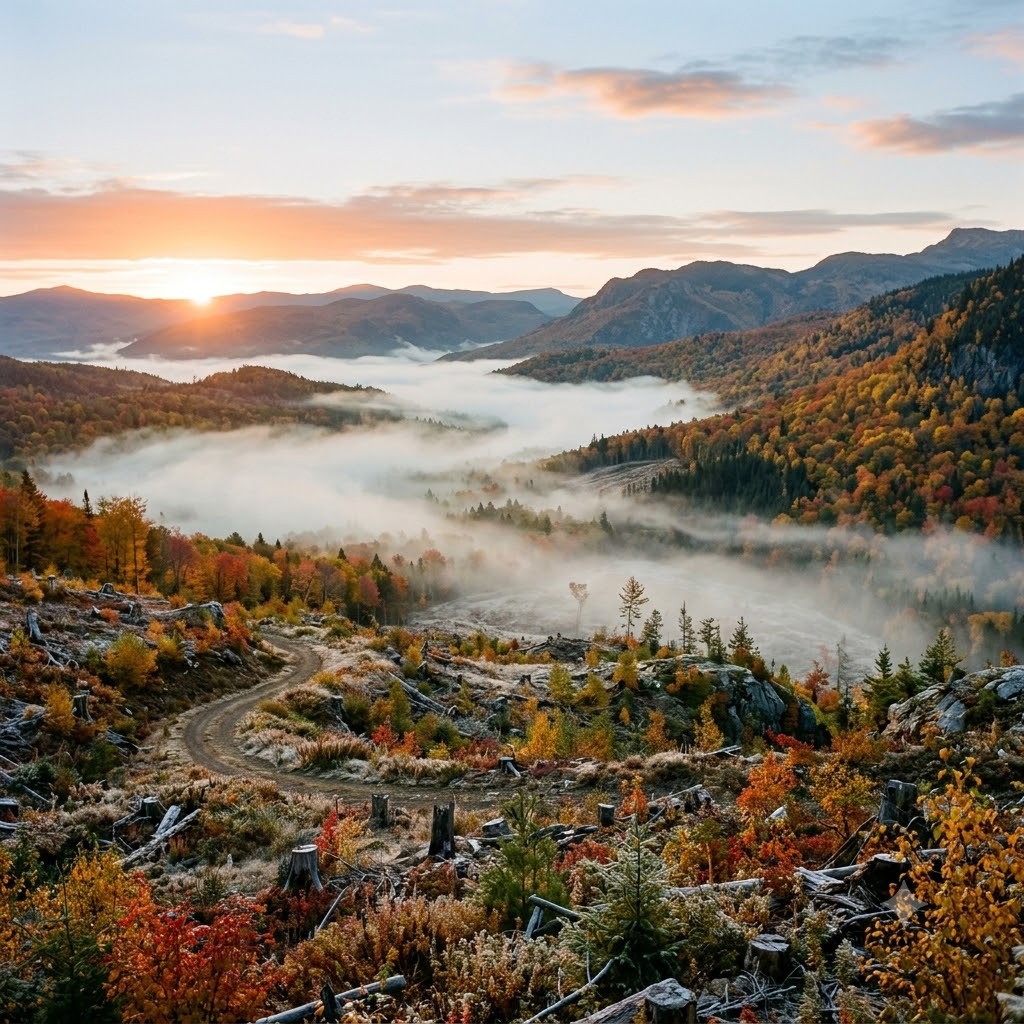
The year a block of timber is cut, it looks like devastation; by year two it's the best deer habitat on the property. Sun hits the ground and the regrowth explodes - briars, brambles, hardwood sprouts at deer-mouth height by the acre - while the growing tangle adds security cover the mature woods can't offer. From roughly year 2 to 6-8, a cut is both restaurant and bedroom, and the herd re-organizes around it. The catch: you mostly can't SEE into it, so the hunting happens at its edges, its interior lanes, and its geometry.
What it is
Regenerating harvested timber: browse-stage regrowth (years 1-6: knee-to-over-head vegetation, maximum food), transitioning to thicket-stage (6-15: dense pole cover, less food, still bedding), on its way back to woods. Edge habitat in a block form.
Why game is here
Tons-per-acre browse at exactly feeding height plus bedding security in the same footprint - a doe can live IN a good cut nearly full-time, and bucks bed the edges and interior humps. Grouse, rabbits, bears and every browser on the landscape agree.
How to hunt it
Perimeter first: the edge trails, corners where the cut meets soft mast or ag, and the pinch between the cut and other features. Interior: the log-deck openings, skid-trail lanes (deer adopt them as their own highways) and any spared shade strips - huntable windows in the wall of brush. Elevated helps; a cut viewed from 5 m up doubles its visibility.
Playing the wind
Edges give clean conventional setups. Interior lanes are riskier - your scent washes through bedding cover with every shift. Hunt the interior only on the season's steadiest winds and enter on skid trails that don't cross the day's likely bedding pockets.
Finding it on a map
Recent aerials show cuts as pale blocks; date them by comparing imagery years (most map apps offer history) - year-of-cut plus 2-6 is your target window. On public timberland, harvest maps and gate roads tell you where next year's hotspot is being made right now.
Common mistakes
Hunting the middle of the brush on foot (you'll see tails only), treating a 15-year-old pole thicket like a browse cut (the food phase ended), skipping the corners for the long edges (corners concentrate), and ignoring NEW cuts entirely - even year one's log decks and stump sprouts pull evening feeders.