Tripod Stand
A free-standing tower with a swivel seat on three legs - tripods put you at height in brush country, plot edges and anywhere the right tree doesn't exist.
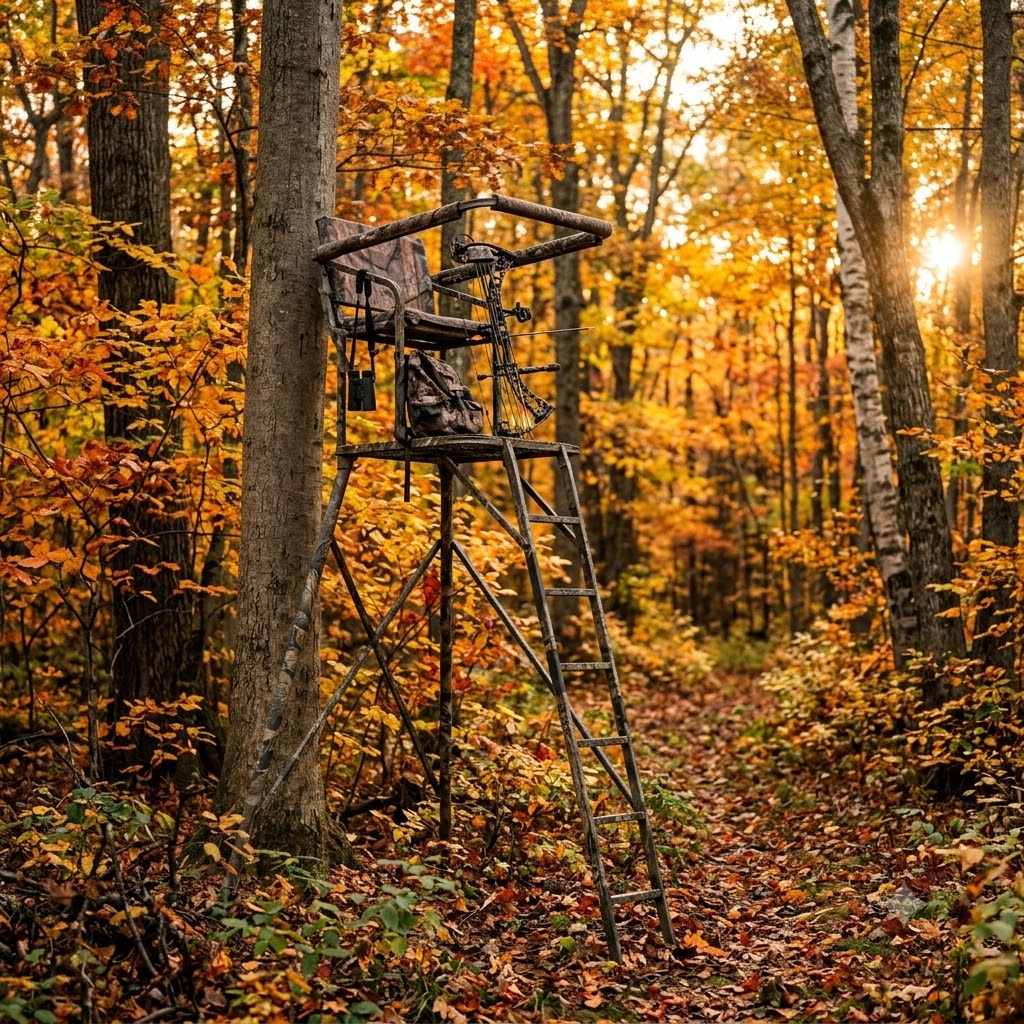
Some of the best hunting country grows no stand-worthy trees at all - south Texas brush, CRP grass seas, young clearcuts, plot corners in scrub. The tripod solves it by bringing its own tree: a 3-5 m tower on three braced legs, topped with a swiveling seat (often railed), guyed or staked against wind. It's not sneaking anywhere - it's a fixture deer learn to ignore, which locally is exactly the plan.
⚠️ Safety first, every climb. Falls from elevated stands are the #1 cause of serious hunting injuries. Wear a full-body harness from the moment you leave the ground, stay connected with a lineman's belt or lifeline while climbing, use a haul line for your unloaded firearm or bow, and check straps, cables and welds before every season AND every sit. Tell someone where your stand is. No deer is worth a fall.
What it is
A freestanding tripod tower with ladder up one leg and a 360° swivel seat on top - single seats with shooting rails most common; some sport full blind enclosures ('tower blinds' are its walled cousin).
Where it shines
Brush country and treeless edges: senderos and lanes cut through scrub, food plot corners in young growth, pasture fence corners, anywhere visibility beats concealment as the strategy.
Setting it up
Assemble flat, raise with 2-3 people, level the feet ON firm ground (dig, don't shim with rocks), stake or guy every leg, and torque every bolt - then again after a week. Place it weeks before hunting; local deer need time to file it under furniture.
Hunting from it
A swivel seat covers 360° - move SLOWLY; you're skylined. Rifle hunters get wonderful steady rail shots down lanes. Range landmarks in every direction during setup, not when antlers appear.
Comfort & concealment
Comfort is good (real seat, footrest). Concealment is time plus stillness: skirts around the platform, brush stacked at the base, dull the shine, and let it weather in. Deer accept fixtures; they never accept movement.
Common mistakes
Skipping the stakes ('it's heavy enough' - until the front blows through), placing it the same week you hunt it, fidgeting on the skyline, and rusty-bolt neglect - a tower's failure mode involves the whole tower.
🧭 Brand-free guidance, not product recommendations. Elevated hunting carries real fall risk - use a full-body harness and follow the manufacturer's instructions and official safety courses; this page is general education, not a safety certification.